Journal
Wooden Fireplace Surround: Stripping Paint Back to Bare Wood
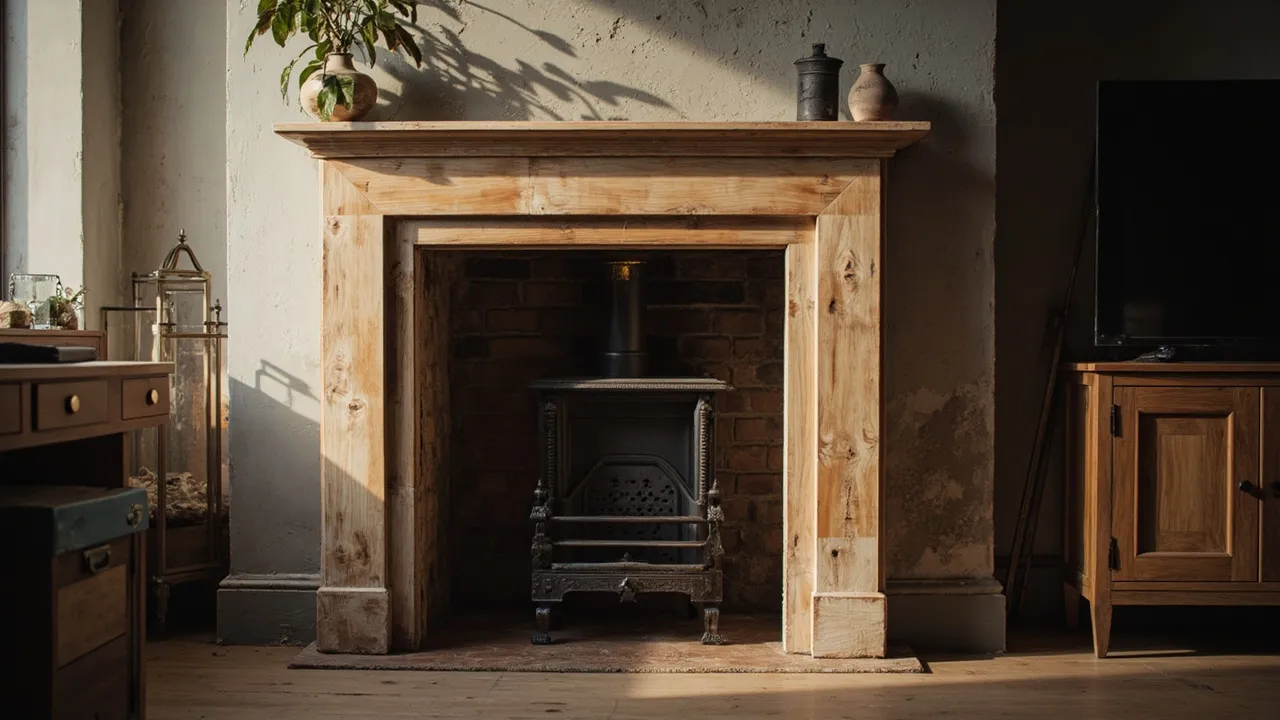
A painted wooden fireplace surround can usually be stripped back to bare wood. Solid pine surrounds are often dip stripped, while veneered, glued or fragile ones are stripped by hand, then neutralised, dried and finished. At Double Dipper in Honley we strip fire surrounds in the workshop, ready to wax, oil or repaint.
- Most old surrounds are pine or oak, and many were painted over decades ago.
- Dip or hand stripping depends on how the surround is built, not just the wood.
- Every piece is neutralised and dried so new finishes take properly.
- Pair it with a stripped cast-iron insert for a complete period fireplace.
What is a wooden fireplace surround made of?
Most period wooden surrounds are pine or oak. Pine was the everyday choice in Victorian and Edwardian terraces, and it was almost always meant to be painted, often grained to look like a better timber. Oak and other hardwoods turn up in grander rooms and in later houses, where they were usually left with a clear finish.
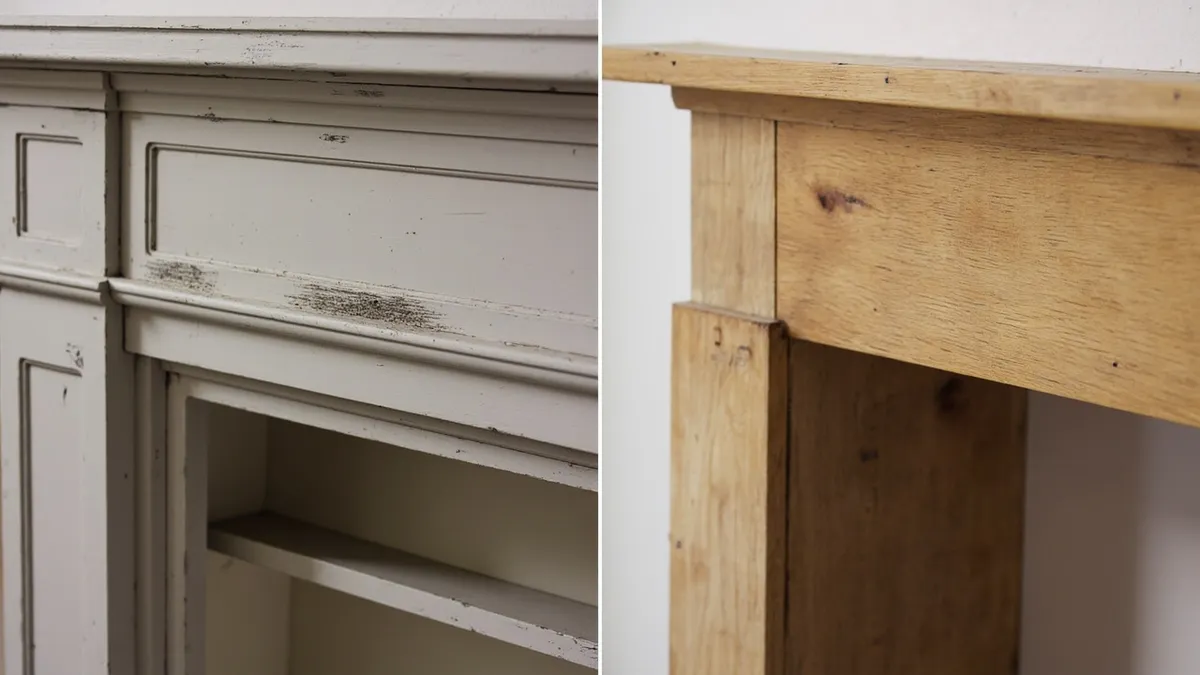
A surround is really a piece of joinery: two legs or pilasters, a frieze across the top and a mantel shelf, sometimes with an overmantel, mirror or carved brackets. It's fixed to the chimney breast and frames either a cast-iron insert or a tiled opening. That construction matters when it comes to stripping, as we'll explain below.
Why strip paint off a fireplace surround?
Because years of gloss blur the detail that makes it worth keeping. Every repaint fills the mouldings a little more, until a crisp profile turns into a soft lump. Paint on the shelf chips and yellows near the heat, and dark brown or cream layers from past decades rarely suit the room today.
Stripping takes it back to the timber so you can decide afresh. Good pine looks lovely waxed, oak comes back to life with oil, and if you'd rather paint, a clean bare surface gives a far better result than another coat over flaking layers.
Should a fire surround be dipped or hand stripped?
It depends on how it's built. A solid pine surround that's sound and well jointed is a good candidate for dip stripping in the bath. Every face, edge and moulding is stripped at once, including the back and the awkward corners under the shelf.

Hand stripping is the right call when the surround is:
- Veneered, as the bath can lift veneer from the groundwork.
- Glued together, with joints that rely on old animal glue rather than screws or pegs.
- Fragile, with loose carving, applied mouldings or cracks.
- Fitted with a mirror or glass that can't come out.
Either way, the detail is hand-finished afterwards, and the wood is neutralised and dried before it leaves. For a fuller comparison, see dip stripping vs hand stripping. If you're unsure, send a photo of the front and the back and we'll tell you which method suits it.
Can you strip a fireplace surround while it's still on the wall?
You can, but it's hard work and messy. Stripping in place means chemicals or heat right next to the hearth, the walls and the floor, and paint left in the mouldings you can't reach. Heat guns can scorch pine and old paint may contain lead. The HSE's frequently asked questions on lead list burning off old paint with blow lamps or gas torches and dry sanding among the riskiest jobs in pre-1980s properties.
Taking the surround off is usually simpler than people expect. Many are held by a few screws or plates into the chimney breast, sometimes hidden under paint or filler. Score along the joint with the wall, find the fixings, and lift it away with a helper. Old plaster may come with it, so be ready to patch. If you're not confident, ask whoever is fitting your fireplace to take it out. Our guide to how to strip paint from wood covers the DIY options if you'd still rather do it yourself.
Got a painted fire surround you'd like back to bare wood? Send us a photo and we'll recommend the method and give you a price. Call 01484 666 333 or use our contact page.
How do you finish a stripped wooden surround?
Choose the finish to suit the wood and where it sits. A surround lives next to heat and gets handled on the shelf, so it needs something durable but easy to touch up.
- Wax gives stripped pine a soft, mellow look and is easy to refresh. It suits a surround that's mostly admired rather than used.
- Hard-wax oil is tougher on a mantel shelf that collects candles, cards and cups.
- Paint is perfectly right for a pine surround that was always meant to be painted. On a clean, bare surface it goes on evenly and keeps the mouldings crisp.
We sell Osmo, Fiddes, Farrow & Ball and Little Greene in our wood finishes shop and paints shop, and finishing is available in the workshop too. Our article on the best wax and oil finish for stripped pine applies just as well to a surround.
Should you strip the cast-iron insert at the same time?
Often, yes. A freshly stripped surround around a tired, painted insert looks unfinished, and the fireplace is already out of action, so it's sensible to do both. We strip wood and metal, so the surround and the insert can come in together.
The cast iron is taken back to bare metal, rust is treated before it leaves, and it's finished in bare metal, clear lacquer, waxed black, high-temperature enamel or oil gloss. A cast-iron insert typically costs from around £90 to strip and refinish. If it has tiles, mention them, as they're removed or protected first. See our cast-iron fireplace stripping service and the guide to restoring a Victorian cast-iron fireplace.
How long does it take and what does it cost?
Larger pieces such as fireplaces usually take 2–3 weeks in the workshop. A surround is priced from a photo, because sizes and detail vary so much. For a sense of our furniture prices, a dining suite of six chairs and a table is £320–£480, and an internal four-panel pine door starts from £60. If you're doing doors at the same time, see our door stripping prices.
Frequently asked questions
Can you strip an MDF fireplace surround?
No. We strip wood and metal only, not MDF, laminate or other composite boards. If you're not sure what yours is made from, a photo of the back usually tells us.
Will stripping damage an oak surround?
Oak needs more care than pine, which is why we check each piece first. Solid oak can often be dipped, while oak-veneered surrounds are usually stripped by hand. It's neutralised and dried afterwards so the finish takes evenly.
Get a quote from Double Dipper
Double Dipper is a paint stripping workshop at Unit 3, Crossley Mills, Honley, Huddersfield, stripping wood and metal since 2016, and we're members of the Guild of Master Craftsmen. Our furniture stripping service handles fire surrounds, mantels and overmantels as well as tables, chairs and dressers.
- Free collection within 20 miles of Honley, covering Huddersfield, Holmfirth, Halifax, Wakefield, Leeds, Bradford and Barnsley.
- Further away? Drop off at the workshop, send smaller items by overnight courier, or ask us to quote a van collection.
- See finished work in our gallery.
Call 01484 666 333, email info@doubledipperpaintstrippers.co.uk or send a photo through our contact page. We're open Monday to Friday 9–5 and Saturday 10–2.
