Journal
How to Restore a Victorian Cast Iron Fireplace
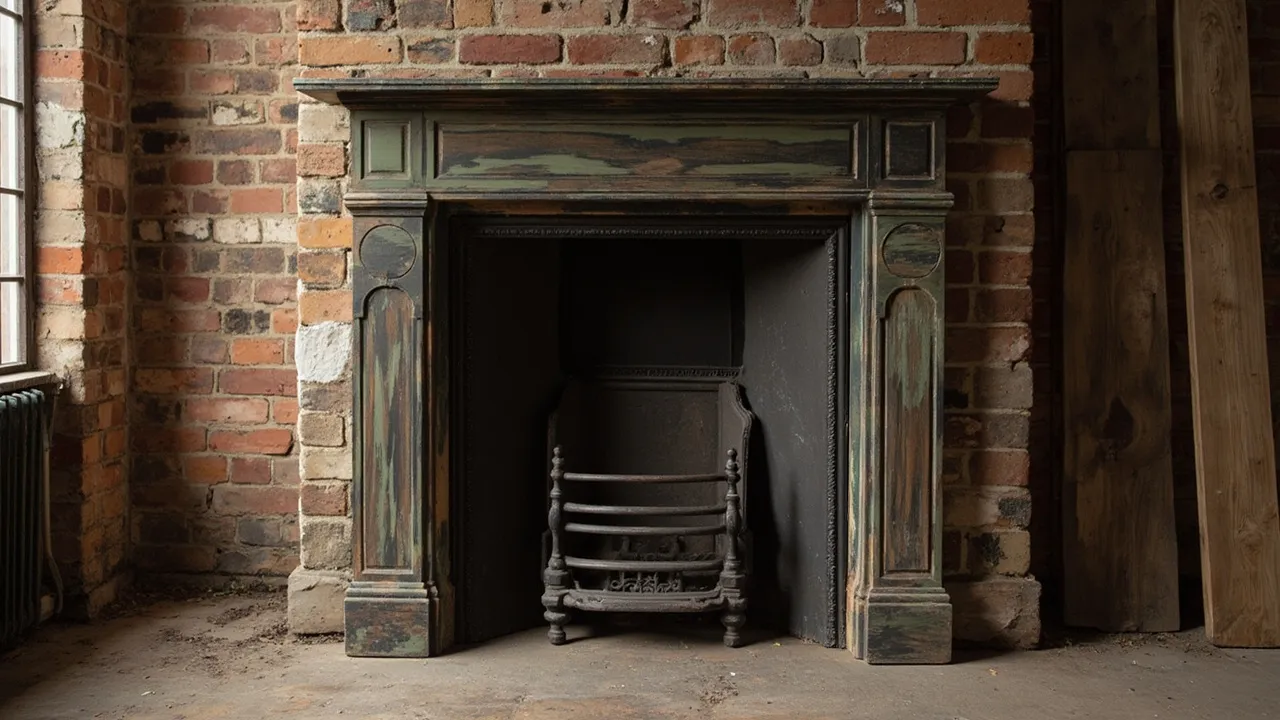
To restore a Victorian cast-iron fireplace, take it out, strip it back to bare iron, treat the rust, choose a finish and have it refitted. Double Dipper strips and refinishes cast-iron fireplace inserts from around £90 at our Honley workshop, usually within 2–3 weeks, so the part that needs a workshop is done properly and the rest is straightforward.
- Most tired Victorian and Edwardian cast-iron fireplaces only need their old paint and rust dealing with. The casting underneath is usually sound.
- We strip paint and old enamel to bare metal, treat rust, and finish in bare, clear lacquer, waxed black, high-temperature enamel or oil gloss.
- Stripping and refinishing an insert costs from around £90. Larger pieces usually take 2–3 weeks.
- Free collection within 20 miles of Honley; further away, drop off, courier smaller parts or get a van quoted.
Is a Victorian cast-iron fireplace worth restoring?
Almost always. A cast-iron fireplace from a Victorian or Edwardian house was made to last, and the iron rarely wears out. What makes one look tired is the finish: years of gloss paint, flaking silver or black paint, soot, and rust where damp has got in behind it.
Once that's stripped away, the detail comes back. Victorian inserts often have arched openings and raised decoration round the frame. Edwardian ones tend to be squarer, often with tiled side panels and flowing Art Nouveau patterns in the casting. Bedroom fireplaces are usually smaller and plainer than the one in the front room, but they restore just as well. Keeping an original fireplace also keeps a piece of the house that's been there since it was built.
Step 1: Find out what you've got
Start by looking closely at the fireplace before anything comes out. You're checking three things:
- What it's made of. Inserts, grates and many surrounds are cast iron. Mantels can be timber, marble, slate or iron. We strip wood and metal, so a timber mantel can come in too, but not marble or slate.
- How many layers are on it. A chip in the paint often shows the history: black, then cream, then gloss white. The more layers, the more detail is hidden.
- Obvious damage. Look for cracks in the casting, missing pieces and broken tiles. Surface rust is normal and is dealt with in the workshop. Cracks are worth having assessed before you spend money on a finish.
Older paint on fireplaces can contain lead, so don't sand it or burn it off indoors. Our guide to safely stripping lead paint explains why, and the same logic applies to ironwork.
Step 2: Take it out carefully
A fireplace needs to come out of the wall to be stripped properly. Stripping it in place means working around the hearth, fighting paint in the decoration and getting mess all over the room. It rarely gives a clean result.
Cast-iron inserts are heavy and can crack if they're dropped or levered hard, so two people and some patience are the minimum. If the fireplace has tiles, decide before it comes out whether you want to keep them. Photograph everything, including how the pieces sit together, so reassembly is simple. If you're unsure about removal or the state of the chimney behind it, get a qualified fitter to take it out.
Step 3: Strip it back to bare iron
This is where the workshop comes in. In the workshop, paint and old enamel are removed back to bare metal, including the paint packed into the casting that no wire brush reaches. Every piece is neutralised and dried, and the detail is hand-finished.
Doing it at home is possible on a plain insert, but ornate castings are hard work. Wire brushes skate over the high points and leave paint in the hollows, and chemical strippers need rinsing and neutralising that's messy in a house. There's a fuller comparison in our article on the best way to strip paint from a cast-iron fireplace.
Ready to get your fireplace stripped? Send a photo on WhatsApp or call Daniel on 01484 666 333. You'll get a price and a date, usually within a day or two. See our cast-iron fireplace stripping service for the full details.
Step 4: Deal with the rust
Bare cast iron starts to rust quickly, so rust treatment isn't optional. Once the paint is off, you'll often find rust that was hidden under it, especially on fireplaces from damp chimney breasts or bedrooms that were closed up for years.
We treat the rust before anything leaves the workshop. That means the finish goes on to clean, treated iron rather than on top of rust that will push through again in a year or two.
Step 5: Choose a finish
Pick the finish that suits the room and how you'll use the fireplace. These are the options we offer:
| Finish | Look | Good for |
|---|---|---|
| Waxed black | Soft, traditional black sheen | The classic Victorian look |
| High-temperature enamel | Hard-wearing, even finish | Fireplaces that will have a real fire |
| Clear lacquer | Natural grey of the iron, sealed | A modern or industrial feel |
| Oil gloss | Painted gloss finish | Decorative fireplaces matched to a colour scheme |
| Bare metal | Plain treated iron | Finishing it yourself at home |
We cover the choices in more detail in our guide to painting, waxing and lacquering a cast-iron fireplace. If you're after a painted surround or mantel, our heritage paints include Farrow & Ball and Little Greene.
Step 6: Refit it
Refitting is the last step and should be done by someone qualified if the fireplace is going to be used. Before a fire is lit, have the chimney swept and checked, and have the fitter confirm that the fireplace and hearth are safe for the fuel you plan to burn. A purely decorative fireplace in a blocked-up opening is simpler, but it still needs to be fixed securely because of the weight.
It's worth timing the restoration with other work. If you're redecorating, send the fireplace off at the start. The room can be plastered and painted while it's away, and the fireplace goes back as the finishing touch.
How much does fireplace restoration cost?
Stripping and refinishing a cast-iron fireplace insert costs from around £90 at our workshop. Larger surrounds and full fireplaces are quoted from a photo, because the size and amount of detail vary a lot. Fitting, tiles and chimney work are separate and are best priced by your fitter.
Most fireplaces are ready in 2–3 weeks. We collect free within 20 miles of Honley, which covers Huddersfield, Holmfirth, Halifax, Wakefield, Leeds, Bradford and Barnsley. From further away, such as Sheffield, Manchester, York or Harrogate, you can drop off at the workshop, courier smaller parts, or we'll quote a van collection. Our price guide lists the rest of our published prices.
Frequently asked questions
Can you restore an Edwardian cast-iron fireplace the same way?
Yes. Edwardian fireplaces are stripped, rust-treated and finished in exactly the same way. Tiled Edwardian inserts just need the tiles considered before they come in.
Can I bring in the timber mantel as well?
Yes. We strip wood and metal, so a painted pine or oak mantel can be stripped alongside the insert.
How long will the fireplace be out of action?
Most fireplaces are ready in 2–3 weeks at the workshop. Allow extra time for removal and refitting, and book your fitter around those dates.
Get a quote for your fireplace restoration
Double Dipper Paint Strippers is a Guild of Master Craftsmen member, trading from Unit 3, Crossley Mills, Honley since 2016. Open Monday to Friday 9am–5pm and Saturday 10am–2pm.
- Call 01484 666 333 or email info@doubledipperpaintstrippers.co.uk.
- Send photos of the fireplace through our contact page.
- Read more about our cast-iron fireplace stripping, or see finished work in the gallery.
