Journal
Best Way to Strip Paint from a Cast Iron Fireplace
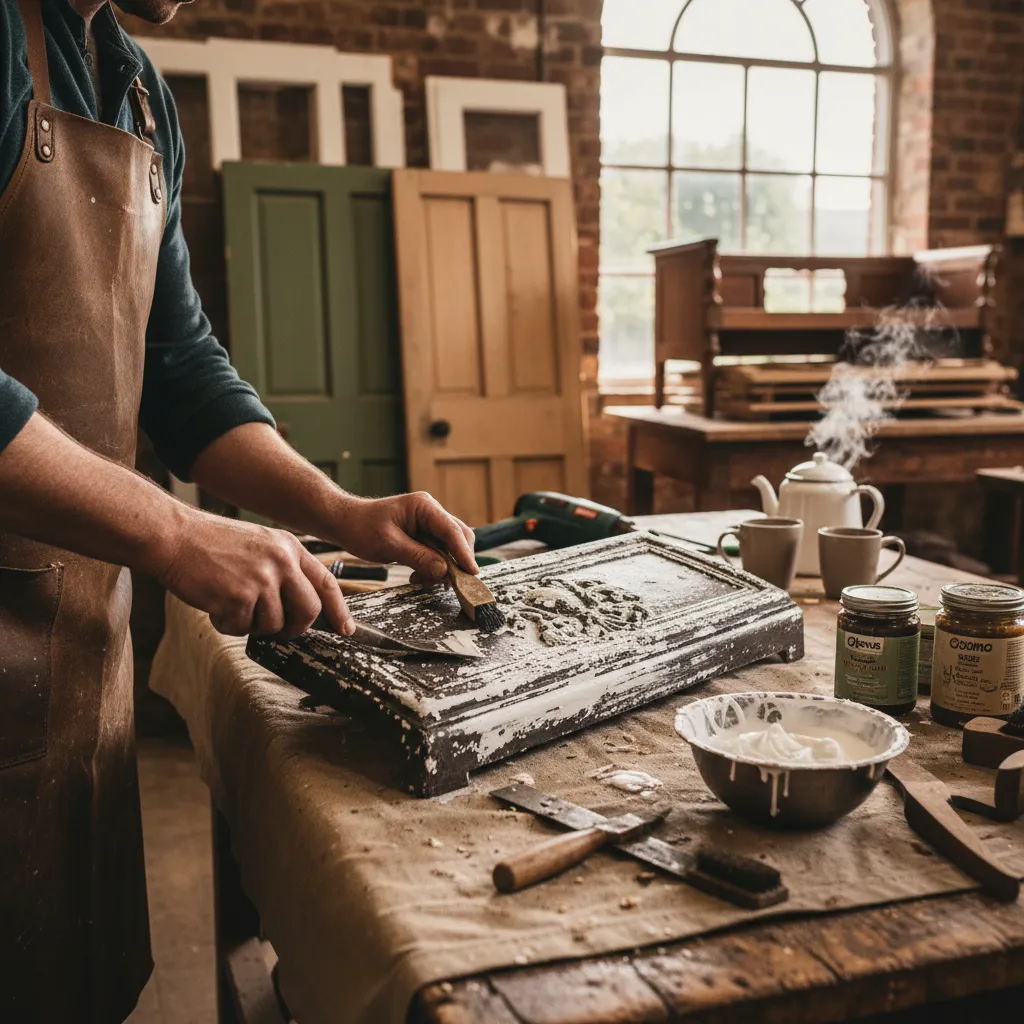
Best way to strip paint from a cast iron fireplace
Direct answer
The best way to strip paint from a cast iron fireplace is a thick chemical paste such as Peel Away 7 or Kling-Strip, left for 24–48 hours, then lifted with a plastic scraper and brass bristle brush, followed by a rust converter and primer before any new finish.
Skip heat guns and hot washes, as both scorch the casting and start flash rust within minutes.
How do you strip paint off cast iron?
You strip paint off cast iron by laying a thick paste or gel over the surface, leaving it to soften the layers for several hours, then lifting the sludge with a plastic scraper and a brass bristle brush rather than a wire wheel. Cast iron holds fine detail in the roses, arches and beading, so the slower chemical route preserves what a drill attachment chews through in minutes.
What is the best product to remove paint from cast iron?
Peel Away 7 is the best product for thick, multi-layer paint on a cast iron fireplace because it is alkaline, lifts up to 30 coats at once, and does not vapour up the room like methylene chloride strippers. Kling-Strip is the practical alternative when the fireplace is a single shade of gloss and you want a water-soluble paste that rinses off cleanly. Specialist suppliers such as Double Dipper Paint Strippers, Liberon and Nitromors all stock paste strippers formulated for cast iron and ornamental ironwork, and an experienced antique fireplace restorer will usually specify one of these by name.
Can you use WD-40 to strip paint?
No. WD-40 is not a paint stripper and will not lift cured gloss or oil-based paint from a cast iron fireplace. It can soften fresh drips or loosen a flaky edge so a scraper bites, but anything that has hardened on properly needs a real chemical stripper behind it.
What to skip on cast iron
Skip the blowtorch, skip the hot wash, and skip leaving bare metal wet overnight. A torch scorches the casting and drives soot into the pores; water flashes the surface with rust within hours. Neutralise the stripper with the manufacturer's recommended solvent, dry the piece immediately, and treat any bloom of orange with a rust converter before priming.
For a Victorian or Edwardian register grate that needs to come back to black lead, send a few photos and the rough dimensions to the Double Dipper Paint Strippers workshop via the contact page or ring 01484 666 333 for a same-day quote.
Stripping methods compared for cast iron
Chemical paint strippers: Peel Away and Kling-Strip on fireplaces
Peel Away 7 is the go-to paste for cast iron fireplaces layered with decades of gloss. Applied 3–6 mm thick, covered with its supplied laminate paper, and left 24 to 48 hours, it lifts up to 30 coats in a single pull, peeling off with the softened paint still clinging to it. Kling-Strip is a water-soluble alternative brushed on like putty, useful on curved arches and decorative panels where a runny paste would drip onto the hearth.
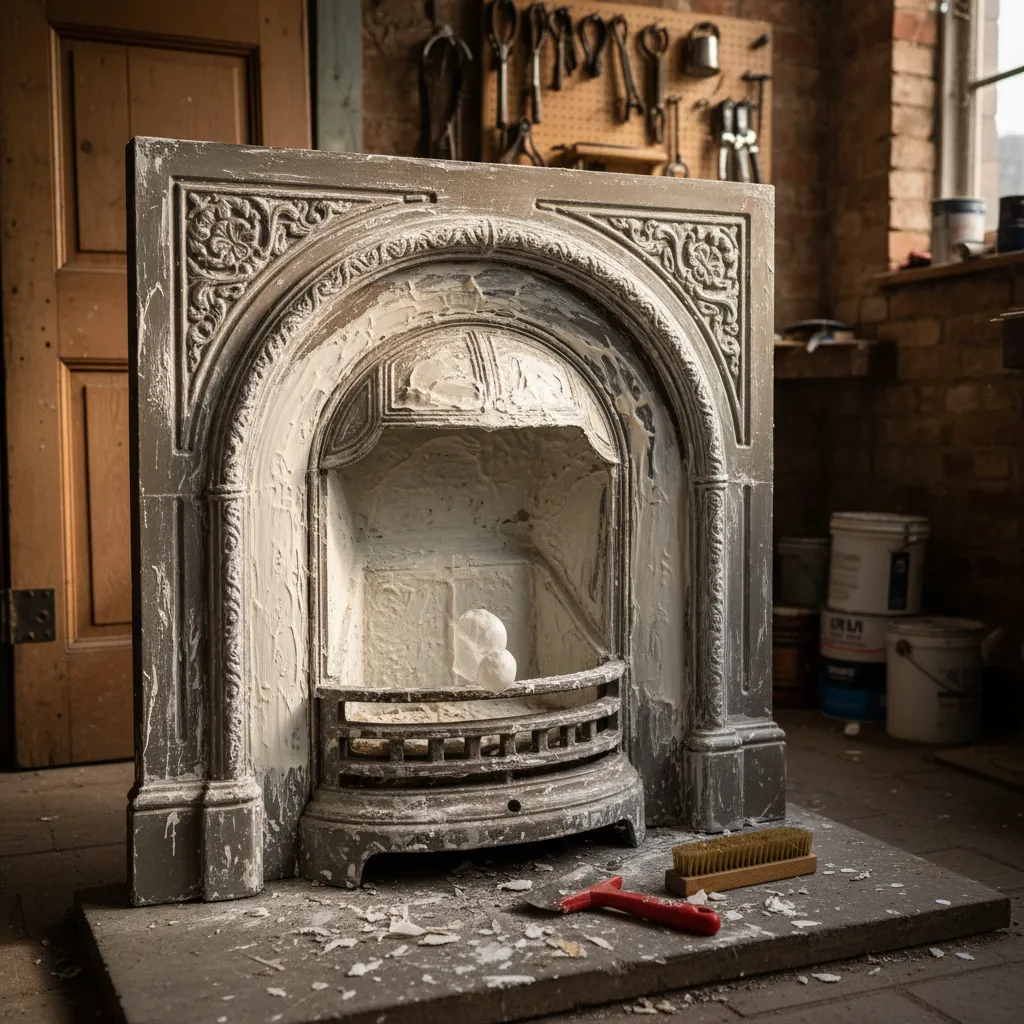
Both strippers leave an alkaline residue that must be neutralised with white spirit, never water, since water drives flash rust into fresh cast iron within hours. Older Victorian fireplaces almost certainly hold lead-based layers, so work with nitrile gloves, eye protection, and an open window. Branded pastes from Liberon and Nitromors sit in the same family of products and are widely stocked alongside Peel Away 7 and Kling-Strip.
Shot blasting and bath-dipping for ornate cast iron
Shot blasting strips a fireplace down to bare metal in under an hour, but standard abrasive grit rounds off the crisp edges on cast iron rosettes and beading. Walnut shell or soda media at 40 to 60 PSI keeps the detail sharp, and only a workshop with a sealed cabinet and proper extraction should attempt it.
At the Crossley Mills workshop in Honley, smaller ironwork such as fire baskets, radiators and bedsteads go through a heated caustic dip tank, then receive a hand-finish in the deeper relief with a brass-bristle toothbrush before drying and oiling within the hour. The Double Dipper Paint Strippers dip tank is built around the same principle, lifting decades of gloss out of every recess without roundel-ing the casting. If the fireplace weighs more than around 60 kg or sits on a chimney breast you would rather not disturb, removing it for off-site work usually beats any in-situ method.
Common questions about stripping cast iron fireplaces
How do you strip paint off cast iron without damaging the detail?
The safest method is a paste stripper like Peel Away 7 brushed thick over the surface, left for 24 to 48 hours, then lifted off with the softened paint still attached. A brass wire brush and a wooden scraper clean the leftover film out of the casting's recesses. Sandblasting works faster, but walnut shell or soda media, not sharp grit, keeps the roses and beading sharp.
What is the best product to remove paint from cast iron, and can WD-40 help?
Peel Away 7 and Kling Strip are the two products we recommend most, because they cling to vertical surfaces and draw out many layers in a single pass. WD-40 is not a paint stripper, though it will soften fresh, uncured paint and help shift small flecks after the main strip. Use it for tidying, not for the heavy lifting.
How do I remove gloss paint from a cast iron fireplace?
Gloss resists water-based strippers, so choose a methylene chloride or NMP paste and score the gloss first with coarse sandpaper so the active ingredient can penetrate. Two applications usually clear thirty-year-old gloss from a bedroom fireplace. Neutralise with white spirit, not water, then dry immediately and prime within four hours.
Is lead paint a concern on older fireplaces?
Any cast iron fireplace painted before the mid-1990s almost certainly carries lead. Wear an FFP3 mask, work outdoors or with open windows, and bag waste separately. Dry-sanding lead paint in a domestic setting is restricted under the Control of Lead at Work Regulations for good reason.
Hand the job to a Yorkshire workshop, or finish it yourself
When to call Double Dipper Paint Strippers for a free quote
Pick up the phone when the fireplace is built into a chimney breast you would rather not dismantle, when the iron carries more than five layers of old gloss, or when the casting has decorative scrolls and rosettes a wire brush would round off. Every job at the Double Dipper Paint Strippers workshop in Crossley Mills, Honley, is handled personally, with ten years of specialist experience stripping and refinishing cast iron fireplaces from across West Yorkshire and Greater Manchester.
A free quote covers collection and redelivery across the region, so there is no need to lift a 70 kg insert down a hallway yourself. Call 01484 666 333 or email info@doubledipperpaintstrippers.co.uk to start the conversation.
After the strip: priming, black leading and rust protection
Bare cast iron flashes rust within hours, so protection starts the same day the last flake comes off. Each piece is dried in the warm workshop, then any pits receive a rust converter before moving to the finish.
For a traditional Victorian look, black leading (also called grate polish) is rubbed in as a paste, drying to a soft graphite sheen that can be topped up each winter. For colour, an oil-based metal primer goes on first, followed by Farrow & Ball or Little Greene, both stocked in the on-site retail shop. Either route leaves a cast iron fireplace ready to sit clean through another decade of fires.
Sources
- Stripping Paint Off a Cast Iron Hearth Cover – Brownstoner Forum Archive
- Taking paint off cast iron fireplace surrounds
- Cleaning paint away from a Victorian-era iron fireplace : r/fixit on Reddit
- Stripping paintwork from a cast iron fireplace
- Bringing an iron fireplace back to life – strip it, or paint it? – Mr Victorian
- Getting paint off metalwork – This Old House guide
- Stripping paint from a cast iron fireplace : r/DIYUK
- Watch Peel Away 7 lift paint from a cast iron fireplace – YouTube clip
