Journal
Best Paint Stripper for Wood (UK): Every Type Compared
The best paint stripper for wood depends on the job: a solvent gel for small detailed pieces, a caustic paste for thick old gloss, a heat gun or infrared heater for flat solid timber, and a dip tank for whole doors and furniture. At Double Dipper in Honley we strip wood every day, and here's how each option really compares.
- Small, fiddly jobs: a solvent-based gel stripper gets into mouldings and carving.
- Thick layers of old gloss: a caustic paste or heat does the heavy lifting, but each has real risks.
- Laser stripping is the new name everyone's searching for, but it's slow and costly on wood.
- Whole doors, staircases and furniture: professional dip stripping is usually quicker, cleaner and cheaper than a weekend of scraping.
What are the main types of paint stripper for wood?
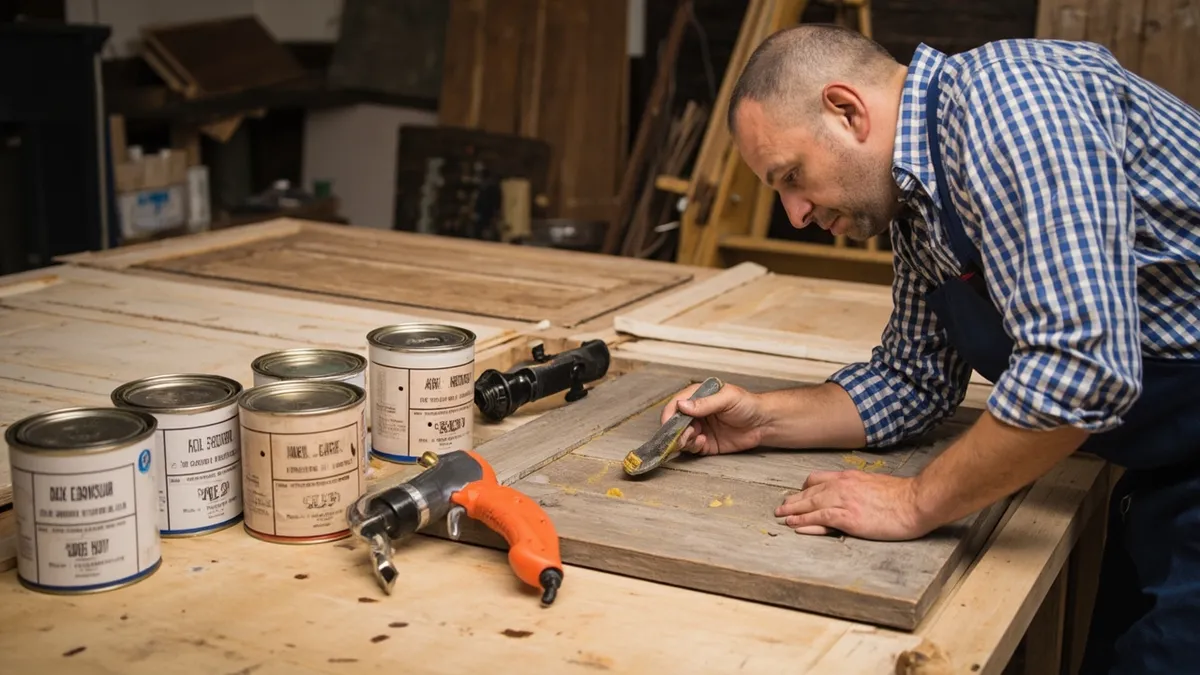
There are seven ways to get paint off wood, and they fall into three families: chemicals, heat and professional stripping. Brand names come and go, but almost every product on the shelf is one of these types, so it's worth knowing what's in the tin rather than what's on the label.
| Method | Best for | Main drawback |
|---|---|---|
| Solvent-based liquid or gel | Mouldings, carving, small furniture | Strong fumes, several coats on thick paint |
| Low-odour "eco" gel | Indoor jobs where fumes are a problem | Very slow; often left for hours or overnight |
| Caustic (alkaline) paste | Many layers of old oil-based gloss | Burns skin, darkens oak, must be neutralised |
| Heat gun | Flat, solid timber with thick paint | Scorching, cracked glass, fire risk |
| Infrared heater | Large flat areas such as panels and cladding | Slow to set up, still heats old paint |
| Laser | Metal and stone; specialist work | Expensive, slow on thick layers, can char wood |
| Professional dip or hand stripping | Doors, furniture, staircases, fireplaces | The piece has to come out and go to a workshop |
Is a solvent-based stripper the best for detailed wood?
Yes, for small pieces with carving or fine mouldings a solvent-based gel is usually the best DIY choice. You brush on a thick coat, wait for the paint to wrinkle and lift, then scrape and pick it out of the detail with a blunt tool and wire wool.
It works well on a picture frame, a small chair or a run of beading. It struggles when there are many coats, because each application only gets through a few layers. On a Victorian door with six or more coats of gloss you can be at it for days. The fumes are strong, so work outside or with windows wide open, and wear chemical-resistant gloves and eye protection.
Do eco and low-odour gel strippers actually work?
They work, but slowly. Low-odour gels are kinder to use indoors, and that's a real advantage in a lived-in house. The trade-off is time: many need leaving for several hours, some overnight under a cover, and thick paint often needs a second round.
If you're patient and the job is small, they're a sensible option. On a whole staircase or a set of doors, the waiting adds up to weeks of evenings. Whatever gel you use, the wood must be cleaned of residue afterwards or new finishes may not dry properly.
When does a caustic paste make sense?
A caustic paste makes sense on thick layers of old oil-based gloss, where other strippers barely touch the bottom coats. It's spread on thickly, often covered with a sheet to stop it drying out, and left to soak through many layers at once.
It has three big downsides. First, it's strongly alkaline, so it burns skin and eyes. Second, it can darken some timbers badly, oak in particular, and that's hard to reverse. Third, the wood must be properly neutralised and washed afterwards, or wax, oil and paint can fail on top of it. We wrote more about this in our guide to caustic soda paint stripping at home.
Is a heat gun better than chemical paint stripper?
A heat gun is quicker than chemicals on flat, solid wood with thick paint, but it's the riskiest method in inexperienced hands. Hot air softens the paint so you can scrape it off in ribbons, with no chemical residue to clean up.
The problems are scorch marks on pine, cracked glass in glazed and stained-glass doors, paint left in the mouldings, and smouldering dust behind architraves. Infrared strippers heat more gently and are popular for large flat areas, but they're slower and the same rule applies to both: old paint may contain lead. The HSE's frequently asked questions on lead warn that stripping old paint with blow lamps or gas torches and dry sanding it are among the riskiest jobs in pre-1980s properties. Our full comparison is here: heat gun vs chemical paint stripper.
Is laser paint stripping worth it on wood?
For most wooden doors and furniture, no, not yet. Laser stripping uses a pulsed beam to vaporise the coating, and it's genuinely impressive on metal, stone and specialist conservation work. That's why searches for it have shot up this year.
On wood the picture is less rosy. Timber is soft and burns, so the beam has to be set carefully to avoid charring the surface. It's slow on thick layers of gloss, the machines are expensive to buy or hire, and vaporising old paint still produces fumes and dust that need proper extraction, especially if lead is present. For a single carved panel a skilled operator can do lovely work. For a house full of four-panel doors, it's a costly way to do a job a dip tank does in one go.
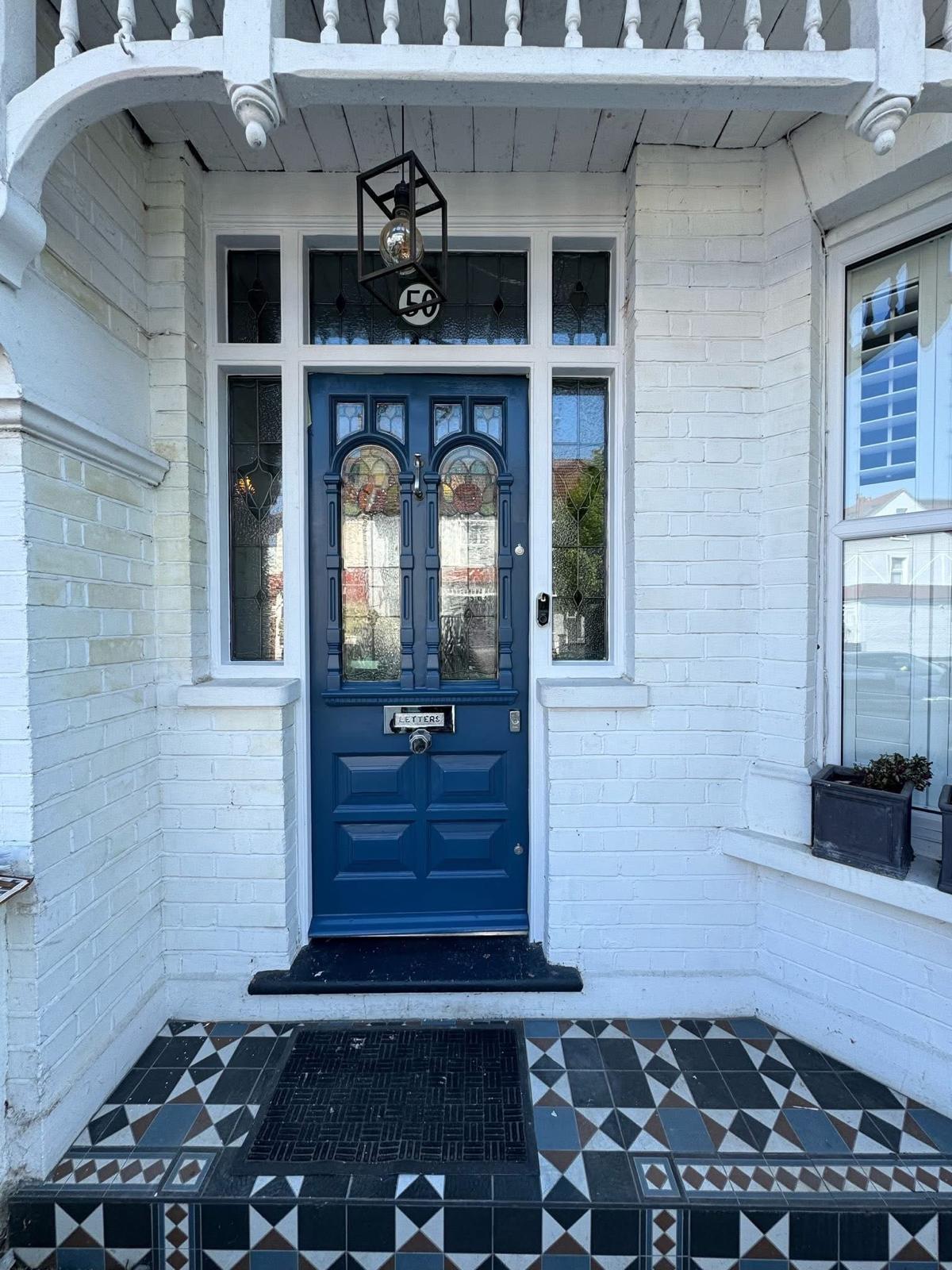
Got a door, a staircase or a piece of furniture that would take weeks to strip by hand? Send us a photo and we'll tell you the best method and a price. Call 01484 666 333 or use our contact page.
Why is professional dip stripping often the best option?
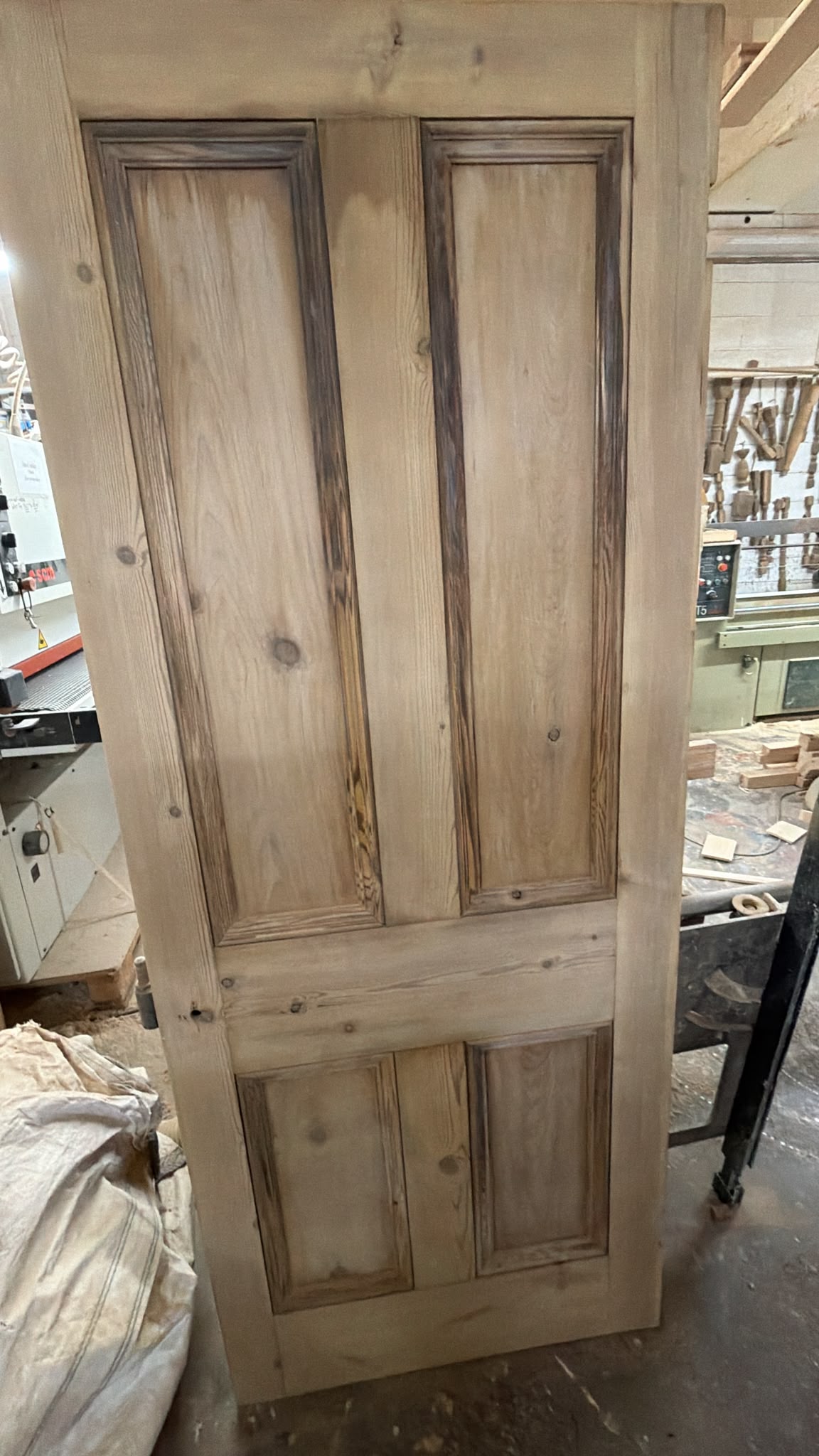
Because it strips every face, edge and moulding at once, and it's done for you. A sound door or piece of furniture goes into the bath, comes out bare, and is then neutralised and dried so it's ready to wax, oil or paint. No fumes in your house, no scorch marks and no paint left in the corners.
Not everything should be dipped. Veneered pieces, loose or glued joints and glass that can't come out are stripped by hand in the workshop instead. If you're unsure which suits your piece, read dip stripping vs hand stripping.
It's also cheaper than most people expect:
- Internal four-panel pine door: from £60 to strip, neutralise and dry.
- External or stained-oak door: £80–£95.
- A whole house of doors: about £55–£80 per door, usually ready in about a fortnight.
- Dining suite (six chairs and a table): £320–£480.
- Victorian or Edwardian staircase: £650–£1,200.
Once you add up the price of several tins of stripper, scrapers, wire wool, protective kit and your weekends, sending the piece out often costs about the same, with a far better finish. See our door stripping prices for the full list.
Which paint stripper should you choose?
Match the method to the piece, not the advert. As a rule of thumb from the workshop:
- A small carved or moulded item: solvent gel, outdoors, with gloves and goggles.
- Something you can't take out, indoors: a low-odour gel and plenty of patience.
- Flat exterior timber with thick paint, and no lead risk: a heat gun or infrared heater, used carefully.
- Doors, furniture, staircases and anything with lots of detail: professional door stripping or furniture stripping.
Whatever you use, finish the bare wood properly. Our guide to the best wax and oil finish for stripped pine doors covers the next step, and we sell Osmo, Fiddes, Farrow & Ball and Little Greene finishes in our wood finishes shop.
Frequently asked questions
What is the strongest paint stripper for wood?
Caustic pastes and fast solvent strippers are the strongest DIY options on thick paint, but the strongest products carry the most risk to you and to the wood. A dip tank in a workshop removes many layers in one go without you handling any of it.
Will paint stripper damage the wood?
It can. Caustic products can darken oak, residue left behind can stop new finishes drying, and heat can scorch pine. Neutralising, washing and drying the wood properly afterwards is what prevents most problems.
Can you strip uPVC or composite doors?
No. Paint stripping is for wood and metal only. We don't strip uPVC, composite or laminate.
How long does professional stripping take?
Most doors are ready in 7–10 working days. Larger pieces such as fireplaces, radiators and metalwork usually take 2–3 weeks.
Get a quote from Double Dipper
If you'd rather skip the fumes, the scraping and the scorched panels, let us do it. Double Dipper is a paint stripping workshop at Unit 3, Crossley Mills, Honley, Huddersfield, stripping wood and metal since 2016, and we're members of the Guild of Master Craftsmen. Every piece is neutralised and dried before it comes home, ready for your chosen finish.
- Free collection within 20 miles of Honley, covering Huddersfield, Holmfirth, Halifax, Wakefield, Leeds, Bradford and Barnsley.
- Further away? Drop off at the workshop, send smaller items by overnight courier, or ask us to quote a van collection.
- See finished work in our gallery.
Call 01484 666 333, email info@doubledipperpaintstrippers.co.uk or send a photo through our contact page. We're open Monday to Friday 9–5 and Saturday 10–2.
