Journal
Caustic Soda to Strip Paint? Why It's Riskier Than You Think
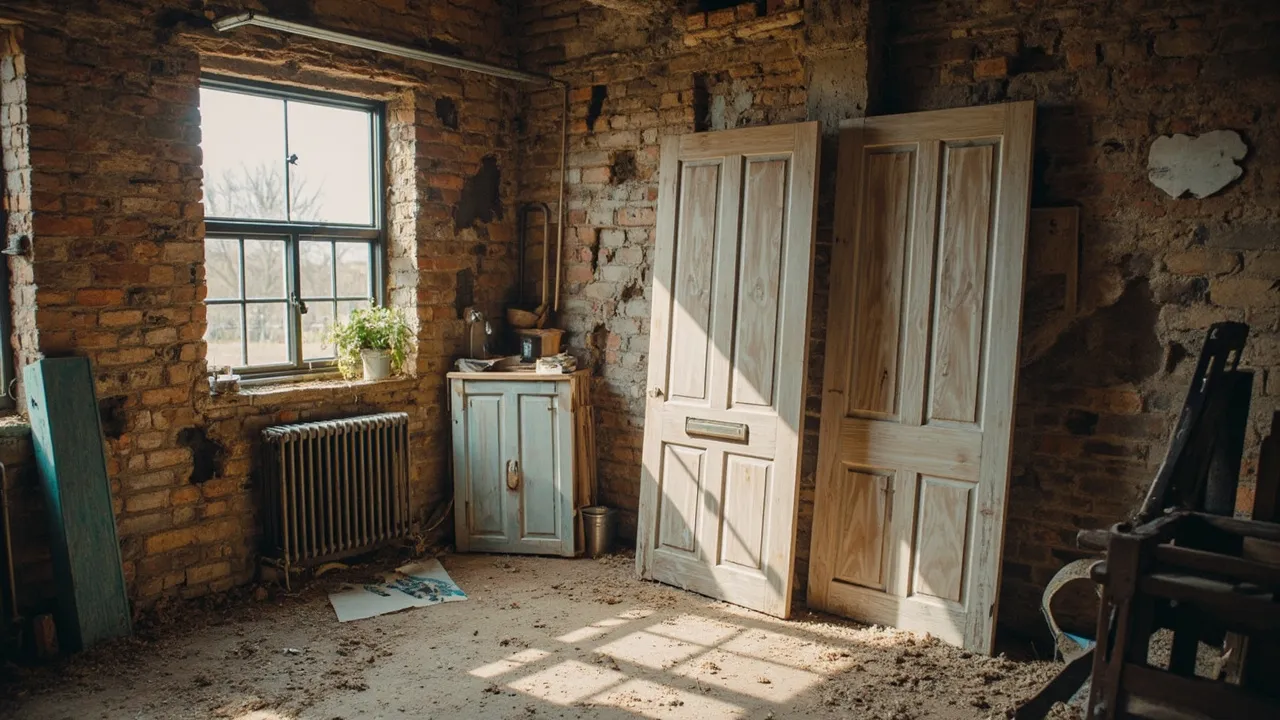
Using caustic soda to strip paint at home is riskier than most people expect. It's strongly corrosive to skin and eyes, can darken and roughen timber, loosens old glue joints, and leaves waste that's hard to dispose of safely. For doors and furniture, a controlled workshop like Double Dipper's in Honley is the safer route.
- Caustic soda (sodium hydroxide) is a strong alkali. It can cause serious burns to skin and eyes, and the damage isn't always felt straight away.
- It can darken hardwoods such as oak, raise the grain on pine and soften the old animal glue in joints.
- If it isn't fully neutralised afterwards, new wax, oil or paint can fail.
- At our workshop, every piece is stripped, neutralised and dried under controlled conditions, then hand-finished.
Why do people use caustic soda to strip paint?
Because it's cheap, it's easy to get hold of, and it does shift old paint. Caustic soda is the traditional ingredient in a lot of old-school stripping, and plenty of people remember a relative using it on a door in the back yard. On a thick build-up of old gloss it works, which is why it keeps coming up when people search for ways to strip a door or a chest of drawers.
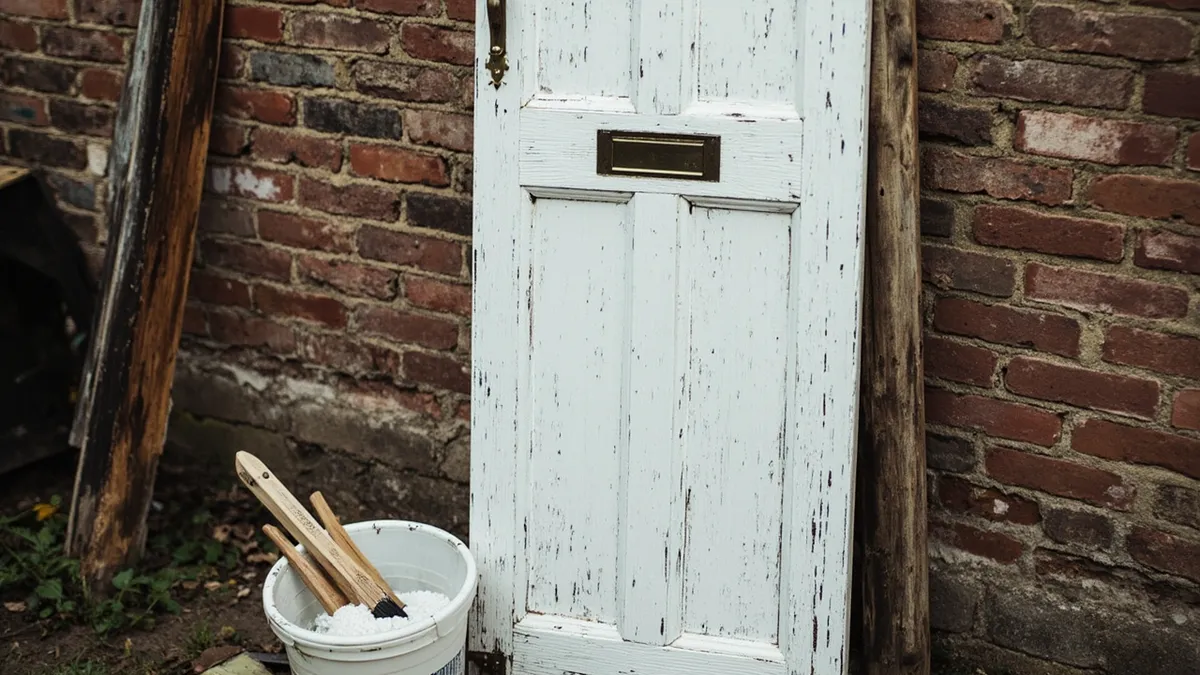
The trouble is that "it works" and "it's a good idea in your kitchen or garden" aren't the same thing. The things that make caustic soda effective on paint are the same things that make it harsh on skin, eyes, timber and drains. That's why we won't give a home recipe or method here. If you're weighing it up, this article explains what can go wrong, so you can decide with your eyes open.
What are the safety risks of caustic soda?
The main risk is chemical burns. Caustic soda is a strong alkali, and it attacks skin and eyes. Unlike an acid burn, an alkali burn can keep working into the skin after contact, and it doesn't always hurt immediately, so people sometimes don't realise how badly they've been splashed until later. Eyes are especially vulnerable: a single splash can do lasting harm.
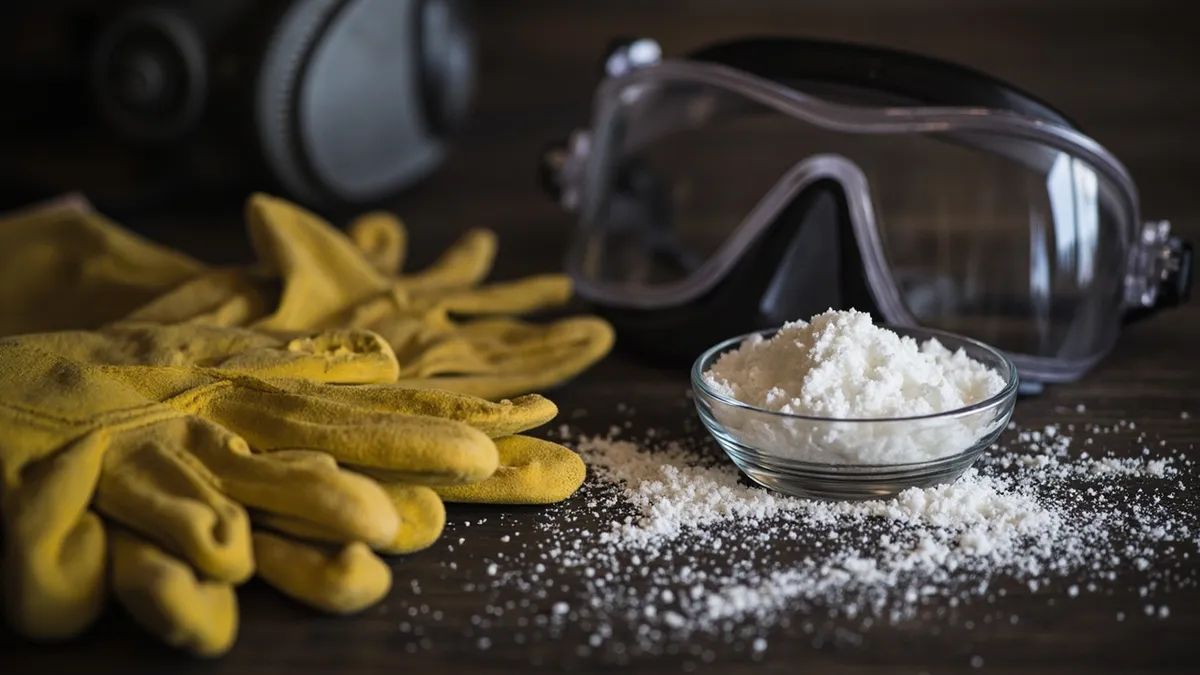
Other risks people don't expect:
- Heat. Caustic soda gives off heat when it's mixed with water, which can make it spit.
- Reactions with metal. It reacts with aluminium, and it can attack some other metals and fittings. Handles, hinges and buckets aren't always what they seem.
- Splashes on everything else. Patios, paths, lawns, plants, car paintwork and clothing can all be damaged by drips and runoff.
- Children and pets. A container or puddle left in a garden or garage is a real hazard to anyone who doesn't know what it is.
- Old paint underneath. Many older doors carry lead paint in their lower layers. Stripping it at home means handling lead-contaminated sludge and waste.
If you've been splashed and you're worried, speak to your GP or NHS 111.
What does caustic soda do to wood?
It can damage the very thing you're trying to save. Paint comes off, but the timber underneath takes a hit too, especially if the chemical sits on it for too long or isn't cleaned off properly.
- Darkening. Oak and other tannin-rich hardwoods can go dark or blotchy when they meet a strong alkali. Stained oak is particularly prone to it. It's one reason oak needs different care from pine.
- Furry, raised grain. Pine can come out with a rough, fibrous surface that needs a lot of work to get smooth again.
- Weakened joints. Period doors and furniture were often put together with animal glue. A strong alkali can soften it, and joints that were sound can open up.
- Veneer lifting. Veneered furniture is especially at risk. Once the glue under a veneer lets go, it's a repair job rather than a strip.
- Finishes that fail. Any alkali left in the timber can stop wax, oil or paint from taking properly, sometimes months later.
We pick the method to suit the piece for exactly these reasons. Sound doors go in the stripping bath; fragile, veneered or glued pieces are stripped by hand instead. Our guide to dip stripping vs hand stripping explains how we decide.
How long should you leave paint stripper on?
With any shop-bought stripper, follow the manufacturer's instructions on the label and no more. Every product is different, and the label is the only reliable answer. Leaving a stripper on longer than stated doesn't usually help: it can dry out, soak further into the wood and make cleaning up harder.
With homemade caustic soda there's no label to follow, and that's part of the problem. People guess, the paste sits too long, and the timber gets darkened or furred. It's also why we don't recommend it for a period door or a good piece of furniture.
Rather not risk it? Send a photo of your door or furniture on WhatsApp, or call Daniel on 01484 666 333. You'll get an honest view on whether it should be dipped or hand-stripped, plus a price and a date, usually within a day or two.
What about the mess and the waste?
This is the part people forget. Stripping at home leaves you with used chemical, wet paint sludge and rinse water, and none of it should go down a drain, onto a lawn or into a household bin without thought. If there's lead in the old paint, the sludge is contaminated too. Check with your local council before you get rid of any chemical or paint waste.
It's also slow, messy work. You're outdoors, in the weather, with a heavy door flat on trestles, trying to rinse paint out of mouldings and panel corners. Even after all that, you often end up with paint left in the detail and a door that still needs neutralising and drying before it can be finished.
Why is a workshop process safer?
Because the chemistry, the rinsing, the neutralising and the drying all happen in one controlled place, by people who do it every day. None of it happens in your home.
At Double Dipper, a piece comes into the workshop and gets checked first. Sound pine doors go in the stripping bath, which reaches mouldings, beading and panel corners in one go. Anything fragile is stripped by hand. Then every piece is neutralised and dried so it goes back as stable, bare timber, and detail is finished by hand. You don't handle the chemicals, you don't deal with the waste, and there's no sludge in your garden.
It's rarely as expensive as people think. An internal four-panel pine door costs from £60 to strip, neutralise and dry. External and stained-oak doors are £80–£95, and a batch of doors for a whole house is about £55–£80 per door. Most doors are ready in 7–10 working days. The full list is on our door stripping price guide.
Collection is free within 20 miles of Honley, which covers Huddersfield, Holmfirth, Halifax, Wakefield, Leeds, Bradford and Barnsley. Further afield, you can drop off at the workshop, courier smaller items overnight, or ask us to quote a van collection.
What can you send us instead?
We strip wood and metal only, and most of what people consider caustic soda for fits in the workshop:
- Doors: internal pine doors, front doors, glazed doors and cupboard doors, through our door stripping service.
- Furniture: chests, dressers, tables and chairs, through our furniture stripping service.
- Metal: cast-iron fireplaces, radiators and gates, taken back to bare metal with the rust treated.
We don't strip uPVC, composite or laminate. If you want a finish done too, we can wax, oil or paint in the workshop using products we sell, including Osmo, Fiddes, Farrow & Ball and Little Greene. Or take it home bare and finish it yourself; our guide to the best wax and oil finish for newly stripped pine doors is a good place to start.
Frequently asked questions
Is a workshop stripping bath the same as doing it at home?
No. What matters in a workshop is the control around the stripping: checking the piece first, choosing dip or hand stripping, then neutralising and drying properly. That's the part a bucket in the garden can't replicate.
Can caustic soda damage an oak door?
Yes. Oak can darken or go patchy when it meets a strong alkali, and stained oak is especially sensitive. That's one reason oak doors are priced at £80–£95 and handled with extra care.
What if I've already started with caustic soda?
Stop, keep everyone away from it, and get in touch. A half-stripped door can usually still be finished in the workshop. If you've had any contact with your skin or eyes and you're concerned, speak to your GP or NHS 111.
Get a quote
Double Dipper is a Guild of Master Craftsmen member, trading from Unit 3, Crossley Mills, Honley, HD9 6PL since 2016.
- Call 01484 666 333 (Monday to Friday 9am–5pm, Saturday 10am–2pm) or email info@doubledipperpaintstrippers.co.uk.
- Send photos through our contact page.
- See finished doors and furniture in our gallery.
