Journal
Victorian Fireplace Tiles: Keeping Them When You Restore
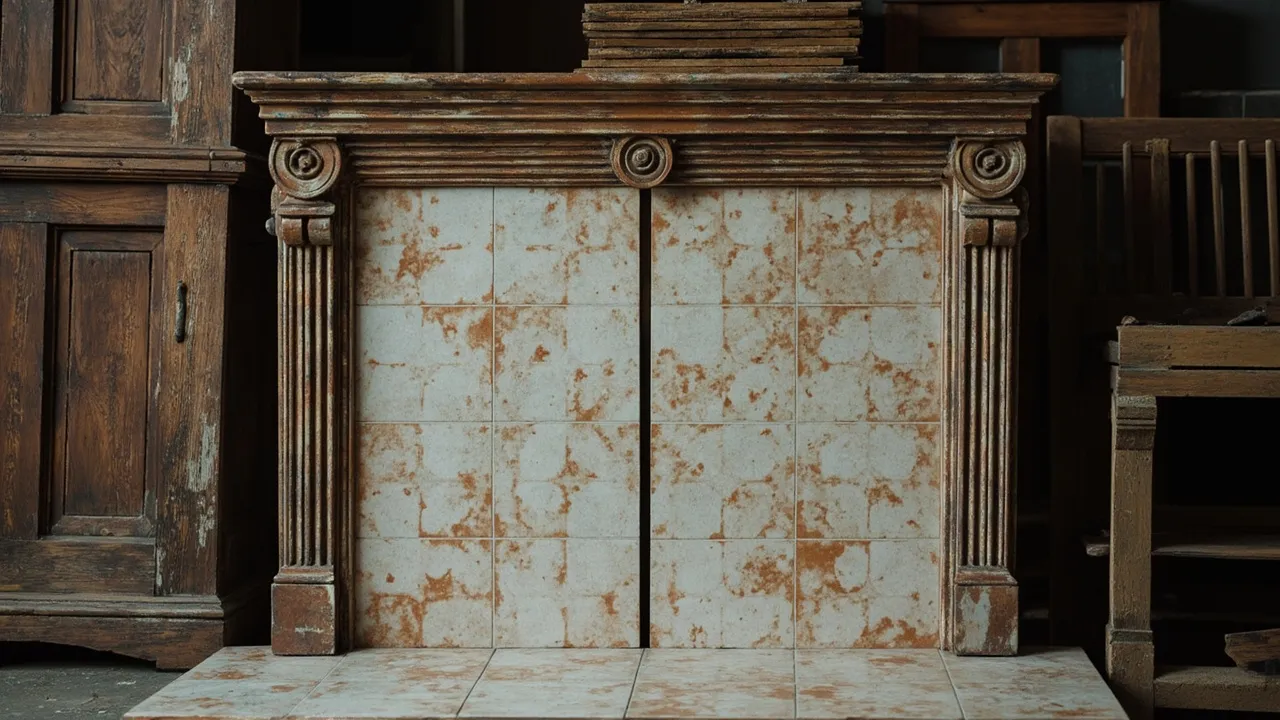
Original Victorian fireplace tiles can almost always be kept when you restore a fireplace. The tiles are taken out or carefully protected before the cast-iron insert is stripped, then cleaned and refitted once the iron is finished. At Double Dipper in Honley we plan around the tiles before any stripping starts, so they come back in one piece.
- Keep the originals where you can. Period tiles add character and are hard to match exactly.
- Tiles never go in the stripping bath. They're removed or protected first.
- Gentle cleaning brings most tiles back; harsh abrasives and acids do more harm than good.
- Autumn is the time to act, so the fireplace is back in before the coldest weeks.
What are Victorian fireplace tiles?
They're the decorative glazed panels set either side of the grate in a tiled cast-iron insert, often called tiled cheeks or slips. Many have a raised, moulded pattern under a coloured glaze, others are flat with a printed or hand-painted design, and you'll see flowers, birds, leaves and geometric repeats.
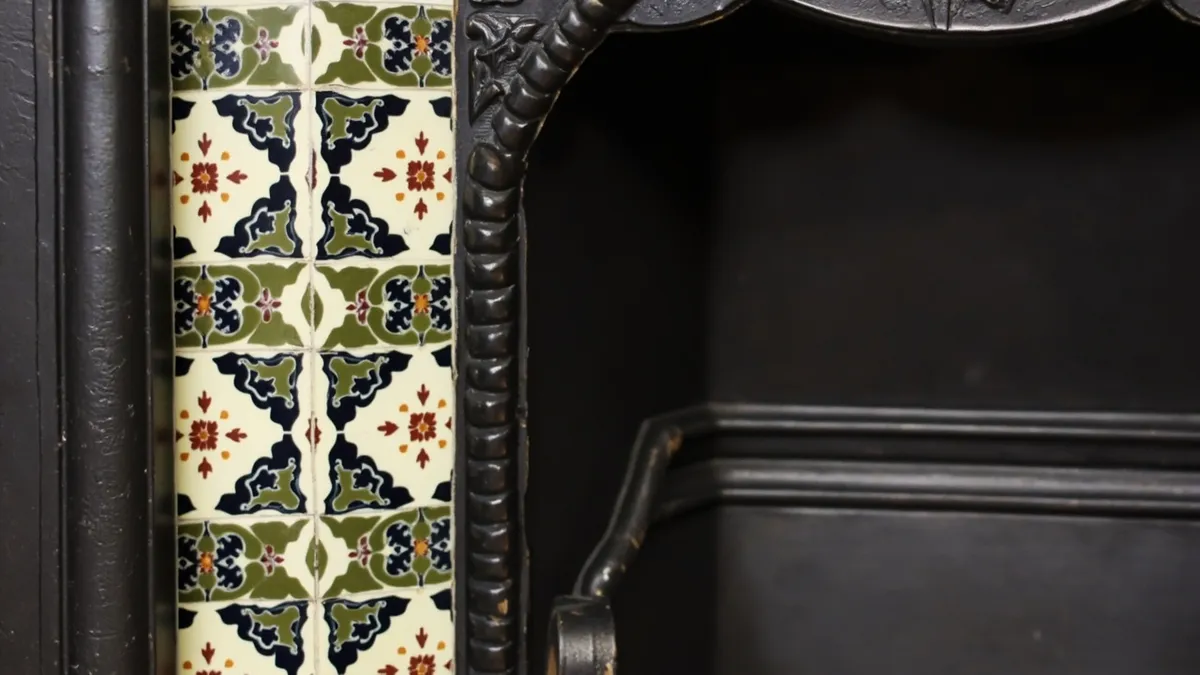
Tiled inserts became very popular in the later Victorian period and carried on into Edwardian houses, where the Art Nouveau styles with long flowing stems are common. Earlier Victorian fireplaces were more often plain arched cast iron with no tiles at all. Some houses also have a tiled hearth in front of the fire, which is usually laid into the floor and stays put when the insert comes out.
Can you keep original tiles when the fireplace is stripped?
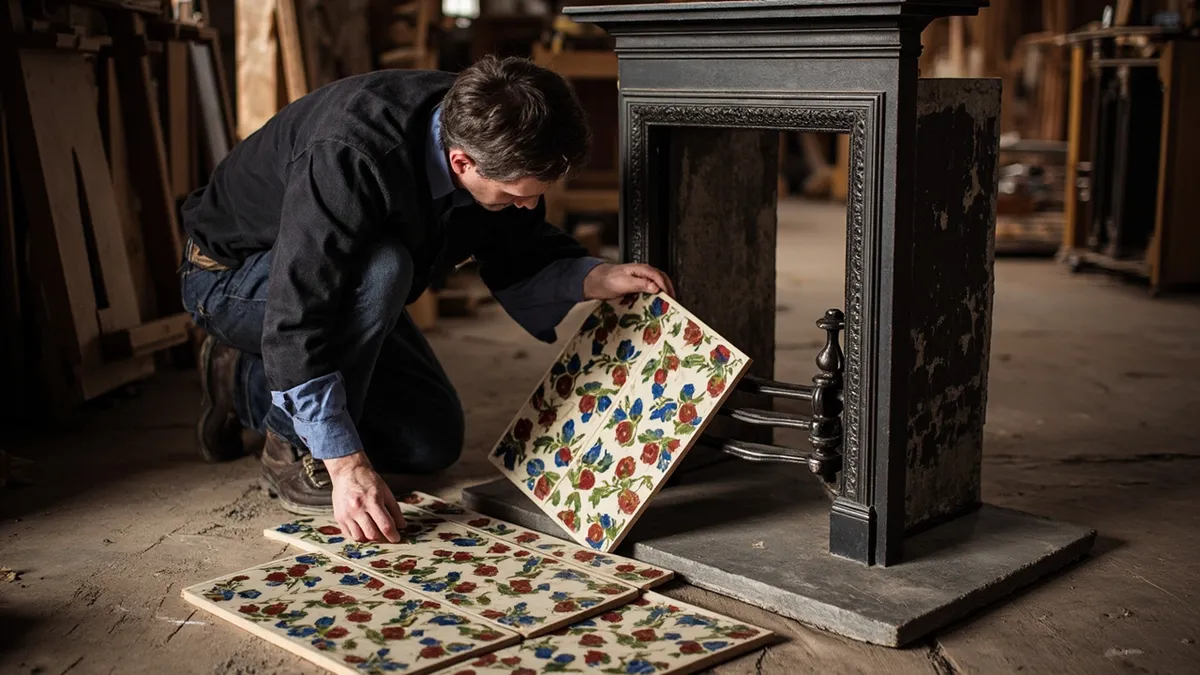
Yes, and in most cases you should. The cast-iron frame holds the tiles in place, usually in slots or behind lugs at the back, sometimes bedded in old lime or plaster. Before the iron is stripped, the tiles are either taken out of the frame or carefully protected, depending on how firmly they're fixed and what condition they're in.
That's why it's worth telling us about the tiles before a fireplace comes in. Send us a photo of the whole insert and a close-up of the tiles, and tell us whether any are loose, cracked or already missing. Then we can agree the plan up front rather than finding surprises on the bench.
If you're taking the insert out yourself, keep any loose tiles together, wrap each one separately and note which side it came from. Patterned panels often make up a picture across several tiles, and getting the order wrong is easy once they're off.
Why can't tiles go through the stripping process?
Because the process is made for wood and metal, not glazed ceramic. A paint stripping bath is strong enough to shift decades of paint and black grate polish, and that's exactly why tiles shouldn't sit in it. Old glazes can be crazed with fine cracks, and anything that soaks into those cracks or the bedding behind them can stain or loosen the tile.
The iron frame, on the other hand, comes out of stripping as bare metal. Paint and old enamel are removed, any rust is treated before it leaves the workshop, and then it's finished. You can choose bare metal, clear lacquer, waxed black, high-temperature enamel or oil gloss. A cast-iron insert typically costs from around £90 to strip and refinish. Our guide to the best way to strip paint from a cast-iron fireplace explains the metalwork side in more detail.
How do you clean old fireplace tiles?
Start gently and only go stronger if you have to. Most dirt on fireplace tiles is soot, smoke film and old polish, and warm water with a little mild washing-up liquid and a soft cloth shifts a surprising amount of it.
- Test any cleaner on a hidden corner first.
- Use a soft brush or an old toothbrush for raised patterns, not a scourer.
- Lift paint splashes slowly with a plastic scraper or your fingernail, never a metal blade across the glaze.
- Avoid acid-based cleaners and abrasive powders. They can dull the glaze and attack the grout or bedding.
- Dry the tiles properly and buff with a soft cloth.
Accept a bit of honest wear. Fine crazing and slightly softened colours are part of the age, and trying to make a 120-year-old tile look new usually ends with a damaged one.
When should you replace fireplace tiles?
Replace tiles only when they're broken beyond use, badly missing, or were swapped for something unsuitable years ago. A hairline crack or a small chip at the edge is rarely a reason to throw an original away, as most of it sits behind the frame once refitted.
If one tile in a set is beyond saving, look for a reproduction that's the same size and thickness so it sits correctly in the frame. Measure the slot in the cast iron rather than the old tile, as edges can be worn. Keep the broken original anyway: it's the best guide when you're matching colour and pattern.
Where a fireplace had its tiles removed long ago, a full new set is a perfectly good choice. Just bear in mind that fitting, tiles and any chimney work are separate jobs best priced by your fitter. We strip and refinish the cast iron.
Thinking about restoring a tiled fireplace this winter? Send us a photo of the insert and the tiles and we'll tell you how we'd handle it and give you a price. Call 01484 666 333 or use our contact page.
Why restore the fireplace before winter?
Because a fireplace that's out of action in December is no use to anyone. Larger pieces such as fireplaces usually take 2–3 weeks in the workshop, and your fitter will need time to refit the insert and tiles afterwards. Starting in autumn means it's back and working when you actually want to light it.
It's also a good moment to look at the whole chimney breast. If the insert sits in a painted timber surround, that can be stripped too, and a bare iron insert with clean original tiles and a waxed surround looks right in a period room. For the bigger picture, read how to restore a Victorian cast-iron fireplace, and if you're planning to paint the iron, painting a cast-iron fireplace covers the finishes.
One safety point: old paint on fireplaces and surrounds may contain lead. The HSE's frequently asked questions on lead warn that burning off old paint with blow lamps or gas torches and dry sanding it are among the riskiest jobs in pre-1980s properties, so don't attack a painted insert with a heat gun or sander indoors.
Frequently asked questions
Do you strip tiled fireplace inserts?
Yes. We strip the cast-iron frame to bare metal, treat any rust and refinish it. The tiles are removed or protected first, so tell us about them when you send your photo.
Can I paint over Victorian fireplace tiles?
You can, but it hides the very thing that makes them special, and the paint rarely wears well near the heat. Cleaning the originals is almost always the better choice.
Can you collect a fireplace insert?
Yes, collection is free within 20 miles of Honley. Inserts are heavy, so it needs to be out of the wall and ready to lift before we arrive.
Get a quote from Double Dipper
Double Dipper is a paint stripping workshop at Unit 3, Crossley Mills, Honley, Huddersfield, stripping wood and metal since 2016, and we're members of the Guild of Master Craftsmen. Our cast-iron fireplace stripping service takes inserts back to bare metal, treats rust and finishes them the way you want.
- Free collection within 20 miles of Honley, covering Huddersfield, Holmfirth, Halifax, Wakefield, Leeds, Bradford and Barnsley.
- Further away? Drop off at the workshop, send smaller items by overnight courier, or ask us to quote a van collection.
- See finished work in our gallery.
Call 01484 666 333, email info@doubledipperpaintstrippers.co.uk or send a photo through our contact page. We're open Monday to Friday 9–5 and Saturday 10–2.
