Journal
Painting Old Pine Furniture: Strip, Paint or Wax?
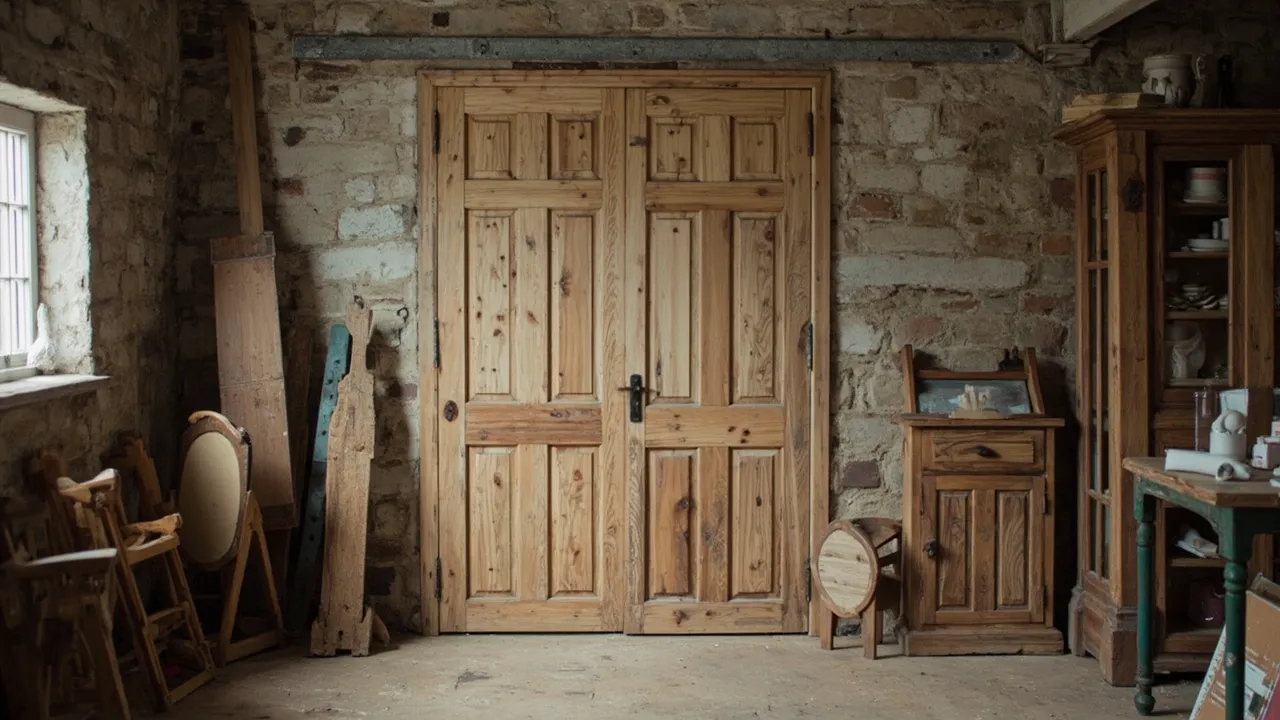
You can paint old pine furniture, but only once the surface is sound. If the piece is bare or waxed, clean and key it; if it's already under flaking or thick paint, strip it first. At Double Dipper we strip painted pine furniture back to bare wood so you can choose: paint it fresh, or wax it and keep the grain.
- Old pine takes paint well once wax, grease and loose paint are gone.
- Painting over cracked or layered paint just carries the faults into the new coat.
- Stripping gives you the choice of paint, oil or wax on the same piece.
- Sound pieces can be dipped; fragile, veneered or glued pieces are hand stripped.
Should you paint, strip or wax old pine furniture?
It depends on what's on the piece now and what you want it to look like. Old pine, the kind used in chests, washstands, dressers, tables and blanket boxes for generations, has a warm colour and tight grain that many people want to see again. Other people want a calm painted finish that suits a modern kitchen or bedroom. Both are fine choices. The mistake is choosing a finish without looking at what it has to sit on.
A simple way to decide:
- Bare or waxed pine in good condition: you can paint it after careful cleaning and preparation, or simply re-wax it.
- One or two sound coats of paint: you can usually clean, sand lightly and paint over it.
- Several layers, flaking, crazing or chipped edges: strip it. New paint won't fix what's underneath.
- You want the wood to show: strip it, whatever's on it now.
Why does paint go wrong on old pine?
Most failures come from the surface underneath, not the new paint. Old pine furniture has often been waxed, polished and handled for decades, so it carries a film of wax and grease that paint can't grip. Knots can bleed resin through light colours. And pieces that were painted before have usually been painted more than once, with each layer softening detail and adding another weak point.
When the bottom layer lets go, every coat above it goes with it. That's why a freshly painted chest of drawers can start chipping on the drawer edges within months. Drawers that bind, doors that won't shut and mouldings that look blunt are all signs of paint build-up rather than tired timber.
How do you get old paint off pine furniture?
You either strip it at home by hand or send it out to be stripped. At home, that usually means chemical stripper or heat, then scraping, wire wool and a lot of work in the corners, mouldings and turned legs. It can be done on a small, simple piece, but it's slow, messy and easy to scorch or gouge soft pine. We compare the home options in stripping paint from furniture: DIY or professional.
In the workshop we use two methods:
- Dip stripping in the bath for sound, solid pieces. The paint lifts from every face, corner and moulding at once.
- Hand stripping for fragile, veneered or glued pieces, and for anything with glass that can't come out.
Every piece is then neutralised and dried, and detail is hand-finished. If you're not sure which suits your piece, our guide to dip stripping vs hand stripping explains the difference.
Is the old paint on pine furniture a lead risk?
It can be. Older paint may contain lead, and pine furniture that's been in a family or a house for a long time can carry layers from many decades. Dry sanding and burning off old paint are the jobs that create the most risk, because they make dust and fumes. The HSE's lead FAQs cover why removing old paint needs care. If you're unsure, don't sand it; have it stripped wet instead. Our article on how to remove lead paint safely goes into more detail.
Got a painted chest, table or dresser you'd like back to bare pine? Call 01484 666 333 or send a photo through our contact page and we'll tell you whether it should be dipped or hand stripped.
How do you prepare old pine furniture for painting?
Good preparation matters more than the paint you pick. Whether the piece is freshly stripped or already bare, work through these steps:
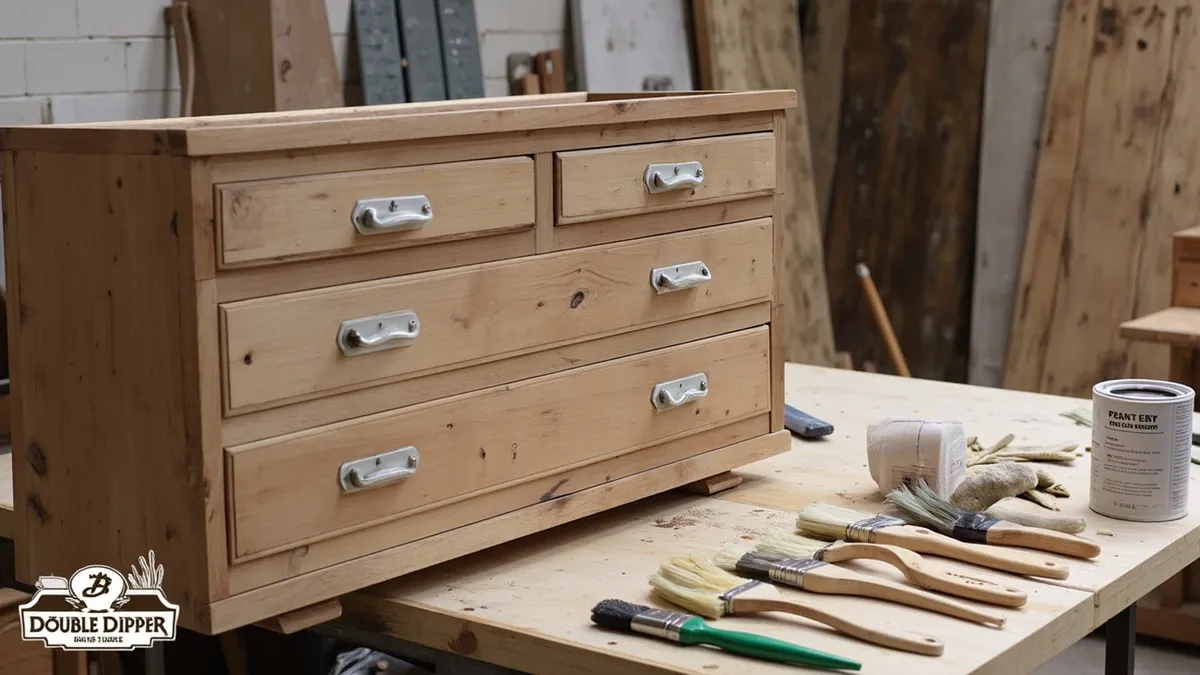
- Remove handles, knobs and hinges. Paint over hardware always shows.
- Clean off wax and grease. Waxed pine must be properly de-waxed, or paint will peel.
- Make good. Fill holes, glue loose joints and ease drawers before you paint, not after.
- Sand lightly to key the surface. A light key is all you need on stripped pine. Don't dry sand old paint you suspect contains lead.
- Seal the knots. Resin in pine knots can bleed through pale colours.
- Prime, then apply thin coats. Two thin top coats wear better than one thick one, and they keep the mouldings crisp.
Freshly stripped pine from our workshop has already been neutralised and dried, so once you've given it a light key it's ready for primer.
What finishes work on old pine?
Paint, oil and wax all work on pine; they just give very different results. Paint gives a flat, even colour and hides repairs. Oil soaks in, deepens the colour and is easy to refresh on a table top that gets heavy use. Wax gives the soft sheen people associate with old pine and is simple to touch up.
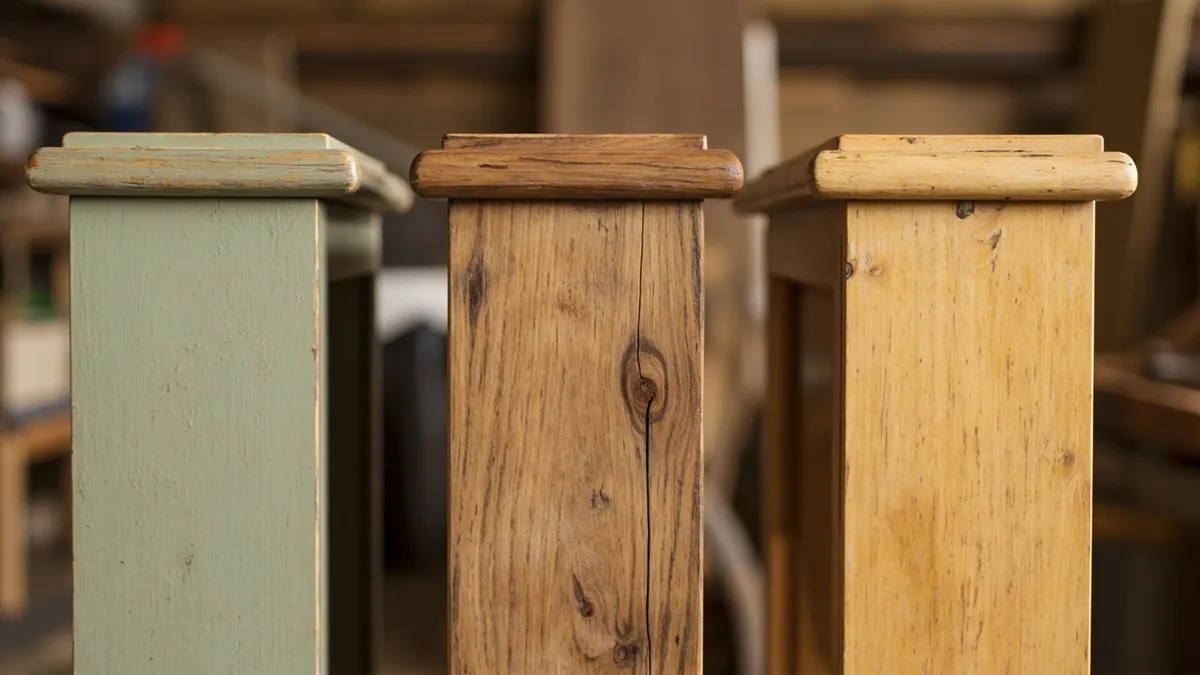
| Finish | Look | Best for |
|---|---|---|
| Paint | Flat, even colour; grain hidden | Pieces with repairs or mixed timbers; a modern room |
| Oil | Warm, natural, low sheen | Table tops and surfaces that get daily use |
| Wax | Soft sheen, traditional old-pine look | Chests, dressers, washstands and bedroom furniture |
We sell Farrow & Ball and Little Greene paints in our paint shop, and Osmo and Fiddes oils and waxes in our wood finishes shop. Finishing is also available in the workshop with the same products. For more on choosing between oil and wax, see our guide to the best wax and oil finish for stripped pine; the advice for doors applies to furniture too.
Why send painted pine furniture to Double Dipper?
Because a stripped piece gives you a clean start, whichever finish you choose. Our furniture stripping service handles tables, chairs, chests, dressers and more. Sound pieces go in the bath; fragile, veneered or glued pieces are stripped by hand. Everything is neutralised and dried, and the detail is finished by hand.
- Dining suite (six chairs and a table): £320–£480.
- Victorian or Edwardian staircase: £650–£1,200.
- Internal four-panel pine door: from £60, if you're doing the doors at the same time.
For other pieces we quote from a photo. We strip wood and metal only, so we can't take laminate furniture or anything with a plastic-faced finish.
Frequently asked questions
Can you paint pine furniture without sanding?
Only if the surface is clean, sound and free of wax. Most old pine needs at least a light key and a thorough de-wax, or the paint won't hold.
Can painted pine furniture go back to bare wood?
Usually, yes. Solid pine strips well, and once the paint is off the wood can be waxed or oiled. Veneered or glued pieces are stripped by hand to protect them.
Will stripped pine look orange?
Old pine usually has a deeper, mellow colour after stripping. The finish you choose then changes the tone, so test oil or wax on a hidden area first.
Get a quote from Double Dipper
Whether you want to paint your old pine or see the grain again, the first step is getting back to a sound surface. Double Dipper is a paint stripping workshop at Unit 3, Crossley Mills, Honley, Huddersfield, stripping wood and metal since 2016, and we're members of the Guild of Master Craftsmen. Every piece is neutralised and dried before it comes home.
- Free collection within 20 miles of Honley, covering Huddersfield, Holmfirth, Halifax, Wakefield, Leeds, Bradford and Barnsley.
- Further away? Drop off at the workshop, send smaller items by overnight courier, or ask us to quote a van collection.
- See finished work in our gallery.
Call 01484 666 333, email info@doubledipperpaintstrippers.co.uk or send a photo through our contact page. We're open Monday to Friday 9–5 and Saturday 10–2.
