Journal
How to Remove Lead Paint Safely: Why Dipping Is the Safer Route
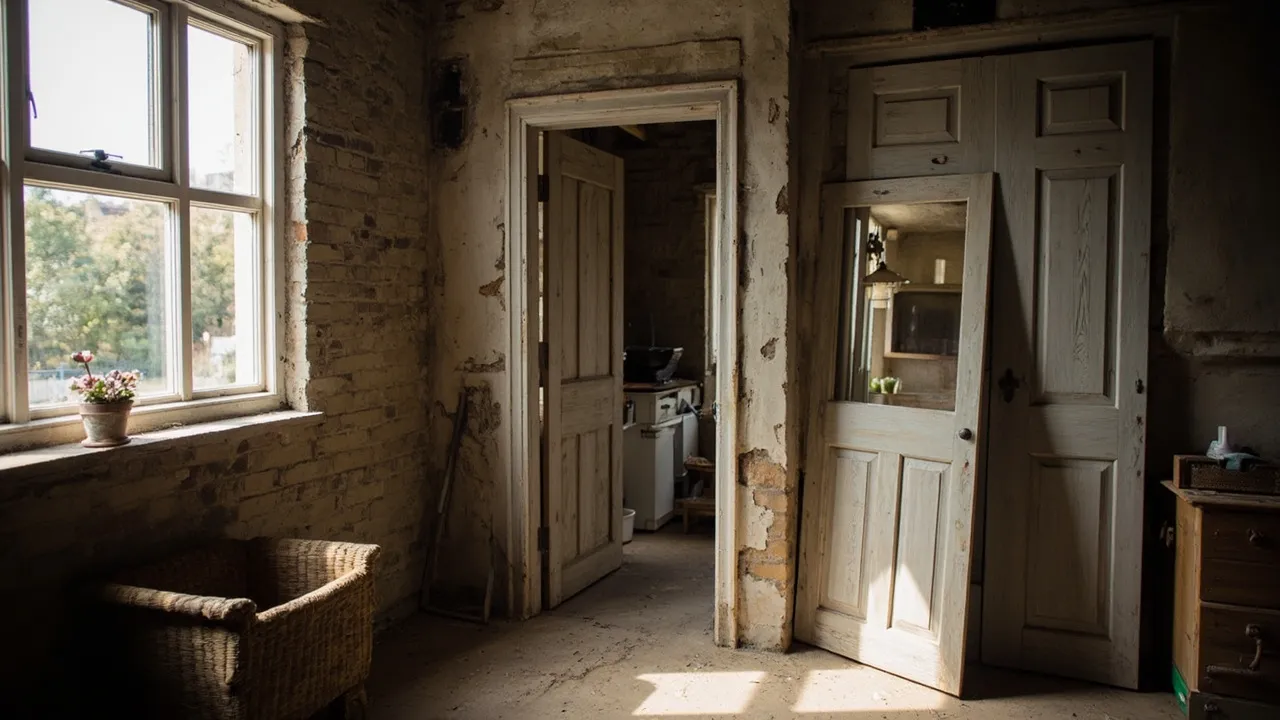
The safest way to remove lead paint from a door or piece of furniture is to have it stripped away from your home, so no lead dust or fumes are created in the house. At Double Dipper in Honley, we dip or hand-strip it in the workshop, then neutralise and dry it, ready to finish.
- The riskiest ways to remove lead paint are dry sanding and heat, because they create dust and fumes.
- If the paint is sound, you may not need to remove it at all.
- Anything that comes off (doors, furniture, fireplaces, radiators, gates) can be stripped away from your home.
- Internal pine doors cost from £60 to strip, neutralise and dry, and most are ready in 7–10 working days.
Do you need to remove lead paint at all?
Not always. If old paint is intact and you're happy with how it looks, leaving it where it is and painting over it can be the lower-risk choice. The Health and Safety Executive's advice on removing old paint suggests only stripping back old paint if it is flaking, chipping or a risk to children.
There are good reasons to strip, though. A period door with decades of gloss loses its mouldings, sticks in its frame and never looks right again. Flaking paint on a door or fireplace keeps shedding. And if you want bare pine, waxed oak or a clean base for a heritage colour, the old layers have to come off. The question then isn't whether to remove it, but how to do it without spreading lead around your home.
If you're not sure whether your paint contains lead, our guide to safely stripping lead paint from a Victorian front door covers how older homes came to have it and why you should assume it's there on original joinery.
Which lead paint removal methods should you avoid?
Avoid anything that turns old paint into dust or fumes. The HSE lists three common jobs that put people most at risk: removing existing paint in properties built before the 1980s, stripping old paint with blowlamps or gas torches, and dry sanding old paint.
- Dry sanding. Power sanders and sandpaper turn paint into fine dust that spreads through the house and settles on floors and furniture.
- Blowlamps and gas torches. Open flame on old paint can give off fumes, and it's a fire risk inside a period house.
- Heat guns used carelessly. Softening paint with heat still leaves scrapings and flakes everywhere, and too much heat raises the same fume concerns.
- Dry scraping big areas. Scraping without keeping the surface damp creates flakes and dust that are hard to clear up completely.
If you already have old paint dust in the house and you're worried about anyone's health, especially young children or someone who's pregnant, speak to your GP or NHS 111.
Why is dipping the safer route for lead paint?
Because the paint comes off away from your home, without sanding and without heat. When a door goes in the stripping bath, every layer lifts at the same time, including the paint in mouldings, beading and panel corners that sanding and scraping struggle to reach. Nothing is being ground into dust, and nothing is being burned.
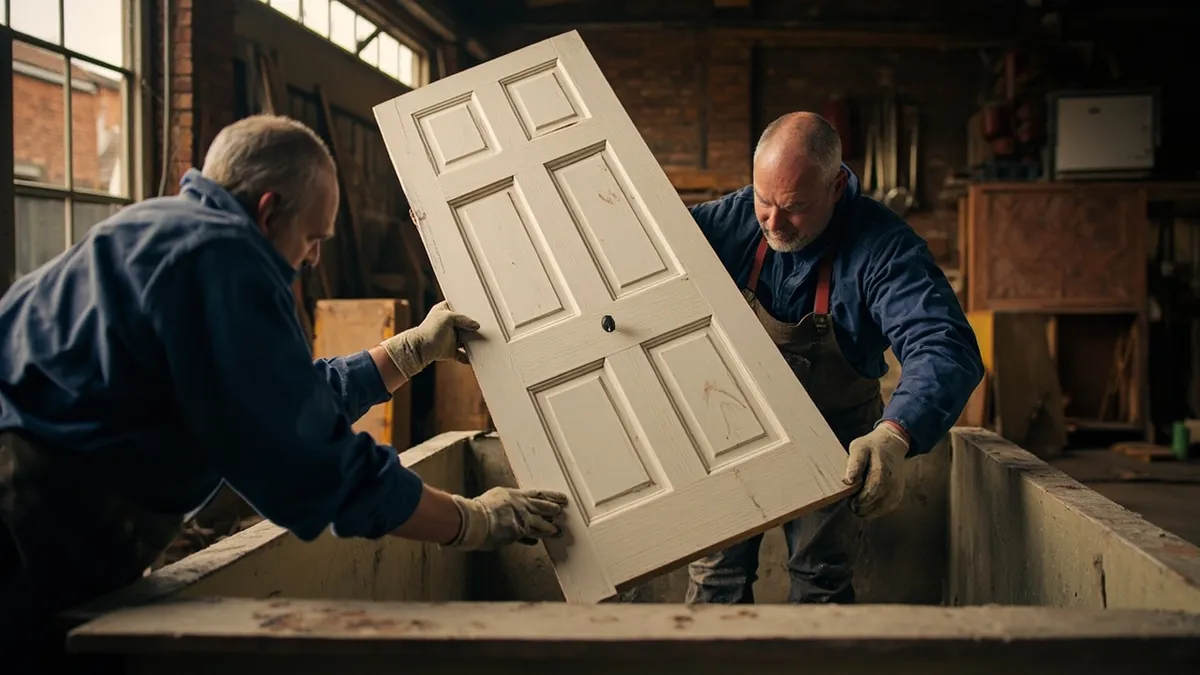
For you, the job at home shrinks to taking the door off its hinges and removing handles, hinges and letterplates. The stripping, the waste and the clean-up all happen in the workshop. You get the piece back neutralised, dried and hand-finished, ready to wax, oil or paint.
Not everything should be dipped. Doors with loose joints, veneer, old glue or leaded glass that can't come out are stripped by hand in the workshop instead. The lead paint still stays out of your house either way. We tell you which method we'll use before we start, and our article on dip stripping vs hand stripping explains how we choose.
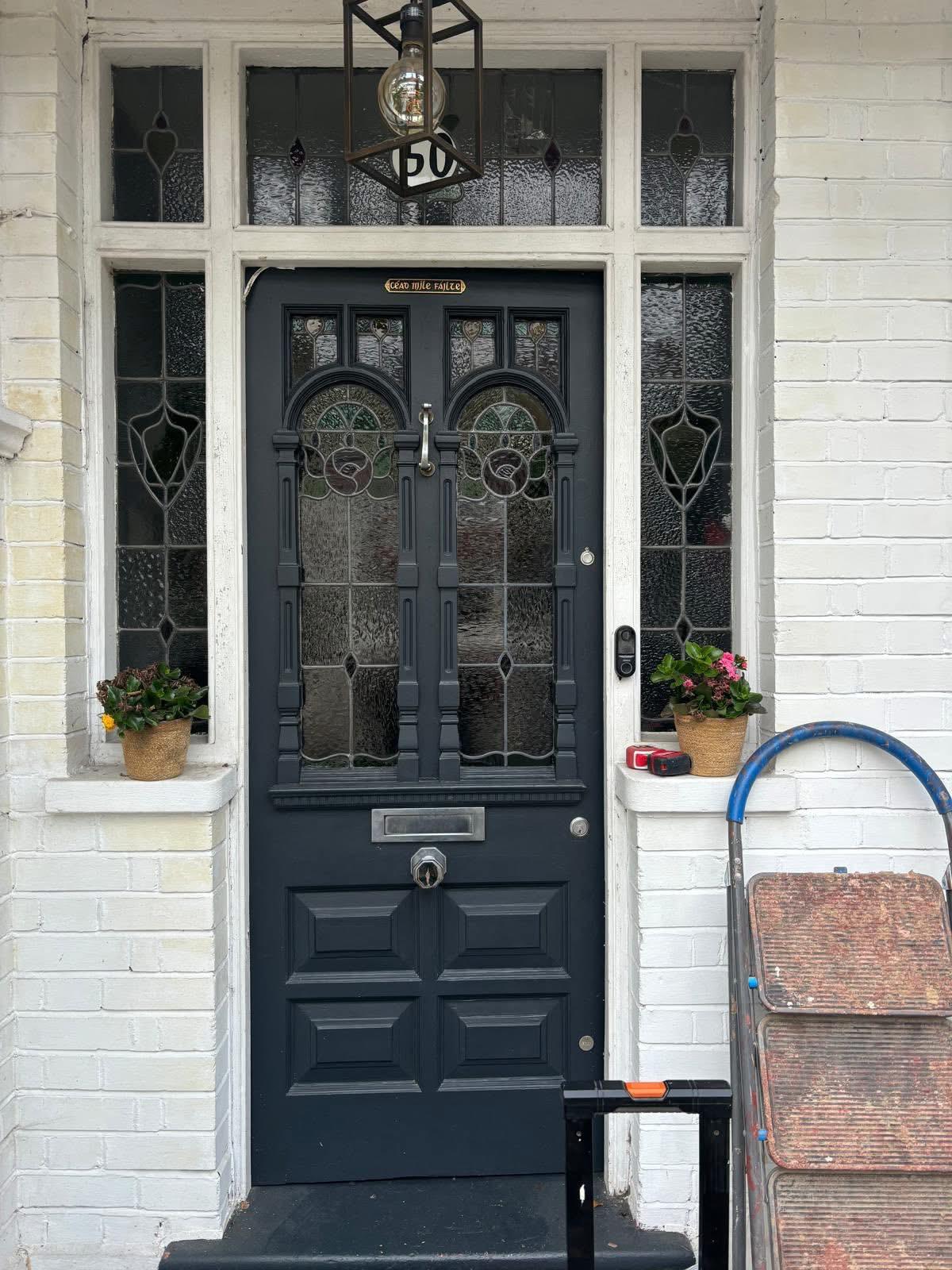
What can be sent away for stripping?
Anything made of wood or metal that can be taken out of the house. The most common pieces are:
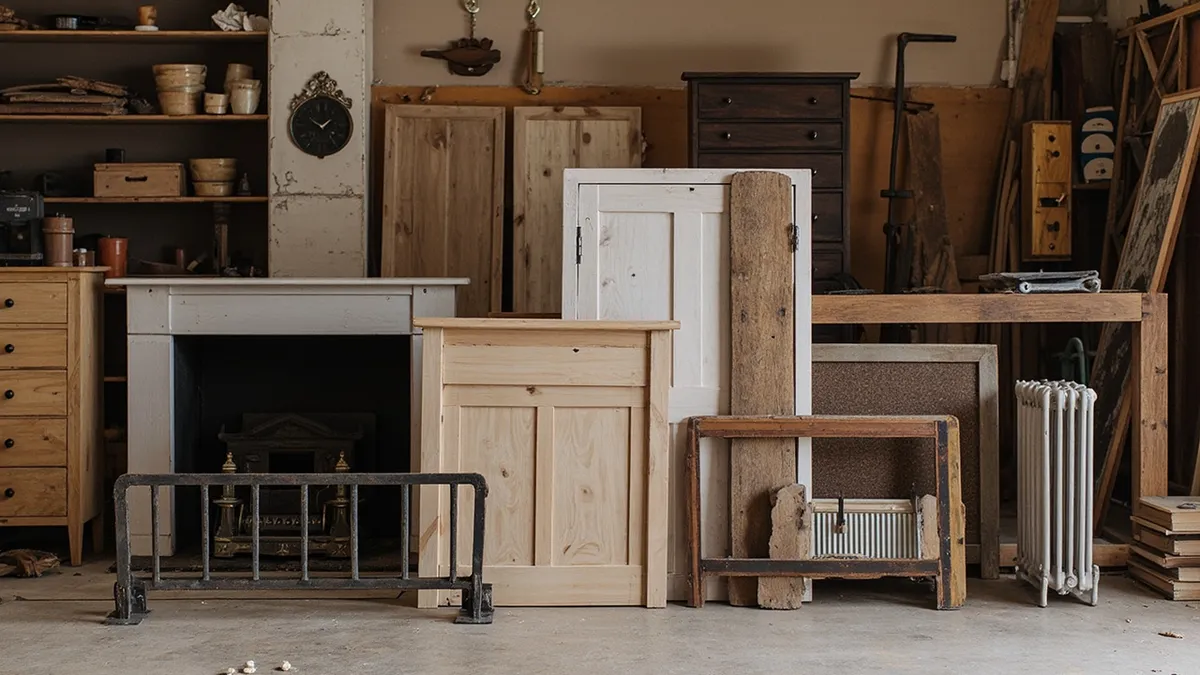
- Doors: internal four-panel pine doors, front doors, glazed doors, cupboard doors and shutters. See our door stripping service.
- Furniture: chests, dressers, wardrobes, tables and chairs, through our furniture stripping service.
- Cast-iron fireplaces: inserts and surrounds stripped to bare iron, from around £90 for an insert. See cast-iron fireplace stripping.
- Radiators and gates: taken back to bare metal with the rust treated. Radiators must be drained and disconnected by a plumber before they come in.
We strip wood and metal only, so uPVC, composite and laminate can't be done.
Got a door or fireplace with old paint on it? WhatsApp a photo or call Daniel on 01484 666 333. You'll get a price, the method we'd use and a date, usually within a day or two.
What about paint that can't be taken out?
Skirtings, architraves, window frames and fixed panelling are harder, because the work has to happen in the house. For these, it's worth getting a decorator who is used to working with old paint. The HSE's general advice is to plan the work, use wet methods rather than dry sanding, wipe up debris with a damp cloth and put it in a plastic bag for disposal.
A sensible approach is to split the job. Doors, fireplaces and anything else removable go to the workshop, and only the fixed woodwork is dealt with in the house. That cuts the amount of old paint being disturbed at home a great deal. If there's a lot of fixed joinery, it's also worth asking whether some of it can simply be rubbed down wet and repainted rather than stripped.
How much does it cost and how long does it take?
These are our published prices:
| Item | Price |
|---|---|
| Internal four-panel pine door | From £60 |
| External or stained-oak door | £80–£95 |
| A whole house of doors, stripped as one batch | About £55–£80 per door |
| Cast-iron fireplace insert, stripped and refinished | From around £90 |
| Dining suite (six chairs and a table) | £320–£480 |
Most doors are ready in 7–10 working days, and a whole house of doors usually takes about a fortnight. Fireplaces, radiators and metalwork usually take 2–3 weeks. There's more on our door stripping price guide.
Collection is free within 20 miles of Honley, covering Huddersfield, Holmfirth, Halifax, Wakefield, Leeds, Bradford and Barnsley. Further away, you can drop off at the workshop, courier smaller items overnight, or ask for a quoted van collection.
Frequently asked questions
Can I use a chemical stripper on lead paint at home?
The HSE mentions chemical stripper, combined with wet abrasive paper and on-tool extraction, as an option for paint in poor condition. It's still slow and messy on a heavily painted door, and you're left handling lead-contaminated sludge. For removable pieces, sending them out avoids that.
Will the door be safe to finish when it comes back?
Yes. It comes back as bare timber that has been neutralised and dried, ready to wax, oil or paint. We can also finish it in the workshop using products we sell, including Osmo, Fiddes, Farrow & Ball and Little Greene.
Do I need to prepare the door before it comes in?
Take off handles, hinges, locks and letterplates if they come off easily. If something is painted in or seized, leave it on and let us know.
Get a quote
Double Dipper is a Guild of Master Craftsmen member, trading from Unit 3, Crossley Mills, Honley, HD9 6PL since 2016.
- Call 01484 666 333 (Monday to Friday 9am–5pm, Saturday 10am–2pm) or email info@doubledipperpaintstrippers.co.uk.
- Send photos through our contact page.
- See stripped doors and fireplaces in our gallery.
