Journal
Stripping Painted Furniture: DIY or Professional?
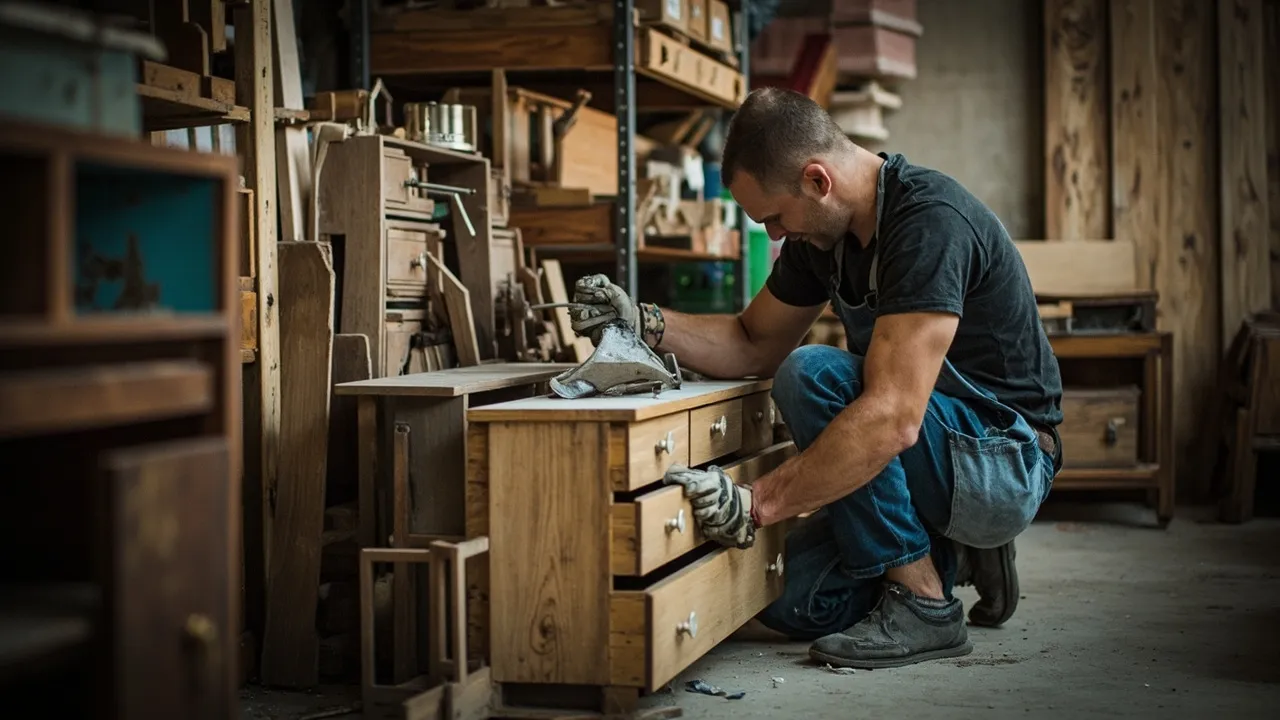
Stripping painted furniture yourself makes sense for a small, solid piece with a few coats of paint. For chests, dressers and dining sets with heavy paint, turned legs, glued joints or veneer, a professional strip is usually quicker, safer and kinder to the piece. Double Dipper in Honley dips solid furniture, hand-strips fragile pieces, and neutralises and dries everything.
- DIY suits flat, solid pieces with light paint, like a simple pine box or a small table.
- Veneer, old glue joints, turned legs and thick paint are the warning signs that a piece needs professional stripping.
- A dining suite of six chairs and a table costs £320–£480 to strip at our workshop.
- Old paint may contain lead, so avoid dry sanding or burning it indoors.
Can you strip painted furniture yourself?
Yes, if the piece is solid and simple. A plain pine chest, a blanket box or a small table with a couple of coats of paint is a reasonable weekend job with a chemical stripper, scrapers, wire wool and patience. Work outside or in a well-ventilated room, wear gloves and eye protection, and follow the product label.
The trouble starts when the piece has detail or history. Furniture tends to have far more awkward surfaces than a door: turned legs, spindles, carved rails, beaded drawer fronts, panelled sides and corners where paint has built up for decades. Each one needs a different scraper, and most of the time goes on the last few percent of paint.
What makes furniture harder to strip than a door?
Construction. A door is a solid frame of stiles, rails and panels. Furniture is usually lighter, with more joints, more glue, and sometimes veneer over a cheaper carcass. That changes how it can be stripped.
- Glue joints. Many older pieces are held together with animal glue, which softens with water and some strippers. Soak a chair and its joints can loosen.
- Veneer. A thin decorative layer glued onto a base wood. It lifts if it gets too wet, and it sands through in seconds.
- Mixed timbers. Painted furniture was sometimes made from mismatched woods because the maker knew it would be painted. You won't know until it's stripped.
- Drawers and runners. Swollen or distorted drawers stop running smoothly, so they need drying properly.
That's why the right method matters more for furniture than almost anything else we strip.
How do you know if a piece is veneered?
Look at the edges and the grain. On veneered furniture, the edge of a top or drawer front often shows a thin line where the veneer meets the base wood, or a separate edging strip. If the grain pattern on the top doesn't carry over the edge, or it's perfectly matched in mirror-image patterns, it's probably veneer.
Under paint, it's harder to tell. Check inside drawers, the back of the piece, or any chipped corners. If you're not sure, assume it's veneered and don't soak or sand it hard. Send us a photo and we'll advise.
What does a professional furniture strip involve?
At Double Dipper, we check every piece before choosing a method:
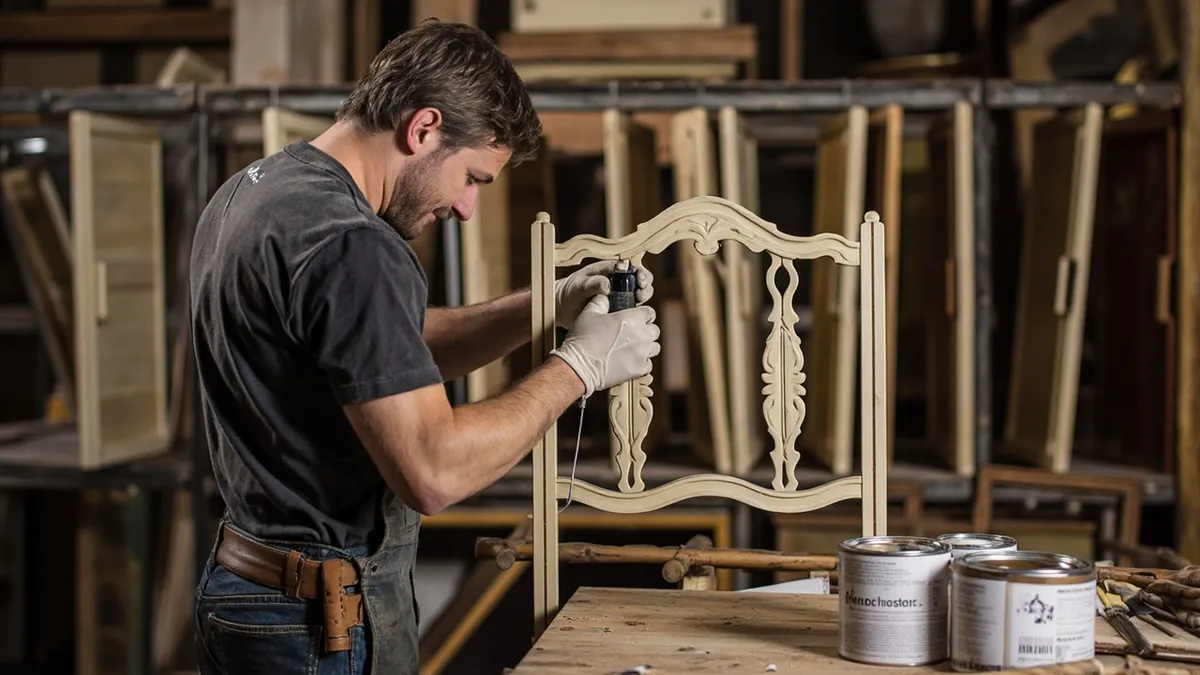
- Sound, solid pieces, such as pine chests, dressers, tables and many chairs, go into the stripping bath, which reaches every leg, spindle and moulding at once.
- Fragile pieces, with veneer, loose or glued joints, or glass that can't come out, are stripped by hand in the workshop.
- Every piece is neutralised and dried before it leaves, so the timber is stable and ready to finish.
- Detail is finished by hand.
We tell you which method we'll use before we start. Our guide to dip stripping vs hand stripping explains how we decide, and our furniture stripping service page covers what we take in.
Got a painted dresser, chest or set of chairs? WhatsApp a photo or call Daniel on 01484 666 333. We'll tell you whether it can be dipped or needs hand-stripping, what it'll cost and when it'll be ready. Or use our contact page.
DIY or professional: how do the two compare?
| DIY | Workshop strip | |
|---|---|---|
| Best for | Small, solid pieces with light paint | Detailed, heavily painted or fragile pieces, and sets |
| Turned legs and carving | Slow, often leaves paint in the grooves | Stripped all at once in the bath, or carefully by hand |
| Veneer and glue joints | Easy to lift veneer or loosen joints | Hand-stripped instead of dipped |
| Mess, fumes and waste | In your home or garden | At the workshop |
| Ready to finish | Only once cleaned, neutralised and dried | Comes back neutralised and dried |
How much does it cost to strip painted furniture?
It depends on the size of the piece, the amount of paint and whether it can be dipped. Our published guide prices include:
- Dining suite (six chairs and a table): £320–£480
- Internal four-panel pine door: from £60
- External or stained-oak door: £80–£95
Single pieces like chests, dressers and wardrobes are priced once we've seen a photo. See the full list on our stripping prices page.
We collect free within 20 miles of Honley, which covers Huddersfield, Holmfirth, Halifax, Wakefield, Leeds, Bradford and Barnsley. From further away, you can drop off at the workshop, send smaller pieces by overnight courier, or ask for a quoted van collection. We strip wood and metal only, not uPVC, composite or laminate.
Is old paint on furniture a lead risk?
It can be. Older painted furniture, especially pieces that have spent a long time in period houses, may have lead in the lower layers of paint. Sanding creates dust and burning it off at high heat can give off fumes, neither of which you want indoors or near children. If you're unsure, test a scraping first, avoid dry sanding and keep the area ventilated. Our article on safely stripping lead paint explains the precautions.
What finish should you use after stripping?
Stripped pine furniture is usually waxed or oiled, which brings out the warm colour of the old timber. Hardwax oils suit tabletops and anything that gets heavy use. If the wood underneath turns out to be mixed or patched, paint is a perfectly good answer, and bare, clean timber gives a finish that lasts.
We sell Osmo and Fiddes finishes in our wood finishes shop and Farrow & Ball and Little Greene in our paint shop, and we can finish pieces in the workshop if you'd rather not do it yourself.
Get a quote for stripping your furniture
Double Dipper is a Guild of Master Craftsmen member, stripping wood and metal at Unit 3, Crossley Mills, Honley, HD9 6PL since 2016.
- Call 01484 666 333 or email info@doubledipperpaintstrippers.co.uk.
- Send photos of your piece through our contact page.
- See finished work in our gallery.
We're open Monday to Friday 9am–5pm and Saturday 10am–2pm.
