Journal
Painted Oak Furniture: Can It Go Back to Bare Oak?
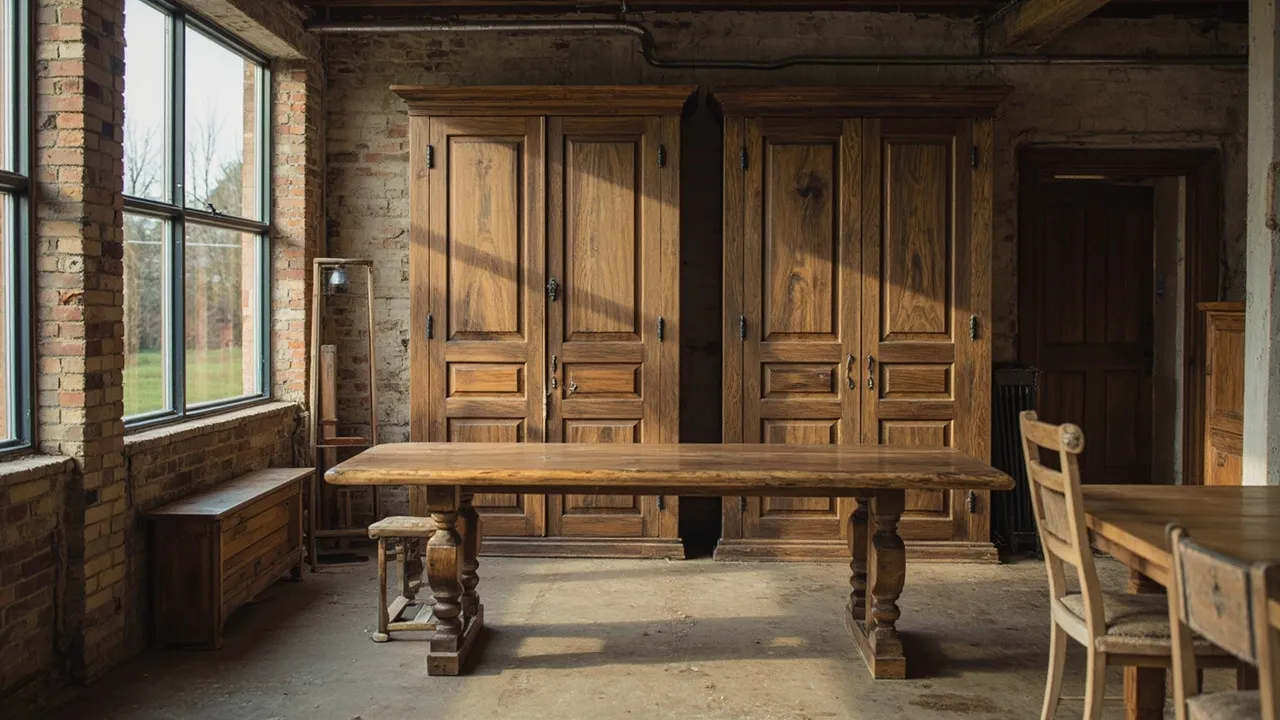
Yes, most painted oak furniture can go back to bare oak, but oak needs more care than pine. It's an open-grained hardwood full of natural tannins, so harsh treatment can darken it and paint can lodge in the pores. At Double Dipper we check each piece, then dip or hand strip it, neutralise it and dry it.
- Solid oak in sound condition can often be dipped; veneered or loosely jointed pieces are stripped by hand.
- Oak's tannins react with harsh treatment and with iron, so steel wool and long soaks are risky.
- Expect some old colour to stay in the grain on stained pieces. That's usually a good thing.
- Bare oak takes oil and wax beautifully, and we can finish it in the workshop.
Can painted oak furniture really go back to bare oak?
In most cases, yes. Paint sits on the surface and in the open pores of the grain, and a controlled strip removes it without taking the timber with it. A sideboard, a chest of drawers or a set of dining chairs that someone painted in the last few decades can usually be brought back to the wood underneath.
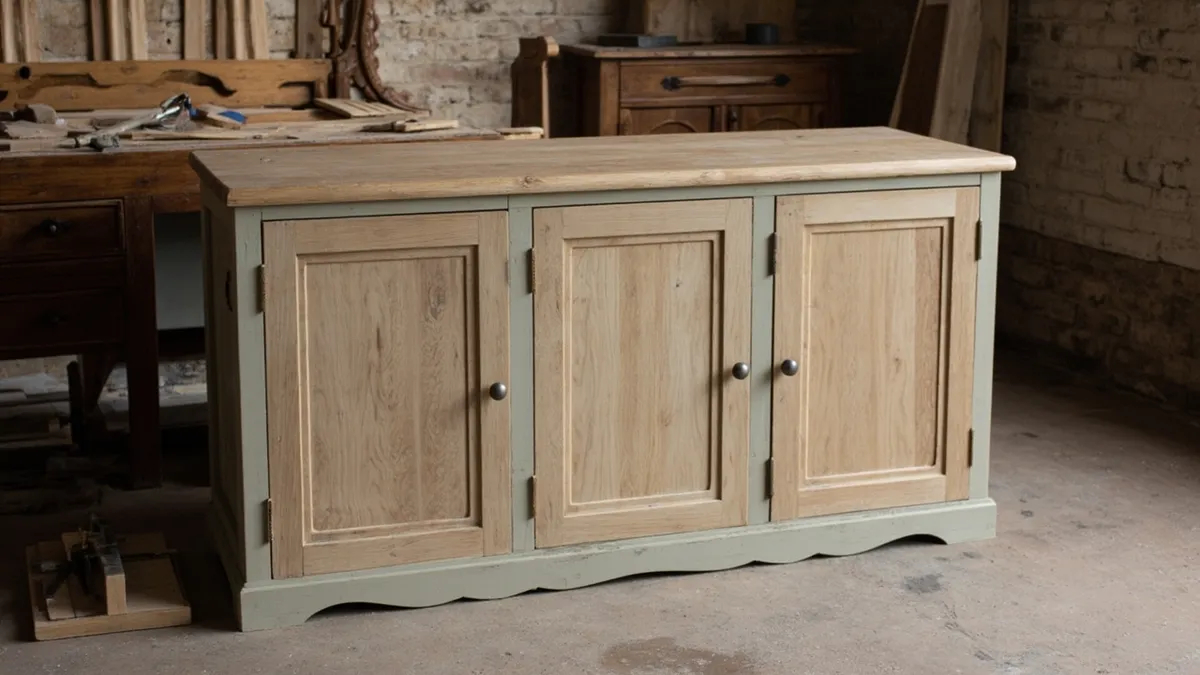
What you get back depends on what was there before the paint. Some pieces were plain waxed oak, and these often come up beautifully. Others were stained or varnished dark before they were painted, and the stain has soaked into the grain. Stripping will lighten them a lot, but some colour may stay in the pores. We'll tell you honestly what's likely before we start.
Why is stripping oak different from stripping pine?
Because oak behaves differently in the ways that matter. Pine is a softwood with a fairly closed grain and a pale, even colour. Oak is a heavy hardwood with an open grain and a high natural tannin content.
- Tannins can darken. Oak left too long under harsh stripping conditions can come out darker or greyer than you expect, which is why the process has to be controlled and the wood neutralised afterwards.
- Iron makes black stains. When oak's tannins meet iron and moisture, they can leave blue-black marks. Old steel screws, nails and fittings can cause it, and so can steel wool used during DIY stripping.
- Open grain holds paint. Paint gets deep into the pores, so careful hand-finishing is needed to get the last of it out.
None of this is a reason to leave good oak painted. It's a reason to strip it with someone who knows how oak reacts. We cover the same ground for doors in our guide to oak door stripping.
Is my painted furniture solid oak or veneer?
Check before you do anything, because it changes the method. A lot of oak-look furniture from the 1920s onwards has a thin oak veneer glued over another timber, and that veneer can lift if it's soaked.
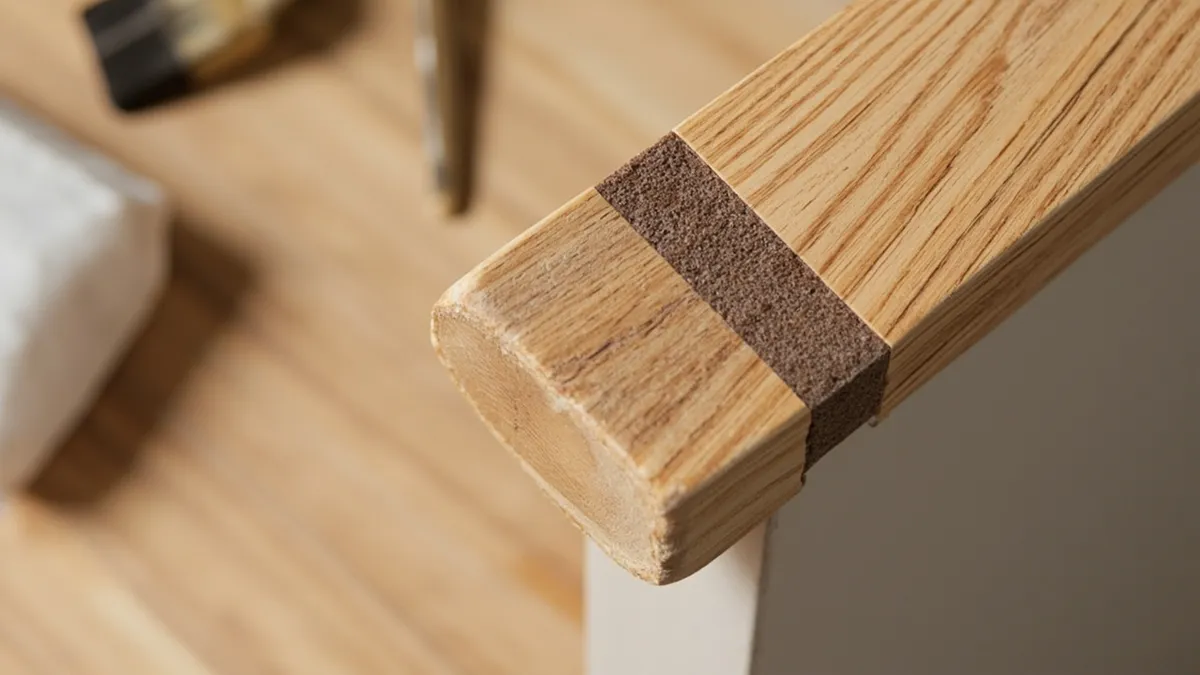
A few clues help. Look at the edges of tops and doors: a thin line where the surface layer meets the core suggests veneer. Look inside drawers and at the back, where paint is often missing. And if the grain on a top repeats or looks unnaturally even, it may be veneer. Some pieces are a mix, with solid legs and frames and veneered panels. If you can't tell, send us a photo and we'll look.
We only strip wood and metal. Painted furniture that turns out to be laminate or another man-made board isn't something we can strip.
Should painted oak furniture be dipped or hand stripped?
It depends on how the piece is made and what condition it's in. We look at every piece before we decide, and we tell you which method we'll use.
| Piece | Usual method | Why |
|---|---|---|
| Solid oak, sound joints | Dip stripping | Strips every face and moulding at once |
| Oak-veneered panels or tops | Hand stripping | Veneer can lift if soaked |
| Loose or glued joints | Hand stripping | The bath can soften old glue |
| Glass that can't come out | Hand stripping | Stripped around the glass |
Either way, every piece is neutralised and dried before it comes home, and the detail is finished by hand. For more on how we choose, read dip stripping vs hand stripping: which suits your piece.
Call 01484 666 333 or use our contact page.
Can you strip painted oak furniture yourself?
You can on a small, lightly painted piece, but oak is less forgiving than pine. Paint sits deep in the open grain and is hard to pick out with a scraper. Heat can scorch the surface, and sanding hard to get rid of the scorch takes away the patina that makes old oak worth keeping.
If you do it yourself:
- Avoid steel wool. It can leave black tannin stains. Use a stiff brush or a non-metallic pad in the grain.
- Don't dry sand or burn old paint. Older paint may contain lead. The HSE's frequently asked questions on lead list using blow lamps or gas torches and dry sanding as risky jobs in pre-1980s properties.
- Clean off all residue. Stripper left in the grain can stop oil, wax or paint from drying properly.
- Let it dry well before you finish it.
For a whole dining suite, a dresser or anything with lots of carving, sending it to a workshop is usually quicker and kinder to the wood. Our guide to stripping paint from furniture: DIY or professional goes into the trade-offs.
How should you finish stripped oak furniture?
Oak takes oil and wax beautifully, so most people who strip painted oak want to see the grain. A hardwax oil brings out the figure and gives good everyday protection, which suits tables and sideboard tops. A traditional wax gives a softer sheen that suits older pieces and chairs.
You can also repaint, of course. If the paint was hiding a damaged or patched top, a fresh painted finish over properly stripped wood will look far better and last longer than another coat on top of old, chipped layers.
We can finish your piece in the workshop with the products we sell, including Osmo and Fiddes oils and waxes, or Farrow & Ball and Little Greene paints. Or take it home bare and ready to finish. Browse our wood finishes.
Frequently asked questions
Will stripping make my oak furniture go dark?
Not if it's done with care. Oak can darken if it's left too long under harsh treatment, which is why we control the process and neutralise the wood afterwards.
Will all the old stain come out?
Not always. Varnish and paint come off, but stain that has soaked into the open grain may leave some colour in the pores. It usually gives the piece depth and keeps it looking its age.
Should I take the handles off first?
Yes, if you can. Remove handles, hinges and other fittings before the piece travels, unless they're seized. Old iron fittings can also stain oak.
Get a quote from Double Dipper
If your oak furniture is hiding under paint, let us bring it back. Double Dipper is a paint stripping workshop at Unit 3, Crossley Mills, Honley, Huddersfield, stripping wood and metal since 2016, and we're members of the Guild of Master Craftsmen. Every piece is neutralised and dried before it comes home, ready for your chosen finish.
- Free collection within 20 miles of Honley, covering Huddersfield, Holmfirth, Halifax, Wakefield, Leeds, Bradford and Barnsley.
- Further away, such as Sheffield, Manchester, York or Harrogate? Drop off at the workshop, send smaller items by overnight courier, or ask us to quote a van collection.
- See finished work in our gallery.
Call 01484 666 333, email info@doubledipperpaintstrippers.co.uk or send a photo through our contact page. We're open Monday to Friday 9–5 and Saturday 10–2.
