Journal
Laser Paint Stripper vs Dip Stripping: Is Laser Worth It?
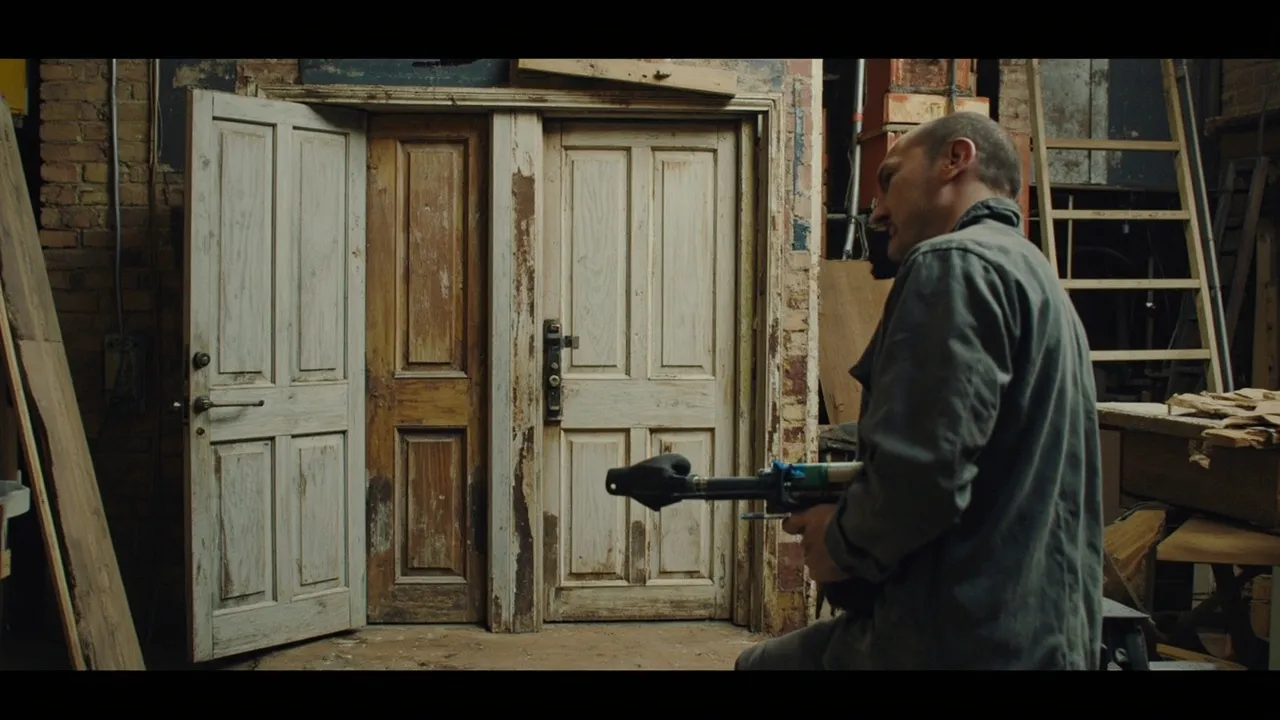
A laser paint stripper is impressive on metal and stone, but for painted doors, furniture and most cast iron, dip stripping is faster, cheaper and reaches every moulding at once. Laser suits small, delicate or fixed surfaces in skilled hands. At Double Dipper in Honley we dip-strip and hand-strip, and here's an honest comparison.
- Laser stripping burns coatings off with a pulsed beam: no chemicals, but slow on thick paint and risky on soft wood.
- Dip stripping takes a whole piece back to bare wood or metal in one go, including the corners and mouldings.
- Laser machines are expensive to buy or hire, and need eye protection and fume extraction.
- For a house of doors, a fireplace or a set of radiators, dipping is usually the better value.
What is a laser paint stripper?
A laser paint stripper is a machine that fires very short, powerful pulses of light at a painted surface. The coating absorbs the energy and is vaporised or blown off as fine dust, while the surface underneath reflects more of the light and is left behind.
It's the same family of technology used for laser cleaning rust off steel and grime off stonework. The operator holds a handheld head and sweeps it across the surface, a strip at a time, a bit like a pressure washer. There's no stripping chemical, no water and nothing to neutralise afterwards, which is why searches for laser stripping have climbed so quickly this year.
Does laser stripping work on wood?
It can, but wood is the hardest surface to get right. Timber is soft, it's fibrous, and it burns. If the beam is set too hot or held in one place too long, the surface darkens or chars, and on pale woods like pine that shows straight away.
Laser also works best on thin coatings. A Victorian four-panel door often carries six or more layers of gloss, sometimes with old distemper or primer underneath. Each pass only takes off so much, so a heavily painted door means many passes, and every extra pass is another chance to scorch the grain. Getting paint out of deep mouldings and corners is slow, because the beam has to reach each face at the right angle.
Where laser does shine on wood is small, delicate work that can't be moved or dipped: a carved panel fixed in place, a historic surface in conservation hands, or a light coating on a flat board. For everyday painted joinery, it's usually the slow way round.
Is laser stripping better for cast iron and metal?
Metal is where laser is at its best, because iron and steel don't burn the way wood does. It's very good at lifting rust and thin paint from flat or gently shaped metal, and it's popular for cleaning parts in industry.
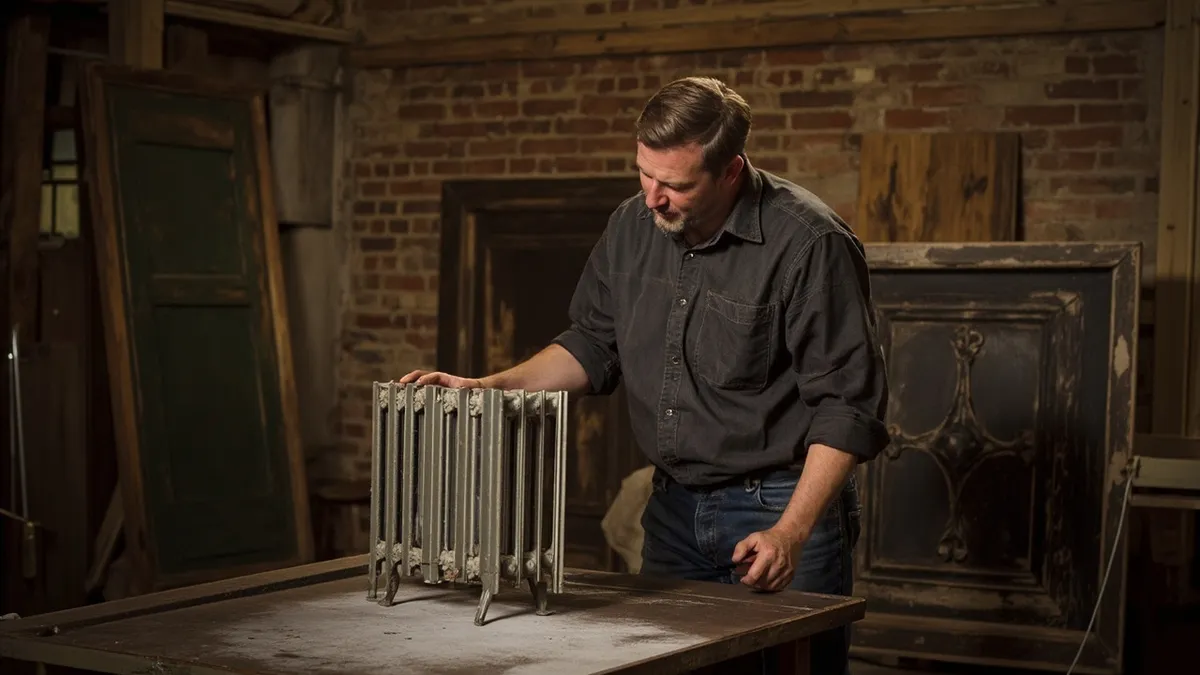
Cast-iron fireplaces and radiators are a harder test. They're full of deep relief, tight corners and hollow sections, and they often have decades of paint, powder coat or old enamel built up. A laser has to see every surface to clean it, so the backs of radiator columns and the undercuts in a Victorian fireplace insert take a long time. In a dip tank, the solution reaches every surface at once, and we then treat the rust before the piece leaves us.
If you're restoring a fireplace or radiators, see our cast-iron fireplace stripping and cast-iron radiator stripping services. Radiators must be drained and disconnected by a plumber before they come in.
How does dip stripping compare?
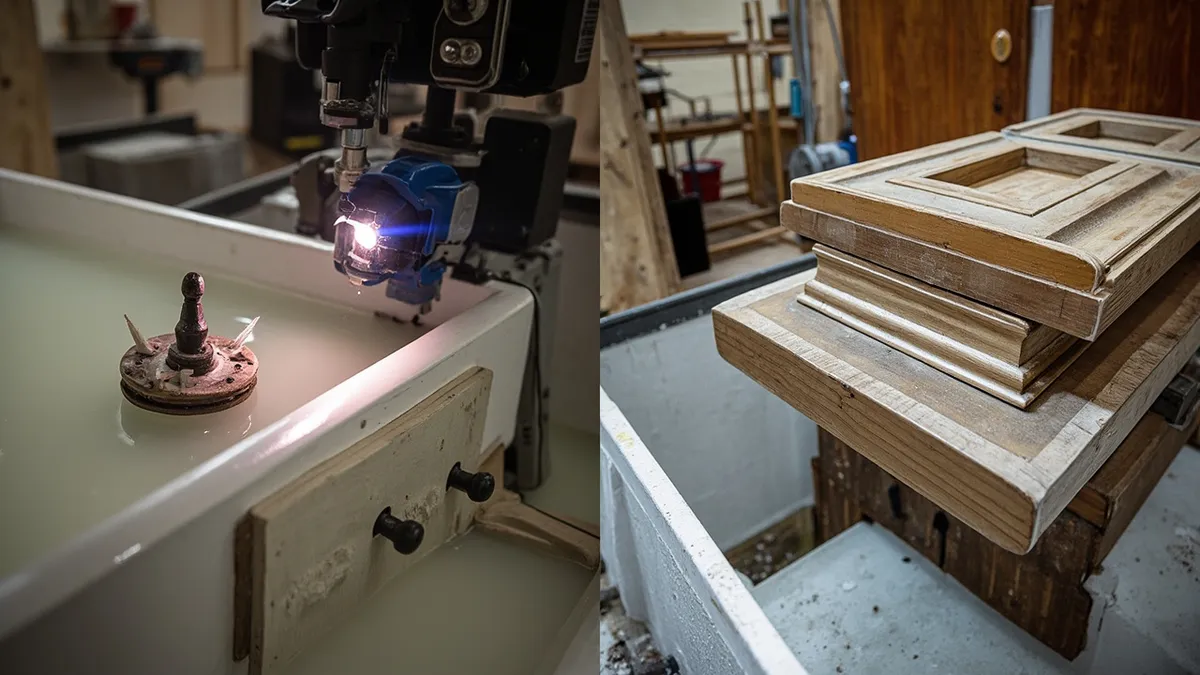
Dip stripping puts the whole piece into a stripping bath, so every face, edge, moulding and corner is stripped at the same time. Once the paint has softened, it's washed off, and the piece is neutralised and dried so it's ready to wax, oil or paint.
| Laser stripping | Dip stripping | |
|---|---|---|
| Thick, old paint | Slow; many passes | Strips all layers at once |
| Mouldings and corners | Slow; beam must reach each face | Reached automatically |
| Risk to wood | Scorching or charring if mis-set | Not for veneer or loose joints (we hand-strip those) |
| Fixed or immovable surfaces | Can be done in place | The piece has to come out |
| Chemicals | None | Handled in the workshop, not your home |
| Safety kit | Laser eye protection, fume extraction | Nothing for you to do |
| Cost for a whole house of doors | High: machine time per door | About £55–£80 per door |
Not everything should be dipped. Veneered furniture, glued or loose joints and glass that can't be removed are stripped by hand in our workshop instead. Our guide to dip stripping vs hand stripping explains how we decide.
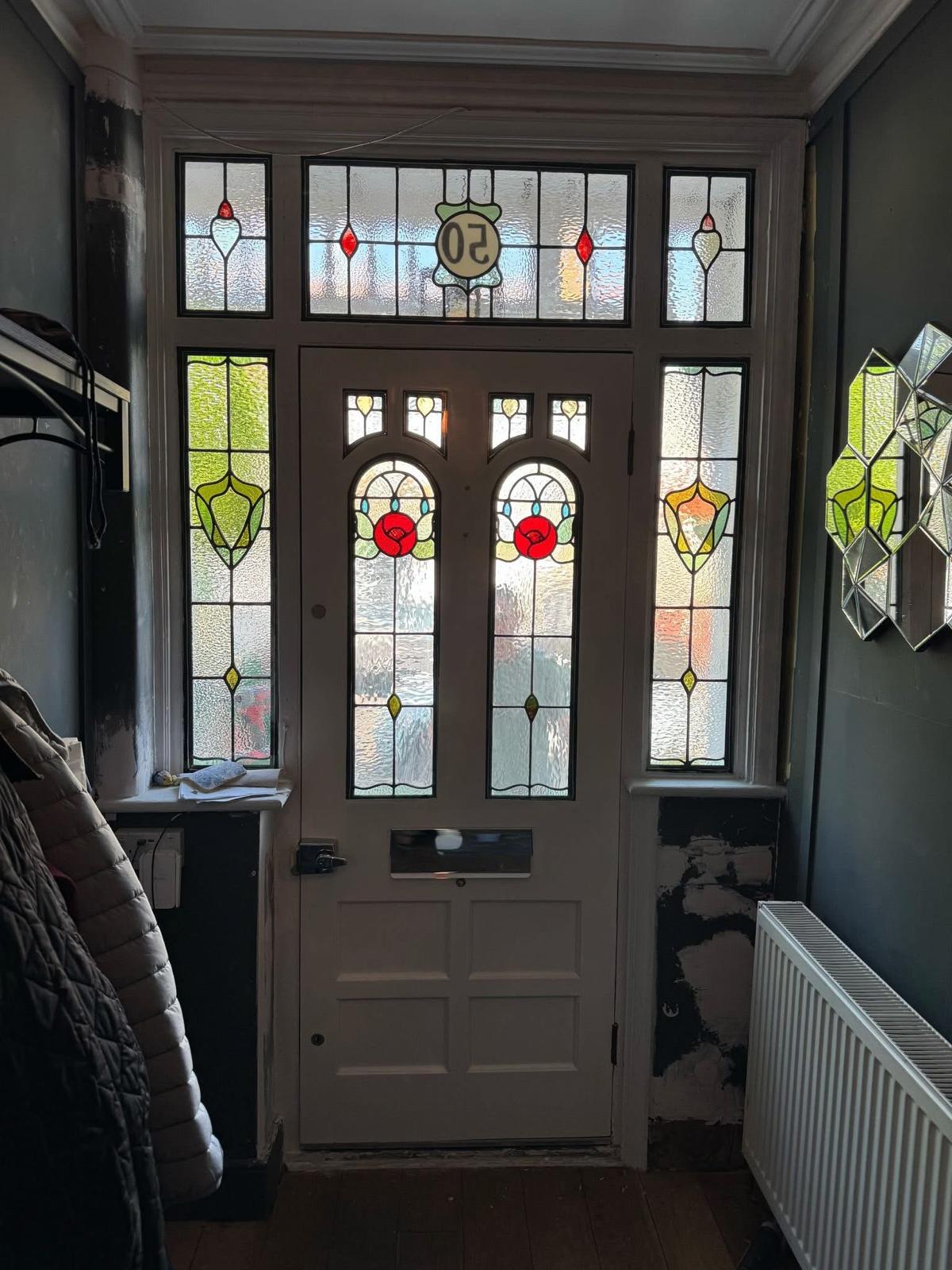
Weighing up laser against dipping for your doors, furniture or fireplace? Send us a photo and we'll tell you honestly which method suits it, and what it costs. Call 01484 666 333 or use our contact page.
Is laser stripping safe?
It's safe in trained hands with the right precautions, but it isn't a tool to pick up casually. The lasers used for stripping are powerful enough to damage eyes and skin, so everyone nearby needs the correct laser-rated eye protection, and the work area has to be controlled.
Fumes are the other issue. Laser stripping doesn't make paint disappear; it turns it into fine particles and vapour that need proper extraction. That matters a great deal in older houses, because paint applied before the 1980s may contain lead. The HSE's frequently asked questions on lead set out simple steps to stop dust and fume when removing old paint. A dip tank keeps the old paint in the bath, in our workshop, rather than in the air of your home.
How much does laser stripping cost compared with dipping?
Laser is usually the more expensive option for typical household pieces. The machines cost a lot to buy, hiring one still carries a significant day rate, and a professional operator charges for machine time, which adds up quickly on thick paint and detailed mouldings.
Dip stripping prices are fixed by the piece:
- Internal four-panel pine door: from £60 to strip, neutralise and dry.
- External or stained-oak door: £80–£95.
- A batch of doors for a whole house: about £55–£80 per door, usually ready in about a fortnight.
- Cast-iron fireplace insert: from around £90 to strip and refinish.
- Victorian or Edwardian staircase: £650–£1,200.
See the full list on our door stripping prices page.
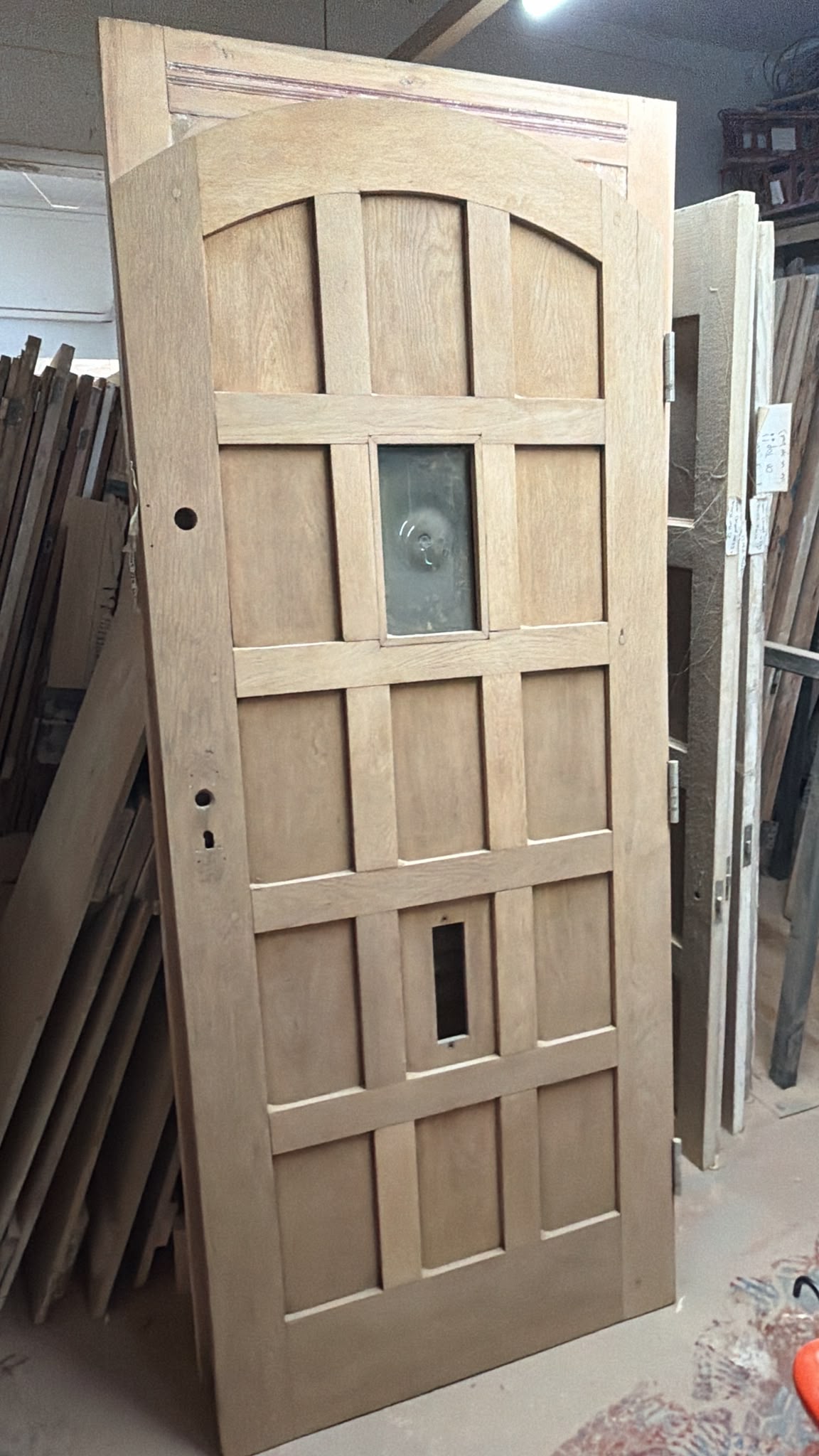
When should you choose laser, and when should you dip?
Choose the method that suits the piece, not the one that's trending. From the workshop, our rule of thumb is:
- Choose laser for small, fixed or delicate surfaces with a thin coating, ideally metal or stone, done by an experienced operator.
- Choose dip stripping for doors, furniture, staircases, fireplaces, radiators and gates with lots of paint and lots of detail. See our door stripping, furniture stripping and metal gate stripping services.
- Choose hand stripping for veneer, loose joints and glass that can't come out.
Doing it yourself? Our guide to the best paint stripper for wood compares every DIY option.
Frequently asked questions
Can a laser strip paint from uPVC or composite doors?
Stripping isn't suitable for plastics and composites, whatever the method. We strip wood and metal only, not uPVC, composite or laminate.
Does laser stripping leave the wood ready to finish?
It leaves no chemical residue, but scorched or darkened areas may need sanding. After dipping, every piece is neutralised and dried so it's ready to wax, oil or paint.
How long does dip stripping take?
Most doors are ready in 7–10 working days. Larger pieces such as fireplaces, radiators and metalwork usually take 2–3 weeks.
Get a quote from Double Dipper
If you want every layer gone, every corner clean and no fumes in your home, let us strip it. Double Dipper is a paint stripping workshop at Unit 3, Crossley Mills, Honley, Huddersfield, stripping wood and metal since 2016, and we're members of the Guild of Master Craftsmen. Every piece is neutralised and dried before it comes home, and metal has its rust treated before it leaves.
- Free collection within 20 miles of Honley, covering Huddersfield, Holmfirth, Halifax, Wakefield, Leeds, Bradford and Barnsley.
- Further away? Drop off at the workshop, send smaller items by overnight courier, or ask us to quote a van collection.
- See finished doors, furniture and fireplaces in our gallery.
Call 01484 666 333, email info@doubledipperpaintstrippers.co.uk or send a photo through our contact page. We're open Monday to Friday 9–5 and Saturday 10–2.
