Journal
Staircase Spindles: Strip Painted Spindles or Replace Them?
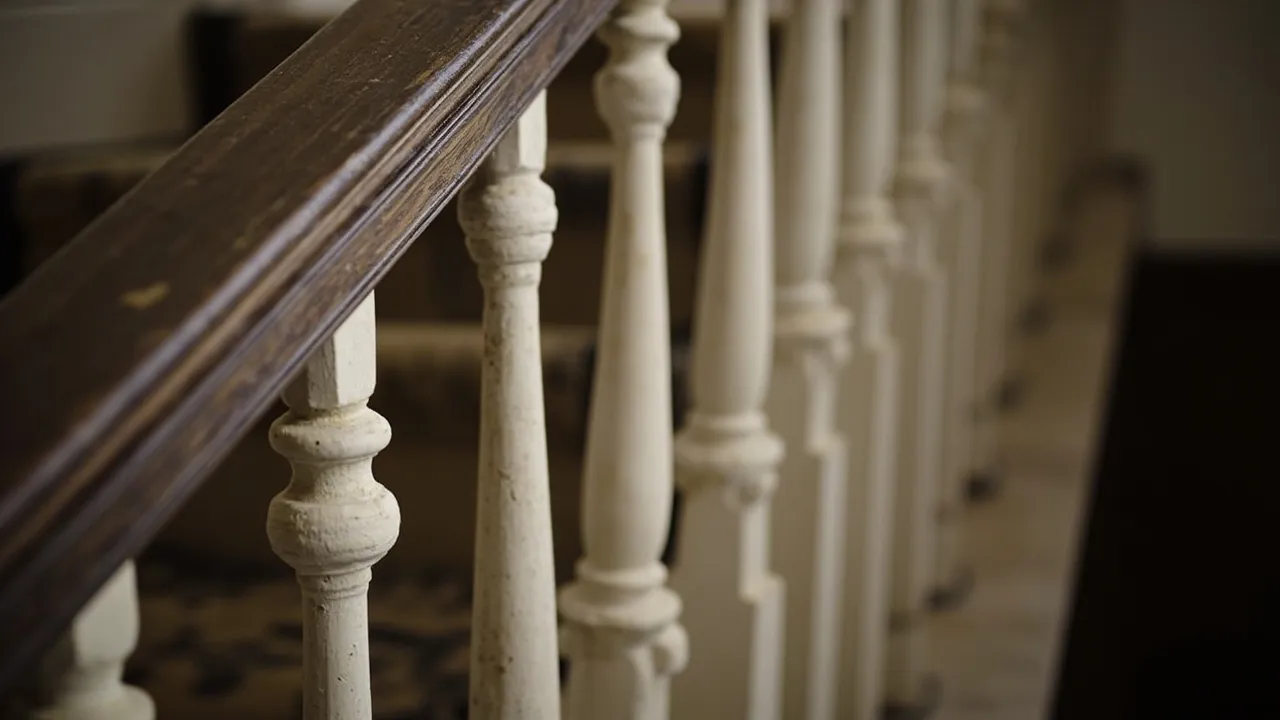
If your painted staircase spindles are original and sound, stripping them is usually better than replacing them. Old turned spindles rarely match off-the-shelf profiles, and replacements change the look of a period hall. Replace only spindles that are split, missing or rotten. Double Dipper strips spindles, handrails and newel caps in Honley.
- Original spindles were turned for that staircase; new ones seldom match the profile, spacing or length exactly.
- Heavy paint hides the detail but rarely damages the wood underneath.
- Mix and match: strip the good spindles and have a joiner copy only the broken ones.
- A Victorian or Edwardian staircase is typically £650–£1,200 to strip.
Should you strip or replace painted staircase spindles?
Strip them if they're original and structurally sound; replace them if they're broken, badly split or not worth keeping. That's the short answer, and for most period houses it points towards stripping.
Staircase spindles replacement is a popular search, and it's easy to see why. A balustrade under decades of chipped gloss looks tired, and a new set of spindles looks like a quick fix. But in a Victorian or Edwardian house the spindles are part of the character of the hall. They were turned to suit that staircase, and they've aged with the handrail, newels and strings around them. Swap them out and the staircase often looks newer than the rest of the house, in a way that's hard to put your finger on but easy to notice.
Replacement makes more sense where the spindles were never special: a plain later staircase, square-section spindles, or a balustrade that's already been altered. It's also the answer for any individual spindle that's cracked through or missing.
Why don't new spindles match old ones?
Because old spindles were usually turned for the job rather than picked from a catalogue. The profile of each bead, ring and cove, the overall length and the thickness all vary from house to house, and sometimes from one staircase to another in the same street.
Common mismatches with off-the-shelf replacements:
- Profile: the turned detail is different, even when it looks similar in a photo.
- Length: old staircases settle, so original spindles are often slightly different lengths along the rake.
- Thickness: a thinner or fatter spindle changes the gaps and the rhythm of the balustrade.
- Timber: new softwood won't look like century-old pine once stripped and finished.
Painting over a mixed set hides some of this. Waxing or oiling bare wood shows all of it.
Can you replace just a few spindles?
Yes, and it's often the best approach. Strip the originals, see which ones are genuinely damaged, then have a joiner or woodturner copy one of the good ones for any that need replacing. Copies made to an original pattern sit far better in the run than a complete new set.
Do the stripping first. Paint hides cracks, old glued repairs and filler, so you only know which spindles need replacing once they're bare. It also gives the turner a clean original to copy, with every bead and cove visible.
What's involved in stripping painted spindles?
Getting the spindles out, numbering them, stripping them in the bath, then neutralising and drying them before they go back in. We covered the hands-on side in detail in our guide on how to strip paint off staircase banisters, so here's the outline:
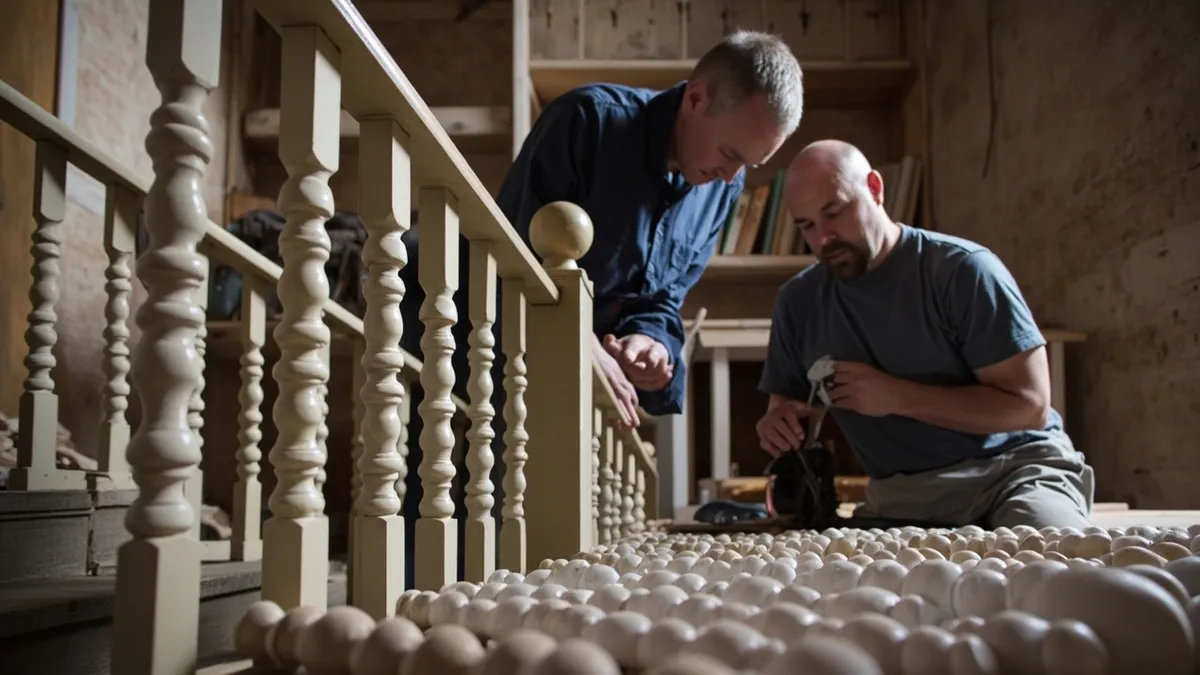
- Photograph the balustrade from both sides.
- Number every spindle with a scratched mark or tag, so each one goes back where it came from.
- Remove the fillets between the spindles and ease them out. A joiner can do this if you're not confident.
- Send the spindles, handrail if it comes off, and newel caps to the workshop.
- Strip the fixed parts (newel posts, strings, treads) in place by hand.
Sound pine spindles go into the dip bath, which reaches every groove at once. Cracked or glued spindles are stripped by hand. Every piece is neutralised and dried, and the detail is hand-finished. Our furniture stripping service covers loose staircase parts, as well as tables, chairs and dressers.
Is it worth stripping spindles yourself?
For most people, not in place. A typical period balustrade has many spindles, each full of detail, and stripping them one at a time on the stairs is where DIY staircase jobs stall. A heat gun scorches the turned detail, chemical stripper drips down the stairs, and sanding flattens the shape.
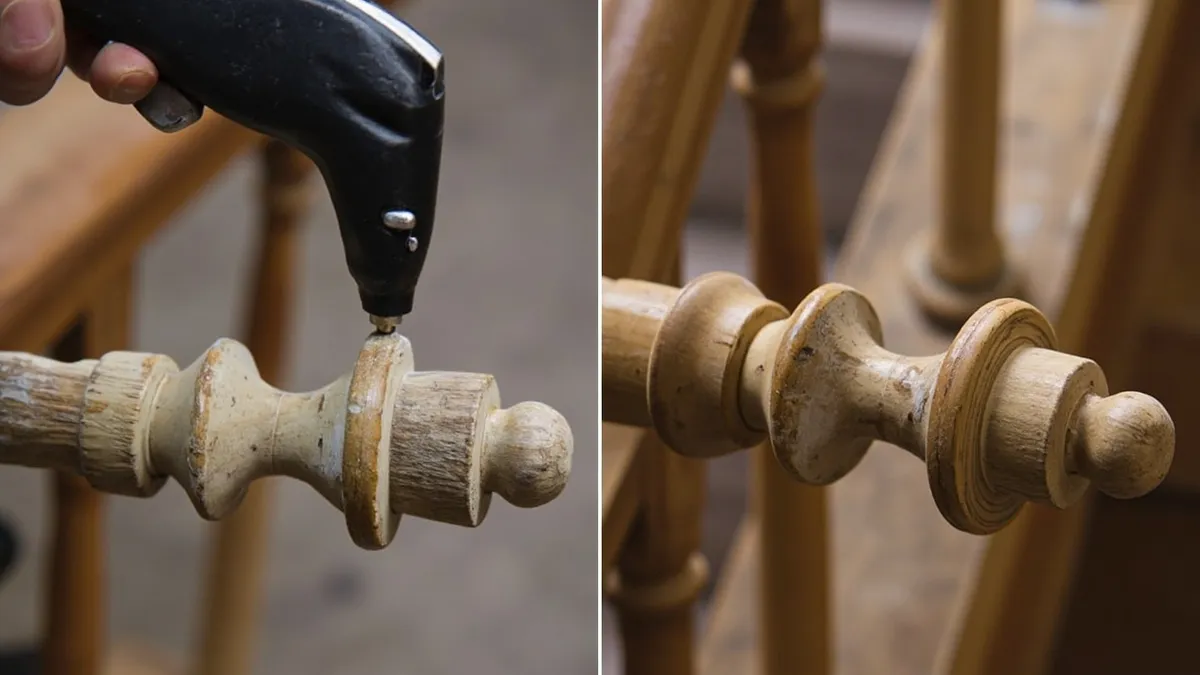
There's also the age of the paint to think about. On a Victorian or Edwardian staircase the bottom layers may contain lead, and the HSE's frequently asked questions on lead list burning old paint off with blow lamps or gas torches, and dry sanding it, among the riskiest jobs in pre-1980s properties. On a stair, dust travels through the whole house. Taking the spindles out and sending them away keeps that out of your home.
Not sure whether yours are worth saving? Send a photo of the balustrade and a close-up of one spindle through our contact page, or call Daniel on 01484 666 333. We'll give you an honest view before you buy anything new.
How much does it cost: strip or replace?
A Victorian or Edwardian staircase is typically £650–£1,200 to strip, quoted per job. The price depends on how many spindles there are, whether the handrail and newel caps come out, how thick the paint is and whether any pieces need hand stripping.
Replacement has costs that are easy to forget. As well as the new spindles, there's fitting, cutting each one to length along the rake, new fillets, and finishing. If you want new spindles to match the old ones, they'll usually need turning to a pattern, which takes longer than buying standard stock. And the newel posts, strings and handrail still need stripping or painting either way.
If you're doing the doors off the landing at the same time, whole-house batches of doors are about £55–£80 per door. See our stripping prices for the published rates.
How should you finish stripped spindles?
Paint, wax or oil all work, and the choice is about the look you want. A popular period approach is to paint the spindles and strings and wax or oil the handrail and treads, which keeps the hard-wearing surfaces natural and the balustrade crisp. Painting from bare wood gives sharp detail again, without the rounded-off look of many old coats.
If you go for a natural finish, stripped pine spindles look warm and even once waxed or oiled, especially when they're all originals from the same staircase. We sell Osmo and Fiddes finishes, plus Farrow & Ball and Little Greene paints, in our wood finishes shop. You can also ask us to finish the pieces in the workshop. For more on finishes for bare pine, see our guide to the best wax and oil finish for stripped pine.
Frequently asked questions
How long does it take to strip a set of spindles?
Larger jobs usually take 2–3 weeks. We'll give you a date when we quote, so you can plan around having the balustrade out.
Can you strip MDF or composite spindles?
No. We strip wood and metal only, not MDF, composite or laminate.
Will stripped spindles still fit back in?
Yes, if they go back in the order they came out. That's why numbering each spindle before removal matters so much.
Get a quote from Double Dipper
Double Dipper is a paint stripping workshop at Unit 3, Crossley Mills, Honley, Huddersfield, stripping wood and metal since 2016, and we're members of the Guild of Master Craftsmen. Every spindle is neutralised and dried before it comes home, ready for your chosen finish.
- Free collection within 20 miles of Honley, covering Huddersfield, Holmfirth, Halifax, Wakefield, Leeds, Bradford and Barnsley.
- Further away? Drop off at the workshop, send smaller items by overnight courier, or ask us to quote a van collection.
- See finished work in our gallery.
Call 01484 666 333, email info@doubledipperpaintstrippers.co.uk or send a photo through our contact page. We're open Monday to Friday 9–5 and Saturday 10–2.
