Journal
How to Strip Paint Off a Staircase and Banisters
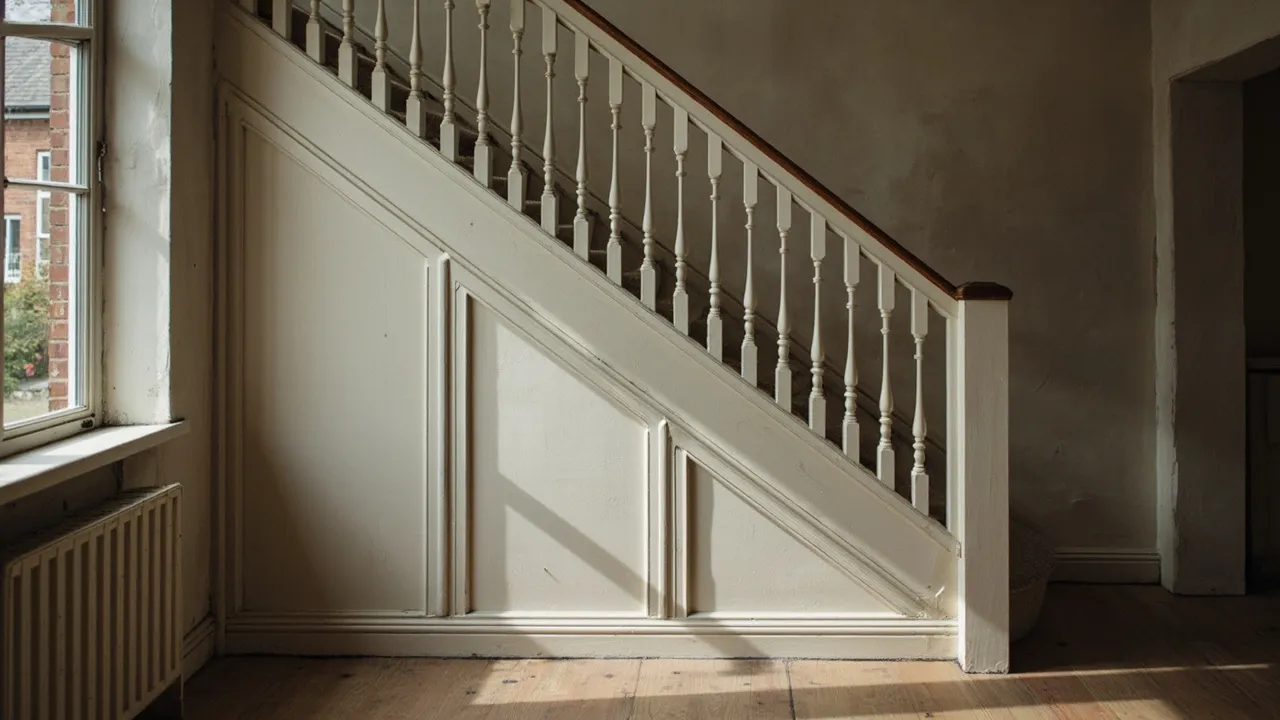
To strip paint off a staircase and banisters, remove what you can, usually the spindles, and strip the fixed parts in place by hand. Loose spindles strip far better in a workshop bath than with a heat gun on the landing. Double Dipper strips removable staircase parts in Honley, and a Victorian or Edwardian staircase is typically £650–£1,200.
- A painted staircase is two jobs: the parts that come out (spindles, handrail, newel caps) and the parts that stay (strings, treads, risers, newel posts).
- Turned spindles are the hardest thing to strip at home. Paint sits in every bead and cove, and a scraper can't follow the shape.
- Older paint on stairs can contain lead, so don't sand or burn it indoors.
- Staircases are quoted per job. A Victorian or Edwardian staircase is typically £650–£1,200.
Can you strip paint off a staircase yourself?
Yes, but it's one of the slowest stripping jobs in a house, and most people underestimate it. A staircase has a lot of surface, a lot of shaped detail and no easy way to work on it. You're kneeling on treads, reaching over the balustrade and trying to keep dust and scrapings out of the hall below.
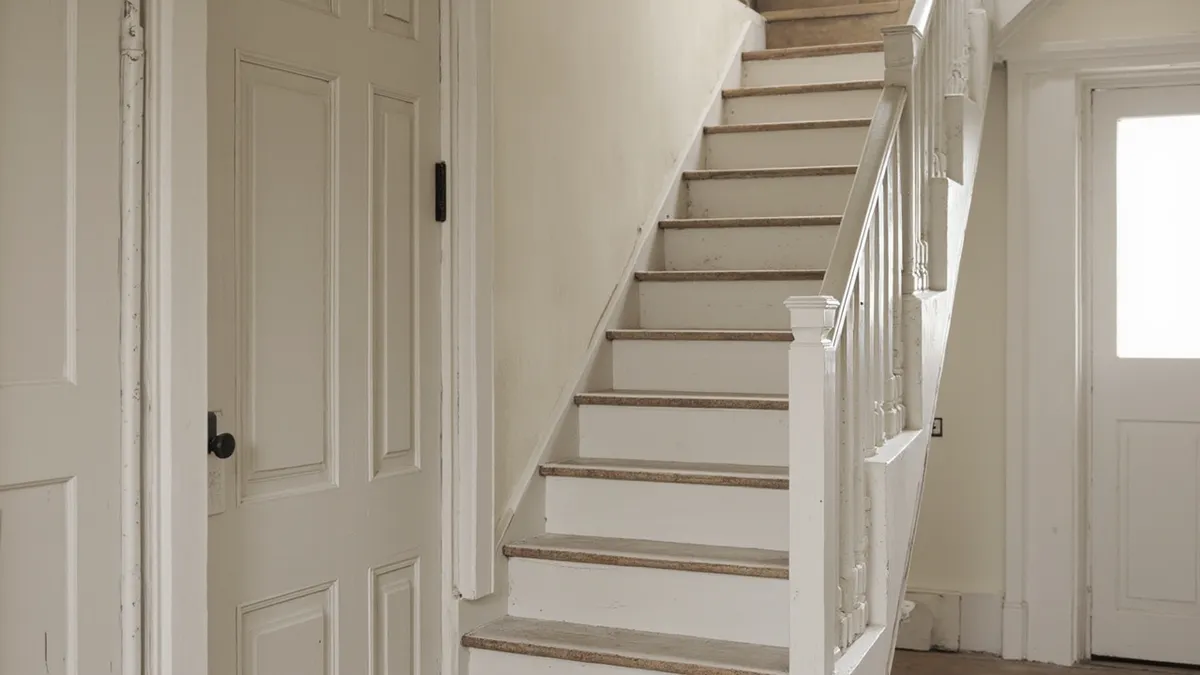
The flat parts are manageable. Treads, risers and the face of the strings can be stripped with a chemical stripper or a heat gun and a scraper, then cleaned up. The problem is the balustrade. A typical Victorian staircase has thirty or more turned spindles, each with rings, beads and coves that have filled up with gloss over the decades. Stripping them in place, one at a time, is where most DIY staircase projects stall.
Which parts of a staircase can come out?
More than you might think. On most period staircases the spindles are held at the top by the handrail and at the bottom by the string or a base rail, with small fillet pieces nailed in the gaps between them. Knock out the fillets and the spindles can usually be eased out without damage.
- Spindles (balusters): usually removable, and they strip very well in the bath.
- Handrail: sometimes removable, depending on how it's fixed to the newel posts. Curved or wreathed rails are best left in place.
- Newel caps and finials: often removable and worth stripping properly, as they carry the finest detail.
- Newel posts, strings, treads and risers: structural, so they stay put and get stripped in place.
Before anything comes out, number every spindle with a scratched mark or a tag, and photograph the balustrade from both sides. Old staircases settle, and spindles are rarely identical in length. If they go back in the same order, they fit. If you're not confident taking the balustrade apart, a joiner can do it in an hour or two.
What's the best way to strip painted spindles?
Dip them. Turned spindles are exactly the kind of shape a stripping bath is good at, because it reaches every groove at once. At home, the choices are all slow:
- Heat gun and shaped scrapers: works on the straight sections, but the rings and beads need a scraper ground to each profile, and it's easy to scorch the wood.
- Chemical stripper and wire wool: gets into the detail better, but takes several applications per spindle on a heavily painted staircase, and it's messy on a stair.
- Sanding: not suitable. It flattens the turned detail and, on older paint, creates dust that may contain lead.
At the workshop, sound pine spindles go into the bath, then every one is neutralised and dried before it comes back. Detail is finished by hand. If a spindle is cracked or has been glued, we strip it by hand instead. Our guide to dip stripping vs hand stripping explains how we decide.
How do you strip the parts that stay in place?
By hand, working from the top of the stairs down, so scrapings fall onto areas you haven't finished yet. A few practical points make it easier:
- Protect the hall. Sheet the floor at the bottom and mask any walls you're keeping. Stripper and softened paint travel further than you expect.
- Keep the stairs usable. Strip alternate treads, so there's always a safe step, or do the work in two halves.
- Start with a test patch. Find out what's under the paint before committing. Some staircases were built to be painted and have filler, patched treads or mixed timbers underneath.
- Neutralise and clean. Whatever stripper you use, follow its instructions for cleaning off residue before any finish goes on.
- Ventilate. A stairwell traps fumes. Open doors and windows at the top and bottom.
Treads take the most wear. Once they're stripped, many people choose to paint the risers and strings and wax or oil the treads and handrail, which is both practical and period-appropriate.
Spindles and newel caps piled up and waiting? Call Daniel on 01484 666 333 or send photos through our contact page. We'll tell you what can go in the bath and give you a price and a date.
Is the paint on my staircase likely to contain lead?
If the house is Victorian, Edwardian or interwar, the lower layers of paint on the stairs may well contain lead. Staircases are among the most repainted parts of a house, so there are often many layers, and the oldest ones are at the bottom.
That matters because the usual DIY shortcuts are the risky ones. Sanding creates fine dust, and burning paint off with a heat gun at high temperature can release fumes. On a stair, that dust settles through the whole house. If you're unsure, use a lead test kit on a small scraping before you start, keep children and pets away, and avoid dry sanding altogether. Our article on safely stripping lead paint from a Victorian door covers the same principles.
Sending the spindles to a workshop takes most of the detailed stripping, and most of the mess, out of your home.
How much does it cost to strip a staircase?
Every staircase is quoted per job, because they vary so much: the number of spindles, whether the handrail comes out, how much paint there is and what's hidden under it. As a guide, a Victorian or Edwardian staircase is typically £650–£1,200.
The easiest way to get a firm price is to send photos of the whole balustrade, a close-up of one spindle, and a note of how many there are. You can also see our published stripping prices, which is handy if you're also doing the doors off the landing. Whole-house batches of doors are about £55–£80 per door.
How do the spindles get to the workshop?
If you're within 20 miles of Honley, we collect for free. That covers Huddersfield, Holmfirth, Halifax, Wakefield, Leeds, Bradford and Barnsley. Further away, you can drop them off at Unit 3, Crossley Mills, Honley, HD9 6PL, send a well-packed bundle by overnight courier, or we can quote a van collection.
Bundle the spindles in the order you numbered them and tape the fillets in a bag with them. Handrails and newel caps travel best wrapped in blankets.
What finish suits a stripped staircase?
Stripped pine spindles and handrails look good waxed or oiled, and a hardwearing oil is a sensible choice for treads that get walked on every day. If you'd rather paint, starting from bare wood gives you crisp detail again and a finish that lasts. You can finish them yourself using products from our wood finishes shop, including Osmo and Fiddes, or ask us to finish them in the workshop. For painted balustrades we also stock Farrow & Ball and Little Greene paints.
Get a quote for stripping your staircase
Double Dipper has stripped wood and metal from Crossley Mills in Honley since 2016, and we're members of the Guild of Master Craftsmen. To get your staircase moving:
- Call 01484 666 333 or email info@doubledipperpaintstrippers.co.uk.
- Send photos of the balustrade through our contact page.
- Read more about our furniture and joinery stripping service, or see finished work in our gallery.
We're open Monday to Friday 9am–5pm and Saturday 10am–2pm.
