Journal
How to Strip Paint from a Cast-Iron Radiator
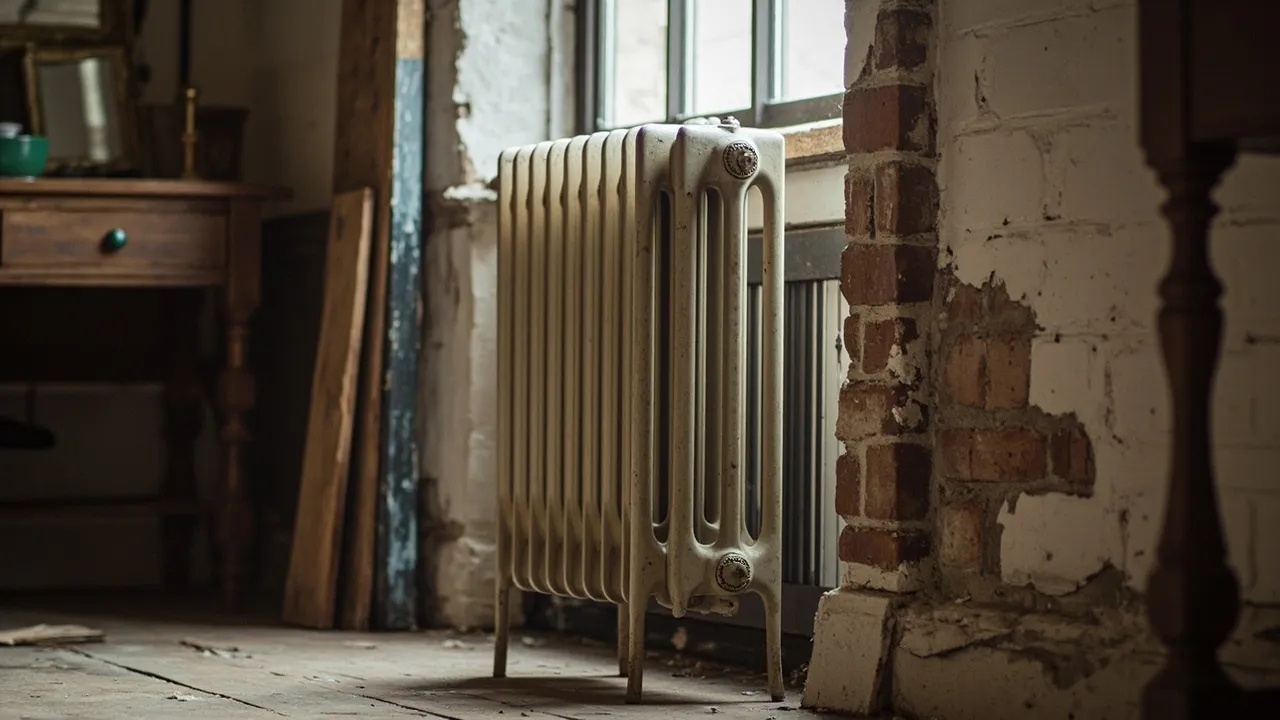
The best way to strip paint from a cast-iron radiator is to have a plumber drain and disconnect it, then send it to a workshop to be stripped to bare metal. Stripping it on the wall rarely works, because you can't reach between the columns. Double Dipper strips radiators in Honley, treats the rust and can refinish them.
- A radiator must be drained and disconnected by a plumber before it comes to us.
- Stripping in place leaves paint between the sections and on the back, and makes a mess of walls and floors.
- Old radiator paint may contain lead, so avoid dry sanding and heat in the house.
- We remove paint, powder coat and old enamel, treat the rust, and finish in bare metal, lacquer, waxed black, high-temperature enamel or oil gloss.
Can you strip paint from a radiator without removing it?
Not properly. You can rub down the front faces and repaint them, but you can't strip a cast-iron radiator back to bare metal while it's on the wall. The trouble is the shape. A column radiator is a row of sections with narrow gaps between them, and each section has curves, ridges and often cast decoration. The back faces sit a few centimetres from the wall. Brushes, scrapers and sanding pads simply don't reach most of the surface.
There are other problems too:
- Mess. Chemical stripper and paint sludge drip into the gaps, onto skirtings and floorboards, and down the wall behind.
- Heat. Using heat on a radiator that's connected to the system, with pipes, valves and decorating nearby, is asking for trouble. Cast iron also soaks up heat, so it's slow.
- Uneven results. You end up with bare metal on the front and old paint in the gaps, so the new finish never looks right.
If the paint is sound and you only want a fresh colour, a careful rub-down and repaint may be enough. If you want the paint off, the radiator has to come off the wall.
How do you get a cast-iron radiator ready for stripping?
Book a plumber to drain and disconnect it. That's a firm rule: we can only accept radiators that have been drained and disconnected by a plumber before they come in. Your plumber will know how to isolate it safely, deal with the system and cap off the pipes while it's away.
A few other practical points:
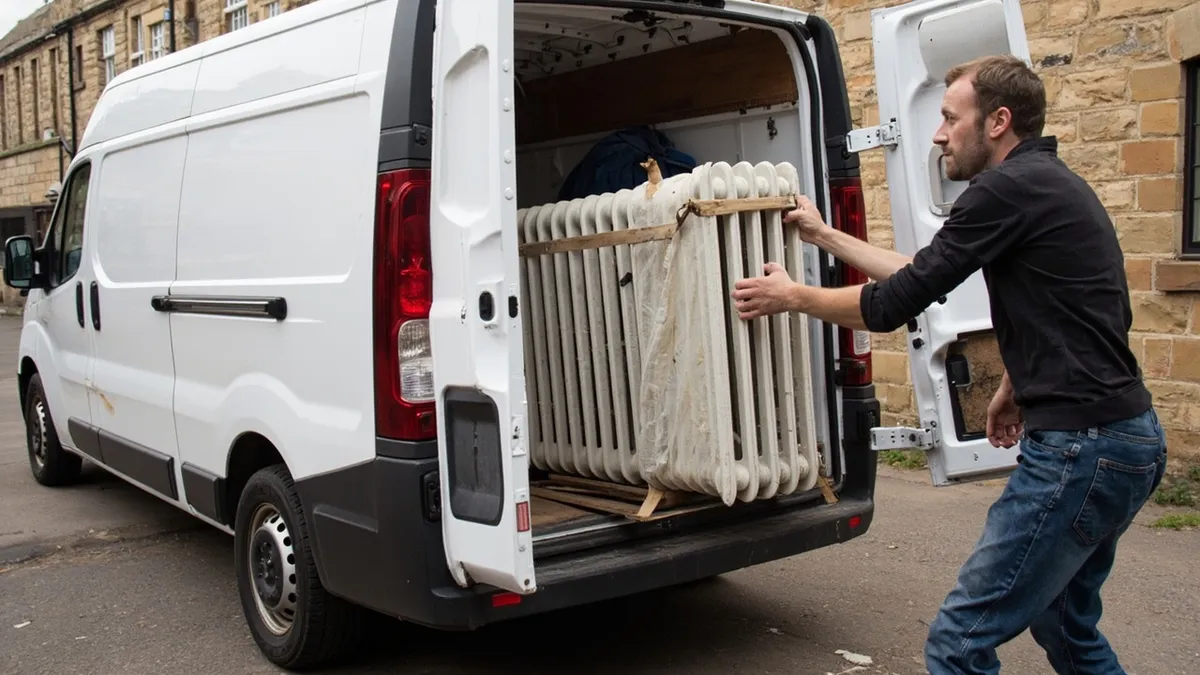
- They're heavy. Cast-iron radiators weigh far more than modern steel panels. Plan for at least two people to move one, and protect floors and stairs.
- Remove the valves if your plumber can. Tell us about any fittings that are left on.
- Note the position. A quick photo before it comes off helps when it goes back on.
- Ask about refitting. Talk to your plumber about checking the radiator and its connections when it goes back on the system.
Is old radiator paint a lead risk?
It can be. Cast-iron radiators in older houses have often been painted many times, and some of those early coats may contain lead. You can't tell by looking. Dry sanding and burning old paint are the methods most likely to create lead dust and fumes, so they're best avoided indoors.
Taking the radiator out and having it stripped in the workshop means none of that happens in your house. If you're worried that you or someone in your household has been exposed to old paint dust, speak to your GP or NHS 111. There's more on this in our guide to safely stripping lead paint.
Thinking about stripping your radiators? Send a photo on WhatsApp, or call Daniel on 01484 666 333. Tell us how many radiators you have and roughly how many sections each, and we'll give you a price and a date, usually within a day or two.
What does Double Dipper do to a radiator?
We take it back to bare metal, deal with the rust, and send it home ready to use or ready to paint. Paint, powder coat and old enamel are all removed, including the layers packed into the gaps between sections and around any cast pattern. Detail is finished by hand.
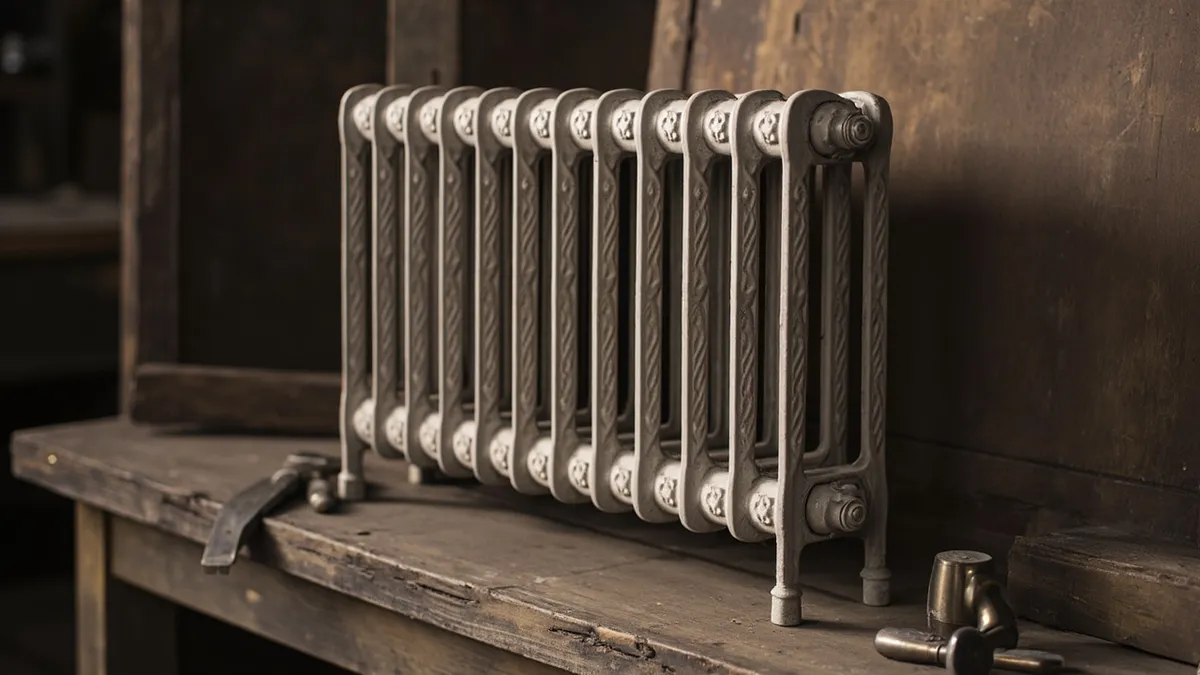
Once it's stripped, you'll see what condition the iron is really in. Any rust is treated before the radiator leaves the workshop. That matters, because bare cast iron starts to rust quickly and paint put over untreated rust soon lifts. Our article on rust treatment for cast-iron radiators before repainting explains why.
You can then choose a finish:
| Finish | What it suits |
|---|---|
| Bare metal | You or your decorator will prime and paint it yourselves |
| Clear lacquer | Showing off the iron and any cast pattern |
| Waxed black | A traditional, low-sheen period look |
| High-temperature enamel | A durable painted finish made for heat |
| Oil gloss | A classic painted radiator to match your woodwork |
More detail is on our cast-iron radiator stripping service page. If you want to paint it yourself, see the paints in our shop.
How long does it take and what does it cost?
Radiators usually take 2–3 weeks, like our other larger metal pieces such as fireplaces and gates. That's worth planning around with your plumber, particularly in the colder months. Doing one room at a time, or waiting for the summer when the heating's off, can make it easier.
Because radiators vary so much in size, section count and paint build-up, they're priced per job. Send a photo and the number of sections for a quote. You can see our published prices for doors, fireplaces and furniture on the price guide.
How do I get my radiator to the workshop?
Collection is free within 20 miles of our Honley workshop, which covers Huddersfield, Holmfirth, Halifax, Wakefield, Leeds, Bradford and Barnsley. Further away, such as Sheffield, Manchester, York or Harrogate, you can drop off at Unit 3, Crossley Mills, Honley, HD9 6PL, or we'll quote a van collection. Given the weight, a van collection is usually the easier choice for more than one radiator.
If you're restoring a whole period house, it's often worth sending doors and fireplaces at the same time. We also strip cast-iron fireplaces through our fireplace stripping service, and doors and furniture too. We strip wood and metal only.
Frequently asked questions
Can I bring a radiator that's still full of water?
No. Every radiator must be drained and disconnected by a plumber before it comes in. That keeps the job clean and safe for everyone, and it's the only way we can accept it.
Can I just paint over the old paint?
If the existing paint is sound and you're happy with the look, a careful rub-down and repaint may be enough. If it's flaking, rusting through or thick enough to hide the detail, stripping gives a much better result.
Do I need to do anything after it comes back?
Have your plumber refit and reconnect it and check it over. If you chose bare metal, prime and paint it without leaving it too long, so the iron doesn't start to rust.
Get a quote
Double Dipper is a Guild of Master Craftsmen member, trading from Crossley Mills in Honley since 2016.
- Call 01484 666 333 (Monday to Friday 9am–5pm, Saturday 10am–2pm) or email info@doubledipperpaintstrippers.co.uk.
- Send photos through our contact page.
- See restored metalwork and doors in our gallery.
