Journal
Rust Treatment for Cast Iron Radiators Before Repainting
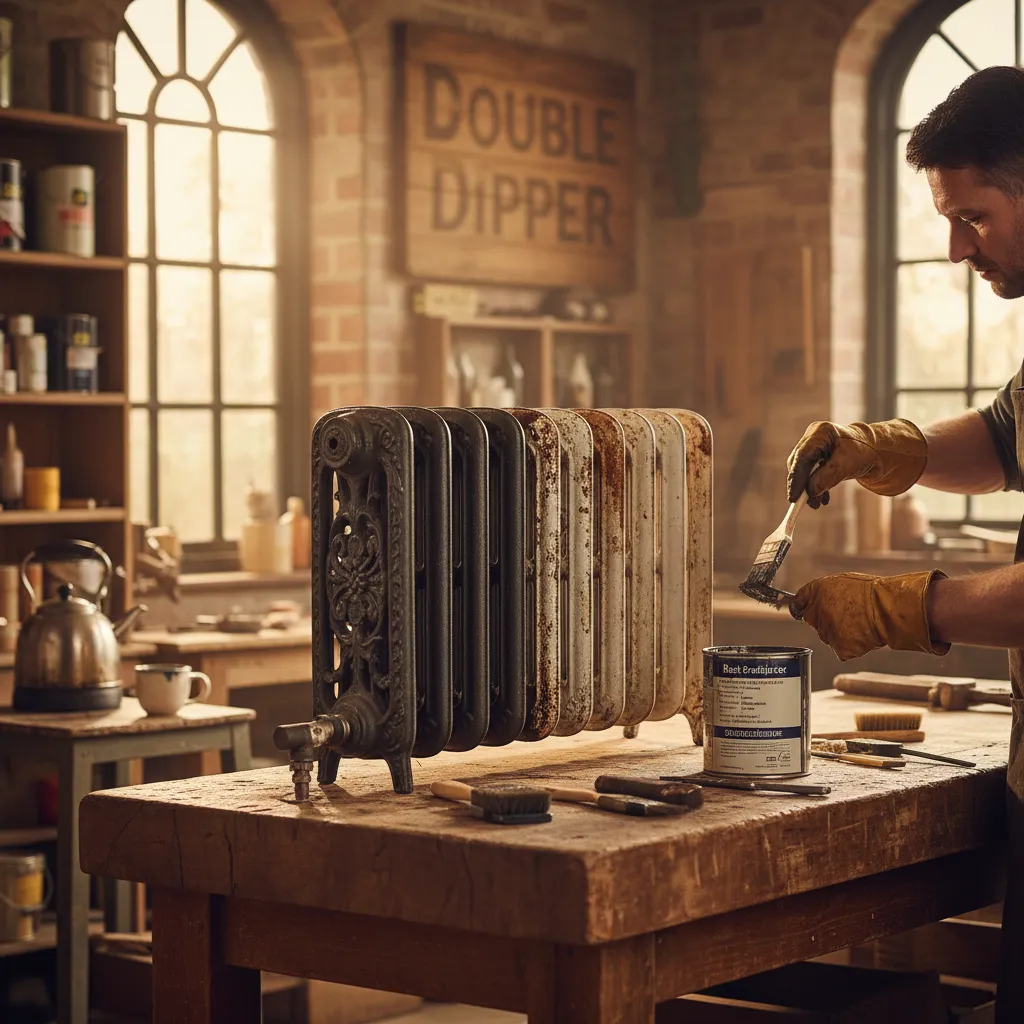
Quick answer: rust treatment for cast iron radiators before repainting
What is rust treatment for cast iron radiators before repainting?
Rust treatment for cast iron radiators before repainting means stripping failed paint, taking loose rust back to sound metal, neutralising what remains with a converter, and priming the same day so flash rust does not spoil the bare surface.
A radiator in poor condition usually shows orange weeping at the column joints, flaking paint around the brackets, and a gritty surface under any topcoat that still looks intact. Daniel Fitzpatrick at Double Dipper Paint Strippers in Honley sees this combination most weeks on Victorian and Edwardian cast iron sent in from across West Yorkshire.
How do you prepare a rusty radiator for painting?
You prepare a rusty radiator by taking it off the wall, removing every trace of flaking paint and rust down to sound metal, and sealing it with a rust-converting primer the same day. Wire brushing alone rarely reaches the gaps between columns, so a dip tank or sandblasting gives a cleaner starting point on ornate Victorian sections.
How to prep rusty cast iron for paint?
Prep rusty cast iron for paint by degreasing first, then attacking the corrosion with wire wool or a needle scaler before the converter goes on. Swab-test any pre-1980s radiator for lead before you abrade; old lead-based coatings turn to dust fast and need a proper mask and wet-cleaning routine.
Can I just paint over rust on a radiator?
No. Paint applied over active rust lifts within months because the corrosion keeps spreading under the film. We have had radiators back on the bench where Hammerite went straight onto orange bloom; the new finish blistered off in sheets the following winter.
Bring the radiator to the workshop at Crossley Mills, Honley, or call 01484 666 333 for a quote.
Preparing a rusty radiator for paint: the practical steps
Mechanical removal of flaking paint and surface rust
Strip every loose, blistered, or cracking paint film with a shavehook or pull scraper, working around the raised lettering and decorative ribs without gouging the metal. Once the big flakes are off, move to a wire brush or a 240-grit flap pad on the column joints, brackets, and headers. These are the spots where rust bleeds through first on older radiators.
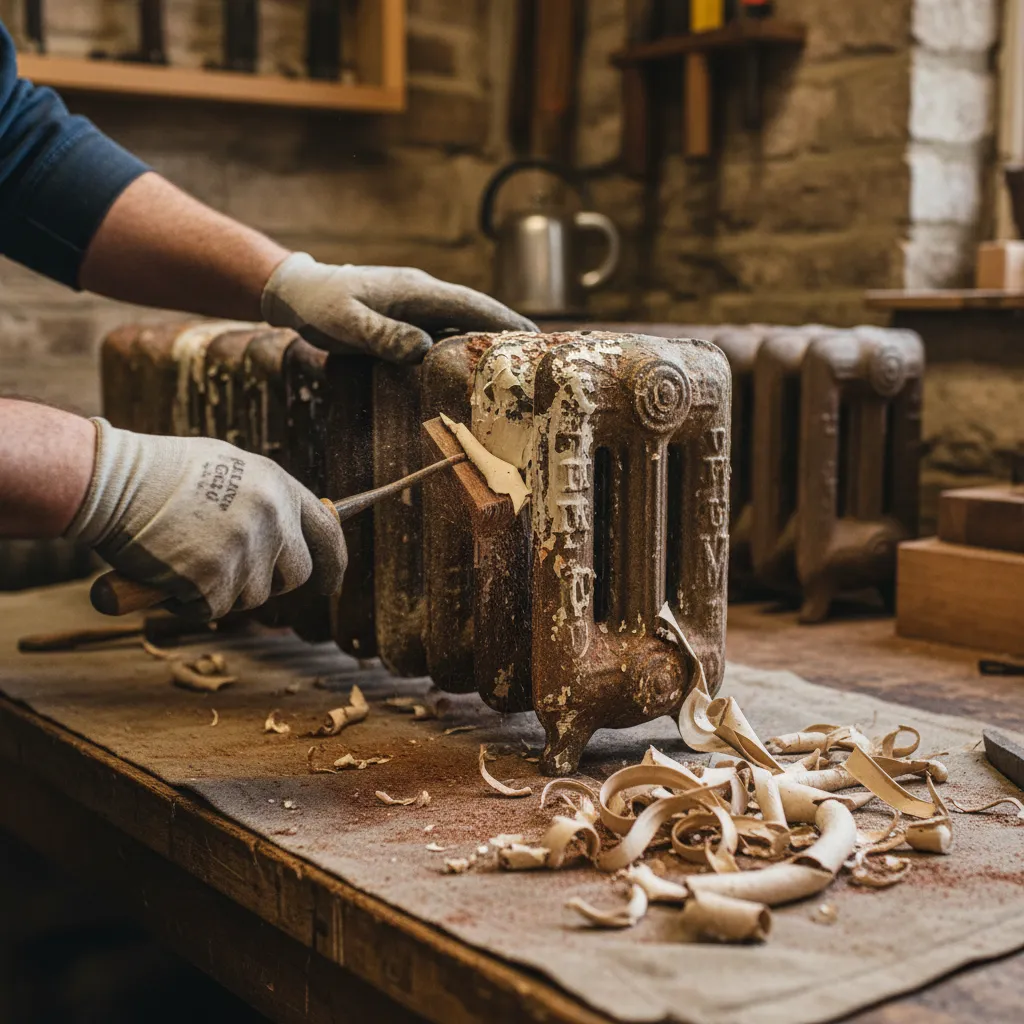
Sandblasting reaches the tight gaps between sections in a way scrapers cannot, which is why our bath-stripping tank at Crossley Mills handles cast iron more reliably than a weekend with a drill. If the sanding dust from the coating looks orange or chalky, stop and test it for lead before going further.
Wipe the radiator down with a tack cloth and prime the same day, because bare cast iron picks up flash rust from morning damp alone.
Degreasing, drying, and the lead-paint check
Wash the whole body with white spirit or a water-based degreaser, then rinse with clean water and towel-dry inside every accessible channel. Moisture trapped in the threaded nipples is the single most common cause of rust returning through a new paint film within twelve months.
Any radiator installed before the 1980s almost certainly carries lead-based paint, so run a 3M LeadCheck swab on the sanding dust before abrading further. A positive read means switching to chemical stripping or sending the piece to a workshop with a sealed dip tank rather than creating lead dust at home.
Once dry, brush a rust-converting primer into every joint before the topcoat goes on.
Common questions about rust treatment for cast iron radiators before repainting
How do you prepare a rusty radiator for painting?
Scrape away each loose flake of paint using a wire brush, then work the corroded areas back to clean bright metal with Scotch-Brite pads or 120-grit abrasive paper. Finish by wiping the surface with methylated spirit or a degreaser so neither dust nor grease can linger beneath the primer coat.
How to prep rusty cast iron for paint?
Cast iron prep means getting into the columns, not just the flat faces. Run a narrow wire brush down each joint, blow out the dust, and treat any rust you cannot reach mechanically with a converter such as Rust-Oleum. Prime within an hour of stripping, because bare cast flashes rust fast in a damp Yorkshire kitchen.
Can I just paint over rust on a radiator?
No. Paint applied over active rust lifts within months because moisture keeps working underneath the film. Neutralise the rust first, then prime, or you will be redoing the job next winter.
How to prep a cast iron radiator for painting?
Take it off the wall if you can, strip it to bare metal, and check for lead paint if it predates the 1980s. Our bath dip at Crossley Mills gets into every fin and column in one pass, which is what makes the finish last.
Choosing the best paint and sending your radiator to a specialist
Best paint for cast iron radiators: Hammerite, Rust-Oleum, and beyond
For cast iron radiators that run hot in use, a heat-resistant enamel gives the most durable finish. Hammerite Radiator Paint and Rust-Oleum Radiator Paint both hold their colour at normal operating temperatures, and either takes cleanly over a cured metal primer.
Spray cans suit ornate sections where brush marks would clog the scrollwork; tins of the same product, brushed on with a fine foam roller, give a smoother skin on flat panels. Match primer and topcoat from the same maker so the chemistry agrees, and allow the full cure window (often a week at room temperature) before turning the radiator back on. Little Greene and Farrow & Ball do not sell a dedicated radiator enamel, so stick with Hammerite or Rust-Oleum for the working surfaces.
When bath dipping beats sandblasting, and how to get started
Bath dipping in a caustic tank strips every layer from deep between the columns in one pass, where sandblasting leaves pockets of old paint and rust that flare up months later. It is the safer choice for Victorian and Edwardian radiators with lead-based coatings installed before 1980, because the tank does the work without blasting lead dust into the room.
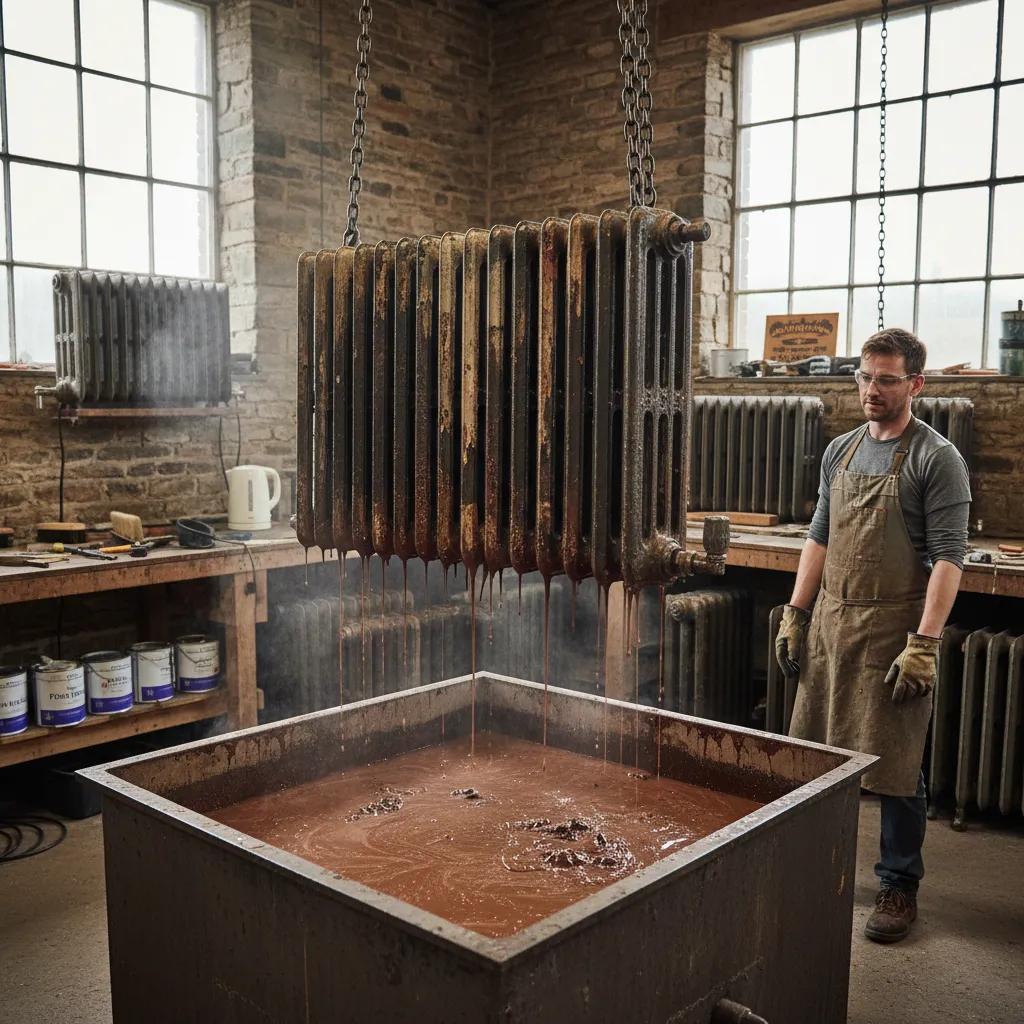
At Double Dipper in Honley, Daniel Fitzpatrick handles every radiator himself from assessment to priming, with pick-up and delivery across West Yorkshire. To start, send a photo and rough dimensions through the workshop contact page, or ring 01484 666 333 for a quote.
Sources
- Cast Iron Radiator Paint Guide: Prep, Paint & Finish | Paladin
- Spraying Cast Iron Radiators and Covers | Vanda Coatings
- Cast Iron Radiator Finishing Advice - Forum Archive
- How to Clean a Cast Iron Radiator | Paladin Radiators
- A Complete Guide To Maintaining Cast Iron Radiators | Trads
- How to Paint a Radiator: A DIY(ish) Approach - Painting by the Penny
- How to Deep Clean Cast Iron Radiators - Everyday Old House
- Cleaning up painted cast iron radiators - How? : r/centuryhomes
