Journal
Door Stripping by Dipping: What Happens in the Dip Tank
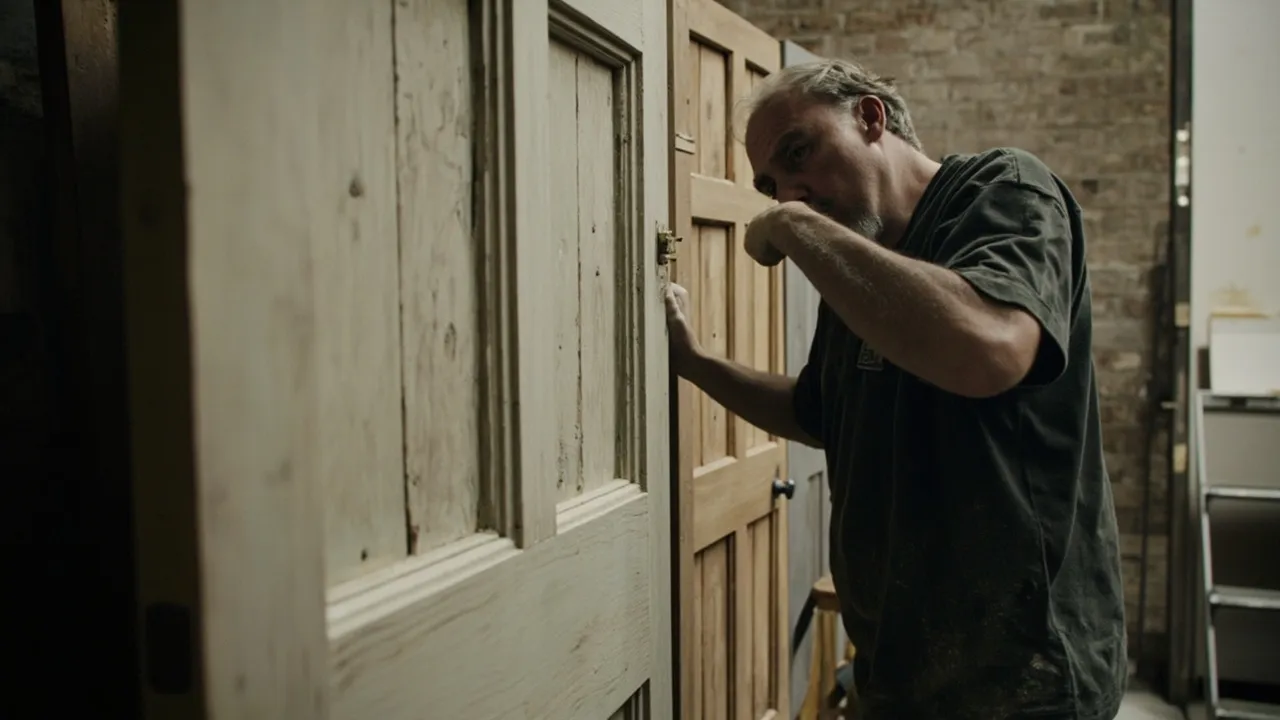
When your door goes in the dip tank at Double Dipper, it's checked, stripped in the bath until every layer of paint lets go, then neutralised, dried and hand-finished. Fragile doors are stripped by hand instead. Internal pine doors cost from £60, and most doors are ready to collect in 7–10 working days.
- Door dipping strips the whole door at once, including paint packed deep in the mouldings.
- Every door is inspected first; veneered, loose or glazed doors may be hand-stripped instead.
- Neutralising and drying are part of the job, not an extra, so the timber comes back stable.
- Most doors take 7–10 working days; a whole house of doors about a fortnight.
Before the dip: how does your door get to us and get checked?
Your door arrives by drop-off, courier or collection, and then it's inspected before anything else happens.
Step 1: Getting your door to the workshop
You either drop it off, or we collect it. Collection is free within 20 miles of our workshop at Unit 3, Crossley Mills, Honley, HD9 6PL, which covers Huddersfield, Holmfirth, Halifax, Wakefield, Leeds, Bradford and Barnsley. From further away, such as Sheffield, Manchester, York or Harrogate, you can drop off, send smaller items by overnight courier, or have a van collection quoted with the job.
Before the door leaves your house, take off the handles, hinges, locks, letterplates and any other fittings, and keep them together in a bag. If something is painted in solid or seized, leave it on and let us know.
Step 2: Checking every door first
Not every door should go in the bath, so each one is inspected first. Before we decide on a method, we look at:
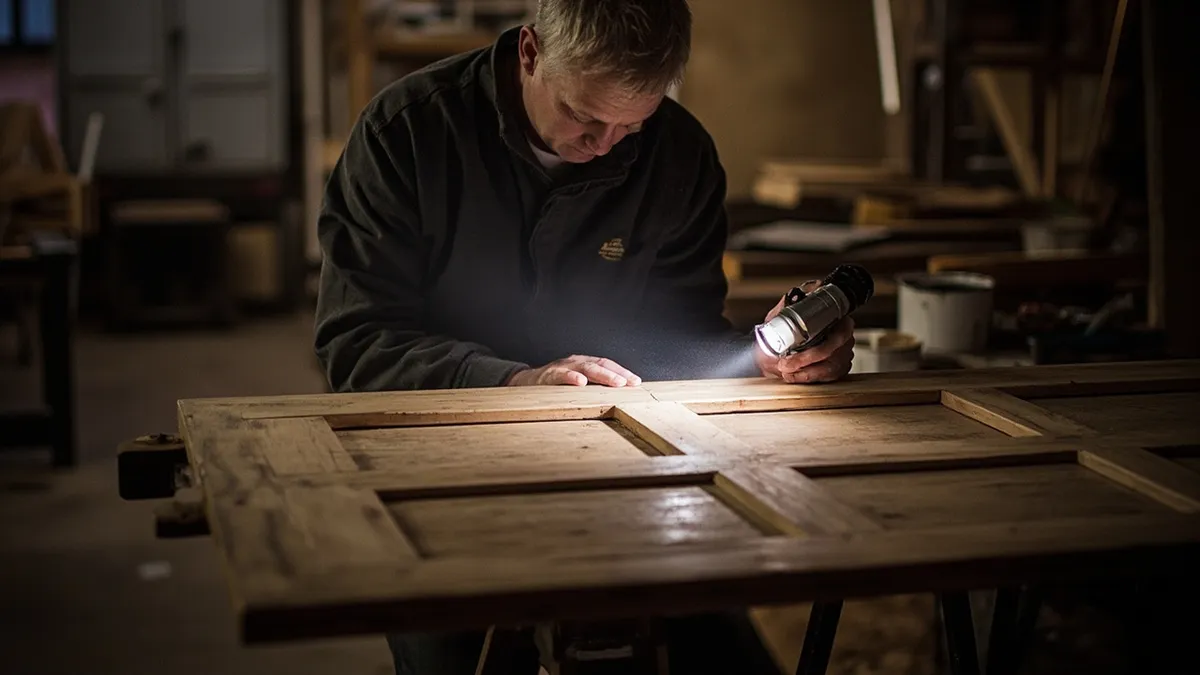
- The timber. Solid pine dips very well. Oak and other hardwoods need a closer look.
- The joints. Old doors were often put together with animal glue, which can soften. Sound, tight joints are fine; loose ones are a warning sign.
- Veneer and plywood. Thin veneers and plywood panels can lift, so these doors are usually stripped by hand.
- Glass. If glass can come out, it does. If leaded or stained glass has to stay in, the door is hand-stripped around it.
We tell you which method we'll use before we start. If you'd like to understand the choice in more detail, read dip stripping vs hand stripping: which suits your piece.
In the workshop: what happens in the dip tank?
The door is stripped in the bath, then neutralised and dried, and each of those three stages matters as much as the others.
Step 3: The stripping bath
The door is lowered into the stripping bath and left until the paint and varnish soften and let go. The big advantage is that the bath works on every surface at once. Panel corners, the edges of beading, the gaps round the panels and the deep curves of the mouldings all get the same treatment. A heat gun or scraper can't do that, which is why doors stripped by hand at home so often keep paint in the corners.
Time in the bath depends on how much paint there is and what kind. A door with decades of gloss takes longer than one with a single coat of emulsion. We keep an eye on it and take it out as soon as the paint has lifted, rather than leaving it in longer than it needs.
Dipping also keeps old paint out of your house. Paint on older doors can contain lead, and dipping means none of it is sanded or burned in your home. There's more on that in our guide to safely stripping lead paint from a Victorian front door.
Step 4: Neutralising
Every door is neutralised after stripping, because stripping leaves residue in the timber, and if it isn't dealt with, it can affect the wood and the finish you put on later. After the bath, the softened paint is cleared away and the door is neutralised. This is the step that separates careful stripping from a quick dip, and it's included in every price we quote.
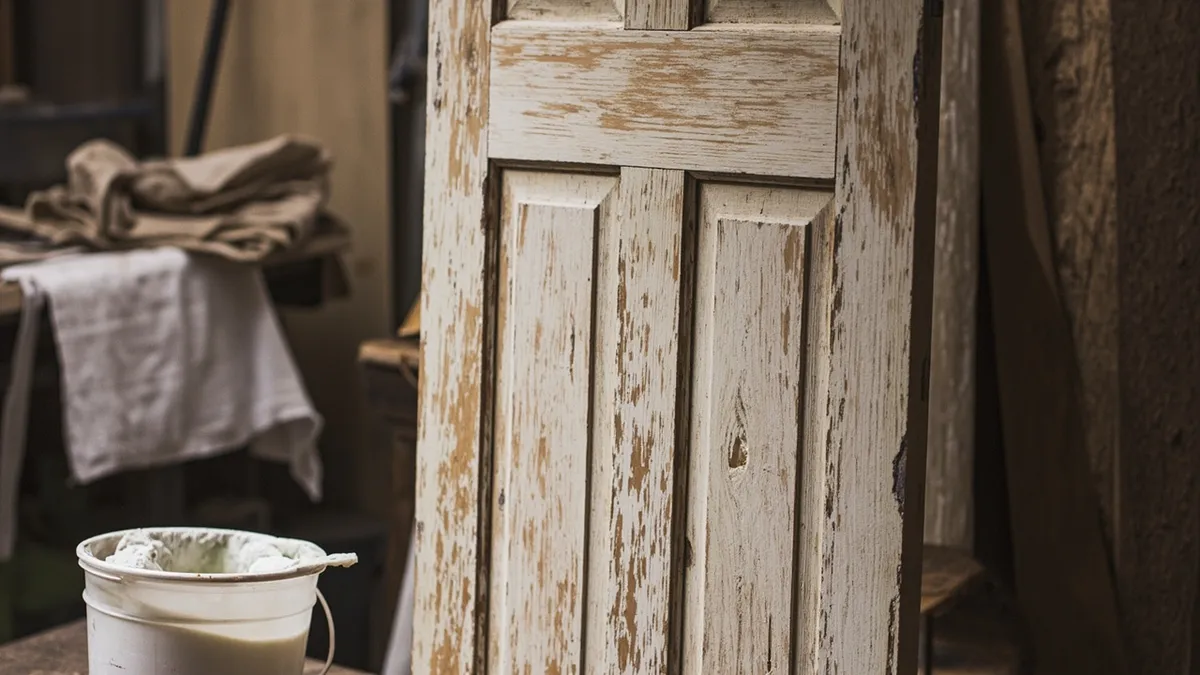
Neutralising matters most when you come to finish the door. Wax, oil and paint all need a clean, stable surface to take properly. A door that hasn't been neutralised can cause a finish to fail or discolour.
Thinking of having your doors dipped? Take a photo of each door and send it on WhatsApp, or call Daniel on 01484 666 333. You'll usually get a price and a collection or drop-off date within a day or two.
Step 5: Drying
Every door is dried slowly and properly. Wet timber that's rushed can move, so nothing leaves the workshop until it's dry. This is one of the reasons dipping takes days rather than hours. The door needs time to settle back to a stable state before it's fitted, finished or collected.
Solid pine doors that are neutralised and dried properly come back straight and sound. Problems after dipping mostly come from glued joints and veneers, which is exactly why those doors are checked in step 2.
After the dip: how is your door finished and returned?
The detail is finished by hand, then the door is either finished in the workshop or handed back bare and ready for you to finish.
Step 6: Hand-finishing
Once dry, the door is checked over and the detail is finished by hand. Any stubborn traces of paint in the deepest corners are cleaned out, and the surface is prepared so it's ready for whatever finish you choose.
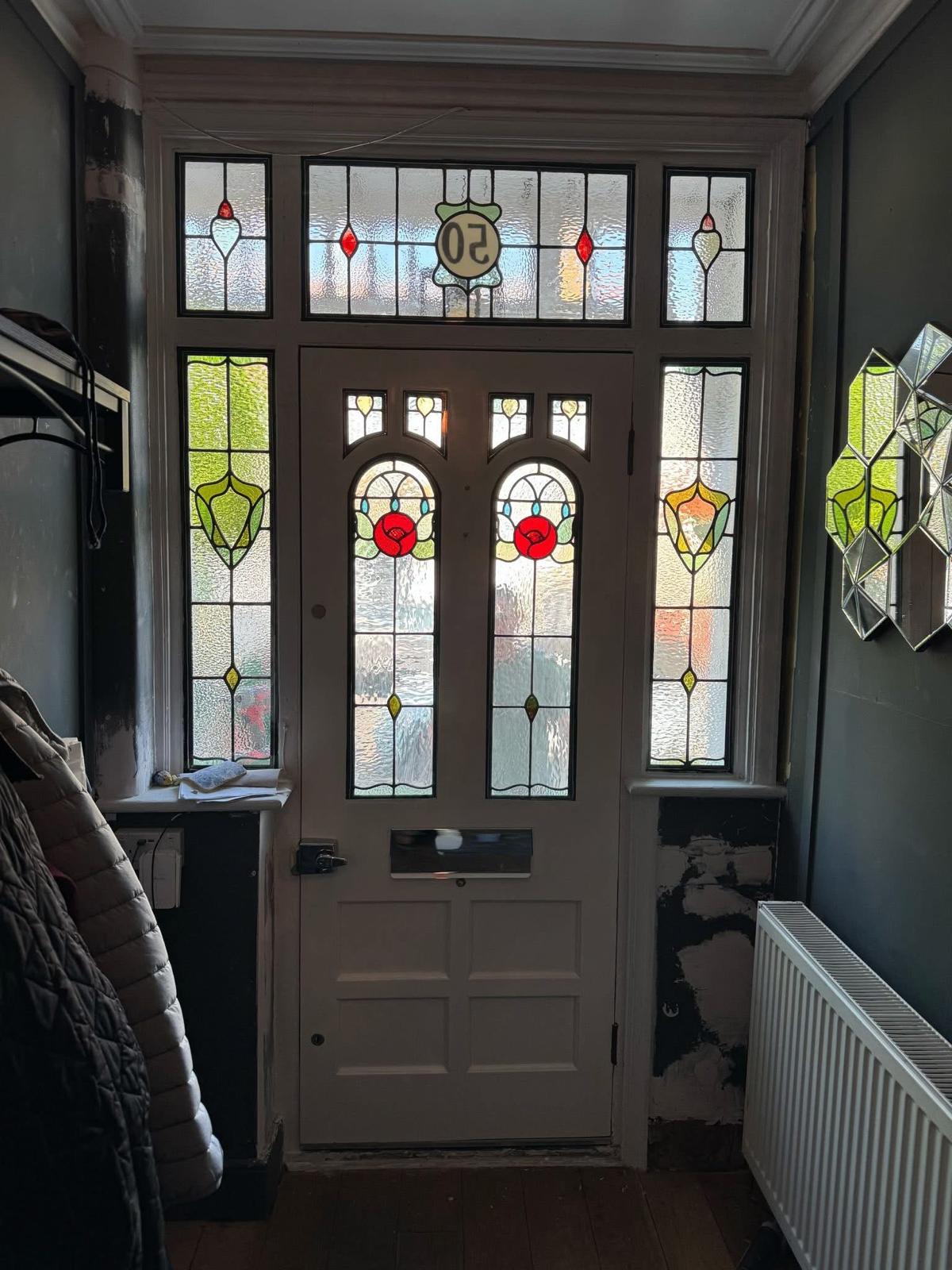
Step 7: Finishing and collection
You can take your door home bare and ready for wax, oil or paint, or we can finish it for you in the workshop using the products we sell: Osmo, Fiddes, Farrow & Ball and Little Greene. If you'd like to do it yourself, our guide to the best wax and oil finishes for stripped pine doors will help, and our wood finishes are available to buy.
When the door is ready, we'll let you know so you can arrange to get it home.
When do we hand-strip instead of dipping?
We hand-strip whenever the bath could do more harm than good. That's usually a door with thin veneer, plywood panels, loose or glued joints, or leaded and stained glass that can't be taken out. Hand stripping takes longer, but it lets us work around the delicate parts and protect them.
Being honest about this is part of doing the job properly. A quick dip on the wrong door can lift a veneer or open a joint, and that can't be undone. If we think your door should be hand-stripped, we'll say so and explain why before any work starts. Either way, the door is still neutralised, dried and finished by hand.
How much does door dipping cost, and how long does it take?
These are our published prices, all including neutralising and drying:
| Door | Price |
|---|---|
| Internal four-panel pine door | From £60 |
| External or stained-oak door | £80–£95 |
| A whole house of doors, stripped as one batch | About £55–£80 per door |
Most doors are ready in 7–10 working days. A full house of doors usually takes about a fortnight. See our door stripping prices for more detail.
Frequently asked questions
Is door dipping the same as dip and strip?
Yes. "Door dipping", "dip and strip" and "doors dipped and stripped" all mean stripping a door in a bath rather than by hand.
Can every door be dipped?
No. Sound wooden doors can. Fragile, veneered or glazed doors may be hand-stripped instead, and we don't strip uPVC, composite or laminate doors at all.
Will dipping damage my door?
Not a sound door that's checked first, neutralised and dried properly. Doors that aren't suited to the bath are stripped by hand.
Get a quote for door dipping
Double Dipper is a Guild of Master Craftsmen member working from Crossley Mills in Honley since 2016.
- Call 01484 666 333 (Monday to Friday 9am–5pm, Saturday 10am–2pm) or email info@doubledipperpaintstrippers.co.uk.
- Send photos through our contact page.
- Read more about our door stripping and dipping service.
