Journal
Antique Pine Dresser Restoration: Strip, Repair and Finish
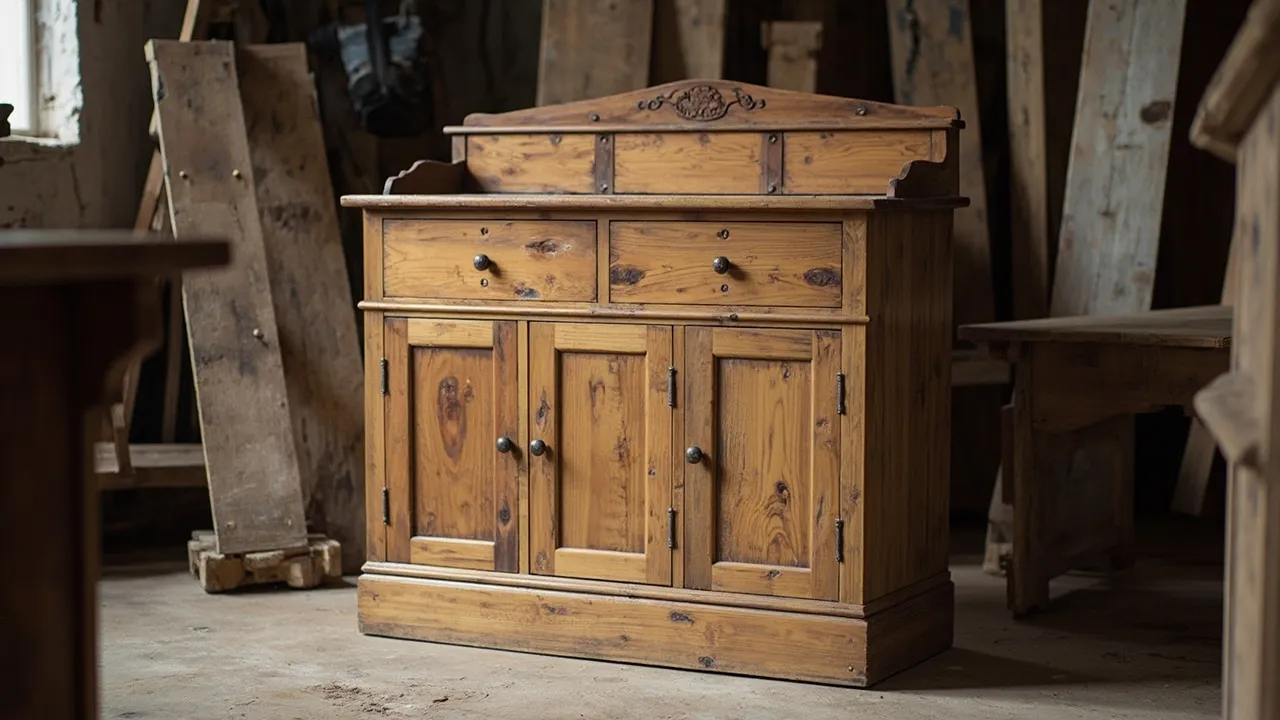
To restore a painted or tired antique pine dresser, take it apart into base, rack and doors, strip the sound solid pine in a dip bath, hand-strip anything glazed, veneered or loosely jointed, then neutralise, dry and wax or oil it. At Double Dipper in Honley we strip dressers this way, and here's how each step works.
- Split the dresser first: the rack, base, doors and drawers are stripped as separate pieces.
- Solid pine dips well; glazed doors, thin backs and glued repairs are usually stripped by hand.
- Old paint may contain lead, so avoid dry sanding or burning it off indoors.
- Finish matters as much as stripping: wax, oil or paint all work on properly neutralised pine.
Is it worth restoring an old pine dresser?
Usually, yes. An old pine dresser, whether a Welsh dresser, a farmhouse kitchen dresser or a simple Victorian one, is made of slow-grown timber with honest joinery, and it's built to be taken apart and repaired. Underneath the paint there's often a warm, mellow pine that a new piece can't match.
Many dressers were painted decades ago to hide wear, to match a kitchen or simply because pine was out of fashion. Others were stripped badly at some point and left grey, blotchy or sticky. Both kinds can be brought back. The questions are how much paint is on it, what condition the joints are in, and whether it has glass, veneer or old repairs that need gentler treatment.
How do you tell what a painted dresser is made of?
Look where the paint hasn't reached. Open the drawers, check the drawer sides and bottoms, the inside of the cupboard doors, the back boards and the underside of the base. Bare timber in these places tells you a lot about what's under the paint on the front.
Signs of solid pine include visible growth rings on end grain, hand-cut dovetails on drawers, and knots showing through the paint as slightly raised or yellowed patches. If an edge shows a thin layer over a different timber, the piece may be veneered, and veneer shouldn't go in a dip bath. If you're unsure, send us a few photos, including the back and inside a drawer, and we'll tell you what we can see.
Should a pine dresser be dipped or hand stripped?
Most pine dressers are a mix of both. Sound, solid pine parts, such as the base carcass, plain doors, drawer fronts and the rack sides and shelves, usually dip well. The bath reaches every moulding, cornice and corner at once, which is where hand stripping eats up the hours.
Some parts need hand stripping in the workshop instead:
- Glazed rack doors where the glass can't come out safely.
- Veneered panels or any veneered drawer fronts.
- Loose or glued joints and older repairs that a long soak could weaken.
- Thin back boards that are split, patched or tired.
Every part, dipped or hand stripped, is neutralised and dried, and detail is hand-finished. For a closer look at the two methods on pine furniture, read our guide to dip vs hand stripping antique pine furniture.
How do you get a dresser ready to strip?
Take it apart as far as it was designed to come apart. Most dressers lift into two: the rack (the open shelves on top) and the base (drawers and cupboards below). Then go a bit further:
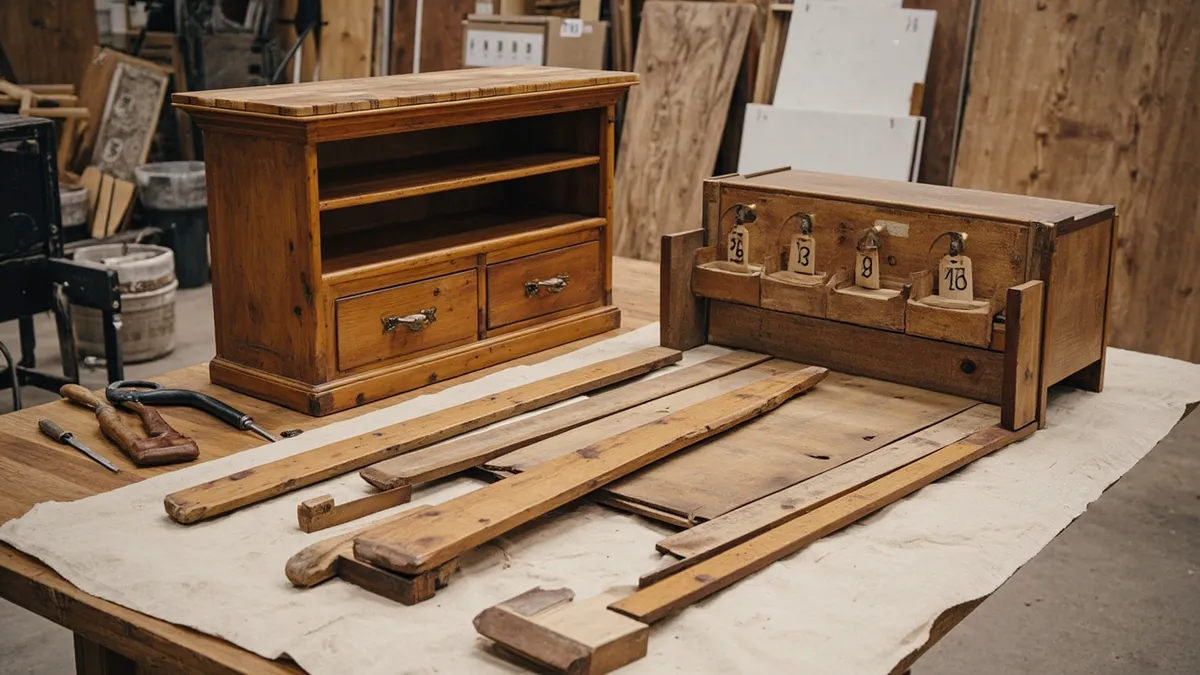
- Empty it and lift the rack off the base. It's heavy and awkward, so two people.
- Take out the drawers and number them on the back in pencil, so they go back in the right holes.
- Remove handles, knobs, hinges, escutcheons and catches. Bag and label them. Metal fittings can be stripped too if they're painted over.
- Take the doors off if the hinges allow, and note which side they hang.
- Photograph everything before and during, especially any plate rails or loose mouldings.
If anything won't come apart easily, don't force it. Tell us and we'll deal with it in the workshop.
Got a painted pine dresser you'd like back to bare wood? Send us a photo of the front, the back and inside a drawer, and we'll suggest the right method and give you a price. Call 01484 666 333 or use our contact page.
Can you strip a pine dresser yourself?
You can, but a dresser is one of the harder pieces to tackle at home. It has a cornice, shelf edges, plate grooves, beaded doors, drawer fronts and often turned or shaped details, and paint packs into every one of them. Chemical strippers need several rounds on thick paint, and heat can scorch pine and crack glass.
Old paint may also contain lead. The HSE's frequently asked questions on lead warn that stripping old paint with blow lamps or gas torches and dry sanding it are among the riskiest jobs in pre-1980s properties. If you do go ahead, work outside where you can, wear gloves and eye protection, and clean the wood of all residue afterwards. Our article on stripping paint from furniture: DIY or professional goes into the trade-offs.
How should you finish a stripped pine dresser?
Wax or oil is the classic look for stripped pine, and both bring up the warm colour of old timber. Wax gives a soft, traditional sheen. A hardwax oil is tougher and better for a base top that takes cups, plates and kitchen knocks. Paint is fine too, and on a properly neutralised, dry surface it goes on better than over decades of old gloss.
A popular choice is a painted base with a waxed rack, or the reverse. Whatever you choose, test it on a back or inside surface first, as old pine can take colour differently from piece to piece. We sell Osmo, Fiddes, Farrow & Ball and Little Greene finishes in our wood finishes shop, and finishing is available in the workshop too. Our guide to the best wax and oil finish for stripped pine applies just as well to a dresser.
How much does pine dresser restoration cost?
We price dressers individually, because they vary so much in size, paint, glass and condition. The best guide is a photo. As a comparison from our published prices:
- Dining suite (six chairs and a table): £320–£480 to strip.
- Internal four-panel pine door: from £60.
Larger pieces usually take 2–3 weeks. Send us photos and the rough size, and we'll give you a price before anything is collected. More detail is on our furniture stripping page.
Frequently asked questions
Will dipping damage an antique pine dresser?
Not if the piece is sound and solid. We hand-strip veneered, glued or fragile parts and glass that can't come out, and everything is neutralised and dried afterwards.
Can you strip a dresser with glass doors?
Yes. If the glass can come out safely, the door can often be dipped. If not, the door is stripped by hand around the glass.
Do you strip the handles and hinges too?
Painted metal fittings can be stripped as well. Bag and label them so they go back where they came from.
Get a quote from Double Dipper
Double Dipper is a paint stripping workshop at Unit 3, Crossley Mills, Honley, Huddersfield, stripping wood and metal since 2016, and we're members of the Guild of Master Craftsmen. Every piece is neutralised and dried before it comes home, ready for your chosen finish.
- Free collection within 20 miles of Honley, covering Huddersfield, Holmfirth, Halifax, Wakefield, Leeds, Bradford and Barnsley.
- Further away? Drop off at the workshop, send smaller items by overnight courier, or ask us to quote a van collection.
- See finished work in our gallery.
Call 01484 666 333, email info@doubledipperpaintstrippers.co.uk or send a photo through our contact page. We're open Monday to Friday 9–5 and Saturday 10–2.
