Journal
Dip vs Hand Stripping Antique Pine Furniture | Guide
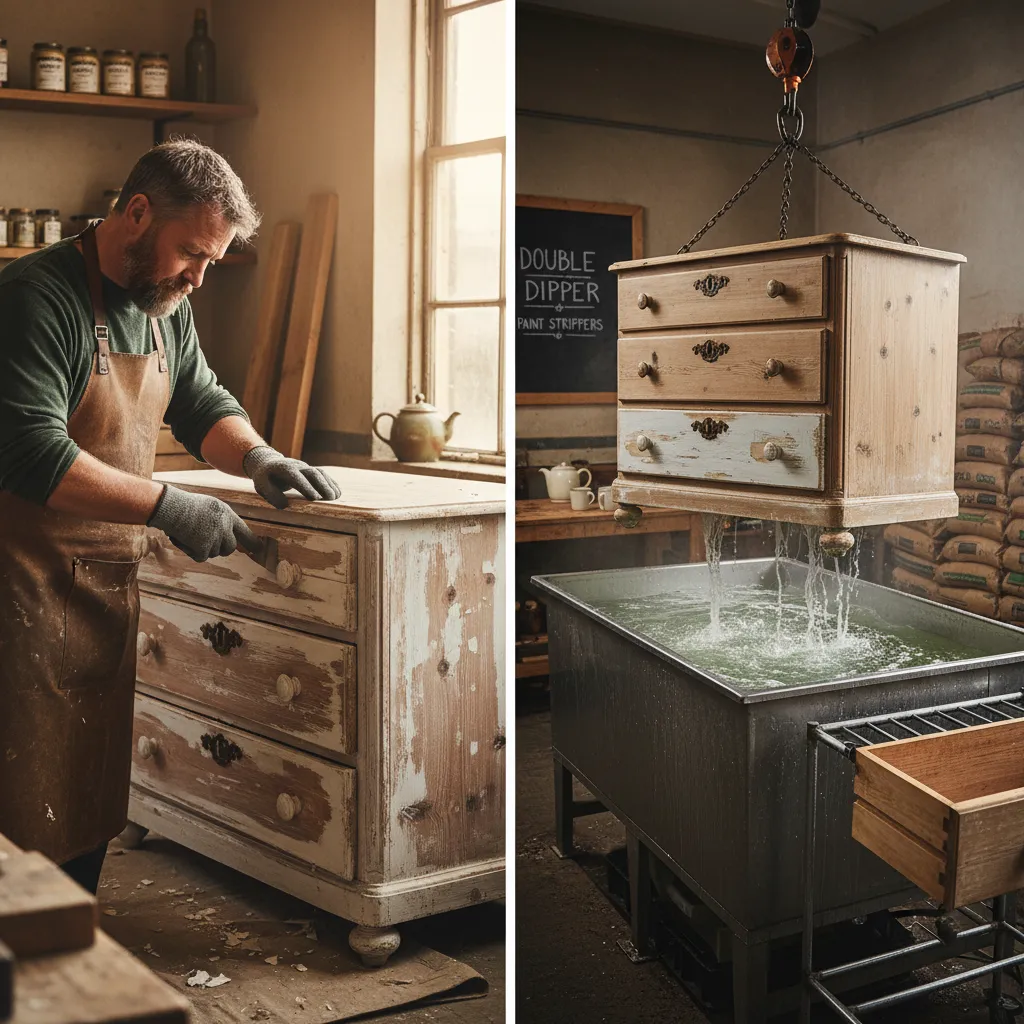
Quick answer: is dip stripping better than hand stripping for antique pine furniture
Is dip stripping better than hand stripping for antique pine furniture?
No, for antique pine furniture, hand stripping is the better choice almost every time.
Dipping a 19th-century pine washstand, a Victorian bookcase or an Edwardian pine wardrobe trades the patina, hide-glue joints and provenance that give the piece its value for a faster turnaround, and a caustic soak can soften tenons, bleach the colour and lift thin veneer on bedsteads, church pews and panelled doors.
The age of the piece matters more than the species. A Victorian pine washstand from 1880 carries original hide glue in its joints and a soft, burnished patina from decades of handling. Soaking it overnight in a caustic tank softens that glue, raises the grain and bleaches the colour depth that restorers pay for. Hand scraping and chemical poultice work treat only the finish, leaving the wood underneath as it was found.
At the Crossley Mills workshop in Honley, Daniel sees the result every week. A 1900s pine church pew brought in for dipping came back with loosened tenons and a washed-out, grey cast; the same job hand-stripped on a sister pew kept its warm honey tone and tight joints. Pine tolerates either method. Antique pine should rarely take the dip.
The trade-off is time and money. Dip stripping a pine door takes hours and often costs £40 to £80. Hand stripping the same door runs £120 to £200 and takes a day or more. You pay more in cash to keep more in character. Pick hand stripping when provenance, joints or patina matter; reserve dipping for modern, solid, replaceable pine where speed is the priority.
How the Dip Stripping Process Works, and Where It Falls Down on Antiques
What happens inside a caustic tank
A piece is lowered into a tank of heated sodium hydroxide, sometimes with additives to slow the action. The solution softens old paint, varnish and lacquer over several hours. The residue is hosed off before the timber is neutralised, rinsed and dried. Tanks in workshops like ours run at controlled temperatures and dwell times matched to the timber.
On solid softwood the process is fast and effective: a 1930s pine door can come out bare in under a day. The drawback is what the solution does to glue, joints and surface character during the long soak.
Why pine tolerates dipping better than hardwoods
Pine's tight, resinous softwood grain resists the raised grain and dark staining that turns oak, beech and mahogany green-black in caustic. That is why some dippers, including Double Dipper Paint Strippers, run caustic baths for pine doors and furniture while switching to a non-caustic system (Paramose TS 10) and hand finishing for hardwoods.
But age shifts the calculation. Antique pine carries hide-glue joints, thin French polish in places, and a patina buyers pay for. Hours of submersion dissolve that glue and bleach the colour out, which is why the workshop hand-strips anything pre-1920 with joins, carvings or veneer. The bench rule: if the pine is solid, modern and paint-coated, dip it; if it is antique, hand strip it.
Hand Stripping Methods and Why Restorers Reach for Them First
Caustic paste, scraping and the slow route
Hand stripping antique pine furniture means working one section at a time with a caustic or solvent-based paste, a scraper, brass brushes and a good deal of patience. The paste sits on the surface for 20 to 60 minutes, softens the old paint or varnish, and the restorer lifts it away with hand tools rather than submerging the whole piece.
In our Crossley Mills workshop, Daniel usually starts on a hidden underside to test the paste dwell time, then works top-down so drips do not mark finished faces. Pine's soft grain lifts quickly, but Victorian hide-glue joints swell if they are soaked for hours, which is why paste gives an operator control a tank cannot.
What hand work preserves that a tank never can
Hand work keeps the original patina, the dark rings around old knots and the faint shadows of a century of wax. A caustic dip strips all of that back to bare, uniform timber and can turn pine a dull grey once it dries.
It also lets the restorer leave sound areas of finish in place, which matters on pieces where one good original side adds £80 to £150 at resale. For antiques with tongue-and-groove panels, hand-cut dovetails or thin veneer bands, hand stripping is the safer choice every time.
- Tools used: scraper, two brass brushes, nitrile gloves, paste, clean cotton rags.
- Typical dwell per coat: 30 minutes, then test with a scraper edge.
Your Pine Furniture Questions, Answered
How do you strip pine furniture?
Strip pine furniture by removing the old finish in layers, then neutralising and refinishing. Brush a methylene chloride or soy-based remover on thick, leave it to dwell, and scrape off the lifted paint with a carbide scraper. For stubborn details, use a brass brush or fine nylon pad.
What is the best way to paint pine furniture?
For a lasting finish on pine furniture, begin with a proper seal and build up thin, even coats afterwards. Knots in pine's resinous grain will bleed through water-based paints, so a shellac-based primer such as Zinsser BIN must be brushed over those spots first. Two slim coats of a quality acrylic eggshell or satin laid on top, with a light de-nib using 240-grit between each, will leave the surface feeling factory-smooth.
Should you strip antique furniture?
Strip antique furniture only when the existing finish is failing or hiding damage, because original patina raises both value and character. An Edwardian pine washstand with crazed shellac is a candidate; a clean Victorian pine chest with sound French polish is better left alone. As a rule of thumb, strip when the cost of refinishing stays under 30% of the piece's resale value.
How to strip antique wood furniture?
Stripping antique wood furniture calls for a patient, hand-led approach with a mild remover and gentle tools, keeping dwell times short so patina and joints are not lost. Daniel's bench rule: pieces with wobbly tenons, lifting veneer or traces of hide glue always go the hand route, whereas solid softwood with tight joins under several thick paint layers can reasonably be dipped.
Bring the piece to the Crossley Mills workshop in Honley for a written assessment, or ring Daniel on the number on the site for a quote.
When to Hand the Job to a Yorkshire Workshop
Signs your pine piece needs a professional, not a tub
A Victorian wardrobe, a 1900s bookcase, or any pine furniture with dovetail joints and original hide glue should never go into a caustic tank. Soak times of several hours soften those joints and swell the grain, even on solid softwood. Skip the dip route when the piece shows any of these: loose joints or wobbly drawers, veneer or ply panels, original wax or oil finish worth keeping, intricate mouldings, or brass and cast-iron fittings already in place.
Watch for lead paint too. Pre-1970s layers often contain it, and a professional workshop handles the hazard under controlled conditions rather than leaving it to a home soak. Pine glued with PVA or built on plywood cores will simply fall apart in a dip bath.
Banisters, bedsteads, cast-iron fireplace surrounds and church pews that have been dismantled for restoration all reach the Crossley Mills bench each month, and direct communication with Daniel means no middlemen, no call centres and a quote the same day. Hand stripping by a trained restorer keeps the patina, controls the chemical dwell time, and means each section is treated on its merits. Pieces worth saving are pieces worth handing over.
Get a quote from Daniel at Double Dipper
Daniel Fitzpatrick has run the Crossley Mills workshop since 2016, a Guild of Master Craftsmen member who personally handles every quote, strip and finish. Send a photo, the rough dimensions and your postcode across West Yorkshire or Greater Manchester, and he will reply with a price and a turnaround, usually within a working day. Pick-up and delivery can be arranged for full-size doors and bedroom suites.
The workshop phone is answered at the mill most days, and the kettle is on.
Sources
- A chat with the master craftsmen weighing dip stripping against hand stripping
- Why a refinisher should never dunk your furniture in a strip tank | Jax Furniture Refinishing & Upholstering
- Things to weigh up before dunking doors or furniture for stripping
- Inside antique furniture stripping: the process and a safe way to carry it out | Finish Pros
- Dip and strip basics: every question answered on removing finishes from wood and metal
- Paint stripping services explained | Timber Restorations
- Readers weigh in on dip stripping | FineWoodworking
- A reliable method for stripping furniture, from start to finish
