Journal
4 Panel Pine Doors, 6-Panel or 1930s? How to Date Your Door
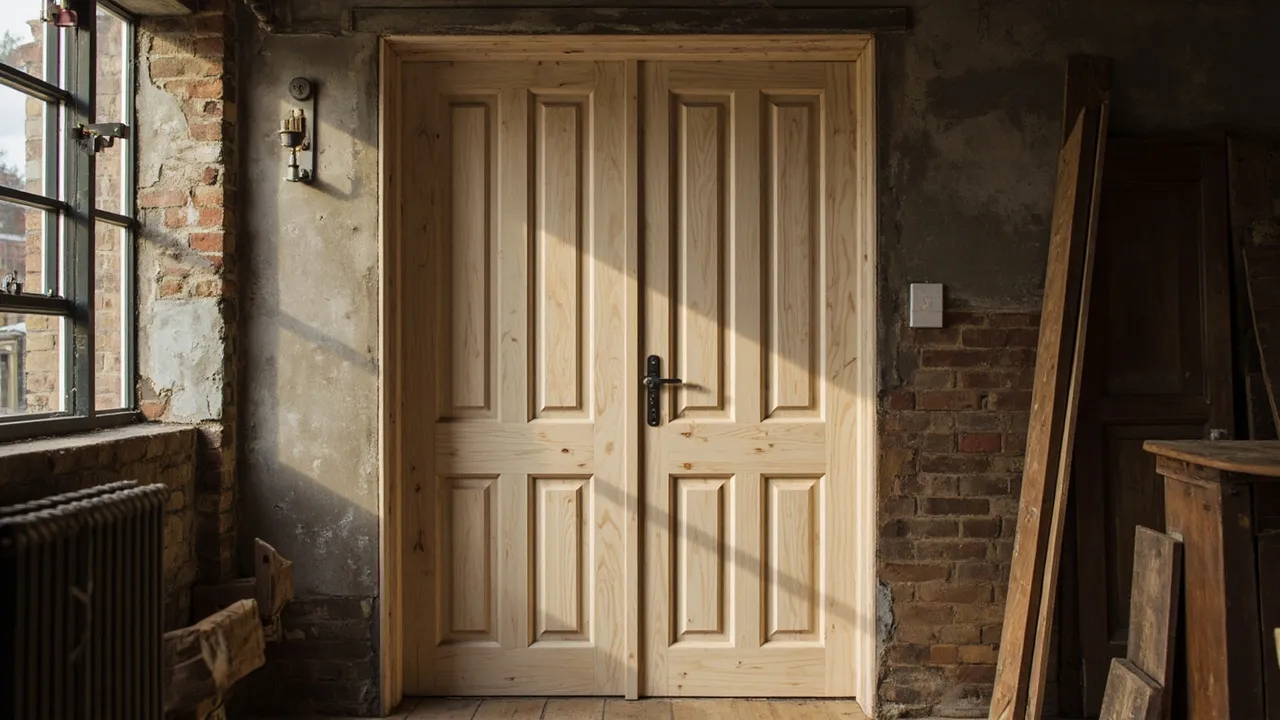
You can date most pine doors by their panels and mouldings. Six raised panels usually point to Georgian or Georgian-style work, four panels to Victorian, glazed or simpler panels to Edwardian, and horizontal panels to the 1920s and 1930s. Double Dipper strips all of them, dipping sound doors and hand-stripping fragile ones, from £60 a door.
- Count the panels, then look at their shape and the mouldings round them.
- 4-panel pine doors are the classic Victorian internal door and usually dip very well.
- 1930s doors can have thin or plywood panels, so we check them and often strip them by hand.
- Whatever the age, every door we strip is neutralised and dried before it comes home.
Why does the age of a door matter?
Because the age tells you how the door was made, and that decides how it should be stripped and finished. A solid Victorian four-panel door and a 1930s door with thin panels need different handling, even if they look alike under decades of paint. Knowing the era also helps you match missing doors, choose the right ironmongery and pick a finish that suits the house.
Dating a door isn't an exact science. Styles overlapped, builders reused older patterns, and reproduction doors copy all of them. But the panel layout and moulding details will usually tell you roughly when your door was made.
What does a Georgian six-panel door look like?
A Georgian-style door usually has six panels: two small ones at the top, then two pairs of taller panels below. The panels are often raised and fielded, meaning the centre of each panel stands proud with a bevelled edge. Proportions are tall and elegant, and the mouldings are fine rather than chunky.
True Georgian doors are uncommon in ordinary terraced housing, but the six-panel layout carried on well into the 1800s and was revived in later reproduction doors. If you have a six-panel door in a Victorian terrace, it may be a later replacement, so look closely at the timber and construction.
How they strip: solid six-panel doors dip well. Raised and fielded panels have lots of edges where paint builds up, and the bath clears them evenly.
How do you recognise a Victorian 4-panel pine door?
The Victorian four-panel door has two tall panels above and two shorter panels below, divided by a wide middle rail at about hand height. This is the door you'll find in a great many of Yorkshire's terraced houses, and it's what people usually mean by "4 panel pine doors" or "Victorian pine doors".
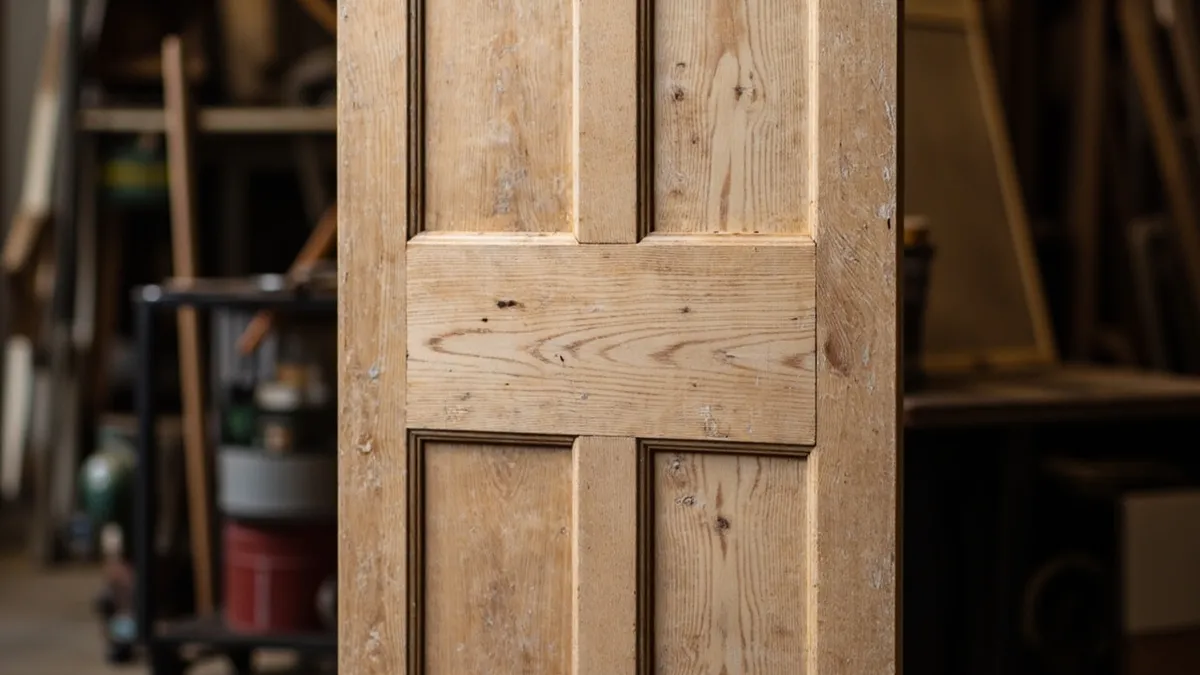
Look for these details:
- Mouldings round the panels, often an ogee or ovolo profile. On cheaper doors the panels are plain (square-edged) on one or both faces.
- Solid pine throughout, frequently slow-grown and dense, sometimes pitch pine with a strong orange and dark grain.
- Through tenons visible on the door edges, where the rails pass right through the stiles.
- Grained or painted finish originally. Many Victorian pine doors were never meant to be bare, so you may find old graining under the paint.
How they strip: very well. Solid four-panel doors are exactly what the stripping bath is for. The paint comes out of every moulding, the detail comes back crisp, and the door is neutralised and dried before it leaves.
What do Edwardian doors look like?
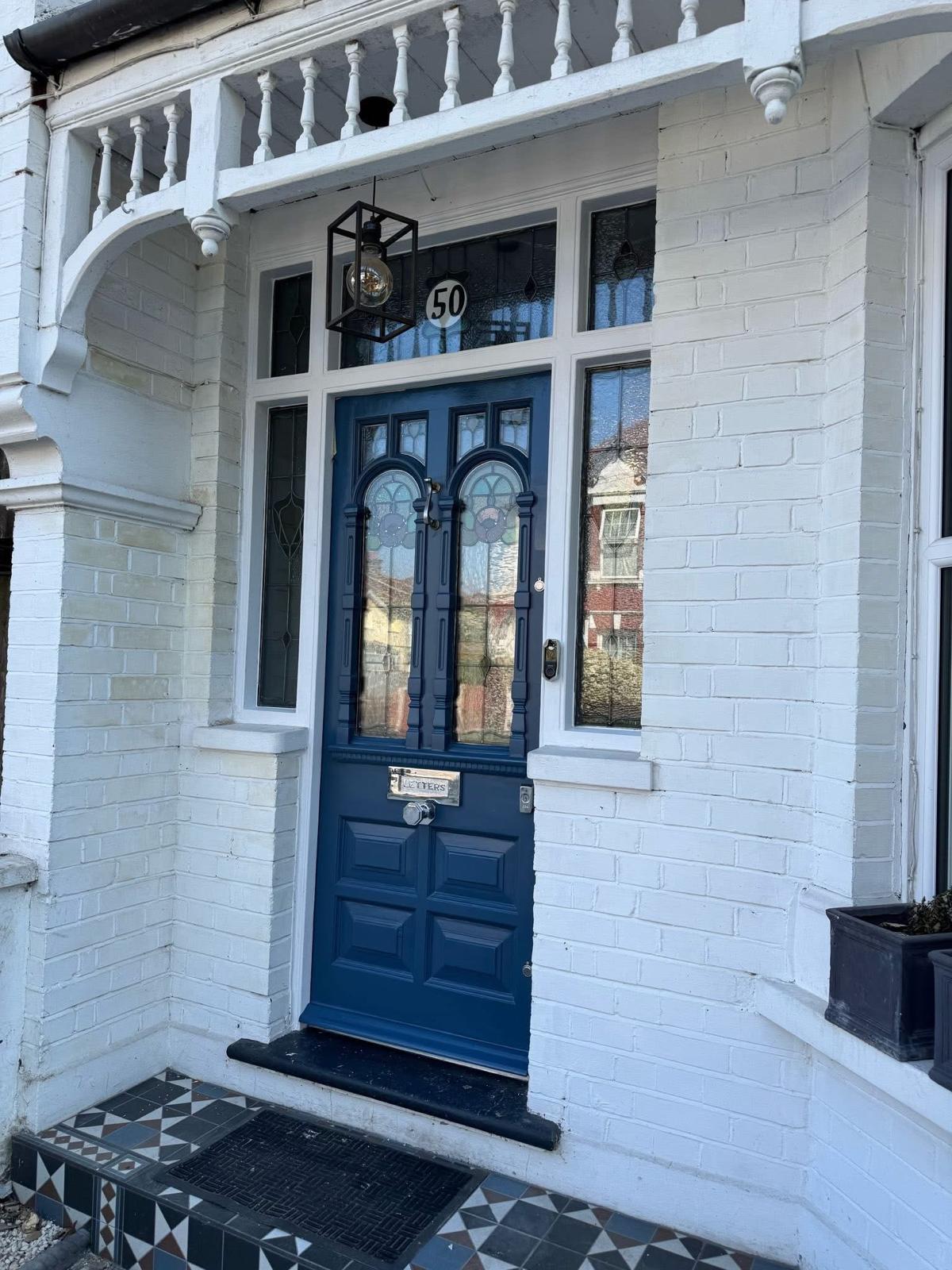
Edwardian doors are usually lighter in style than Victorian ones. Internal doors often kept four panels, but you'll also see doors with one tall panel over two or three smaller ones, and many front and internal doors have glazed upper halves. Stained and leaded glass is common in Edwardian front doors, often in Art Nouveau patterns.
How they strip: solid Edwardian doors dip well. If the glass can be taken out, the door is dipped as normal. If leaded or stained glass has to stay in, we strip the door by hand around it so the glass and its leading are protected.
How do you spot a 1930s pine door?
The giveaway is horizontal panels. Many 1920s and 1930s internal doors have five horizontal panels stacked one above the other, or one tall panel above a few short horizontal ones. Mouldings are simpler, often plain or with a small square edge, in keeping with the cleaner look of the time. Front doors of the period often have a small glazed panel near the top, sometimes with a sunrise pattern.
Construction varies more in this period. Some doors are good solid timber. Others use thin panels, or plywood panels set into a solid frame. Late in the period, flush doors faced with plywood or hardboard also appear.
How they strip: solid 1930s doors strip well. Doors with plywood panels need care, because the layers can loosen, so we check each one and often strip them by hand. Flush doors faced with hardboard or laminate can't be stripped.
Not sure what you've got? Photograph both faces and one edge of the door and send them on WhatsApp, or call Daniel on 01484 666 333. We'll tell you what the door is, how we'd strip it and what it will cost.
Quick guide: dating your pine door
| Style | What to look for | Usual stripping method |
|---|---|---|
| Georgian or Georgian-style six-panel | Six panels, often raised and fielded, fine mouldings | Dip if solid and sound |
| Victorian four-panel | Two tall panels over two short, wide middle rail, ogee or ovolo mouldings | Dip |
| Edwardian | Lighter panels, glazed tops, stained or leaded glass | Dip, or hand-strip if glass stays in |
| 1920s–1930s | Horizontal panels, plain mouldings, sometimes plywood panels | Dip if solid; hand-strip plywood panels |
| Flush (hardboard or laminate faced) | Flat faces, no panels | Can't be stripped |
What does it cost to strip a period pine door?
The price depends on the door, not its age. An internal four-panel pine door is from £60 to strip, neutralise and dry. External and stained-oak doors are £80–£95. If you're doing a whole house, a batch of doors works out at about £55–£80 per door. The full list is on our door stripping prices page.
Most doors are ready in 7–10 working days, and a whole house of doors usually takes about a fortnight. We collect free within 20 miles of our Honley workshop. Further away, you can drop off, courier smaller items, or ask for a quoted van collection.
How should you finish a door of each era?
Match the finish to the house. Victorian doors were usually painted or grained, so paint is historically correct, though many people love them waxed. Edwardian doors suit either. 1930s doors were often painted or given a darker stain. If you're keeping the timber bare, a wax or hardwax oil brings out the grain. Read paint or wax: a craftsman's guide to stripped pine doors for help deciding.
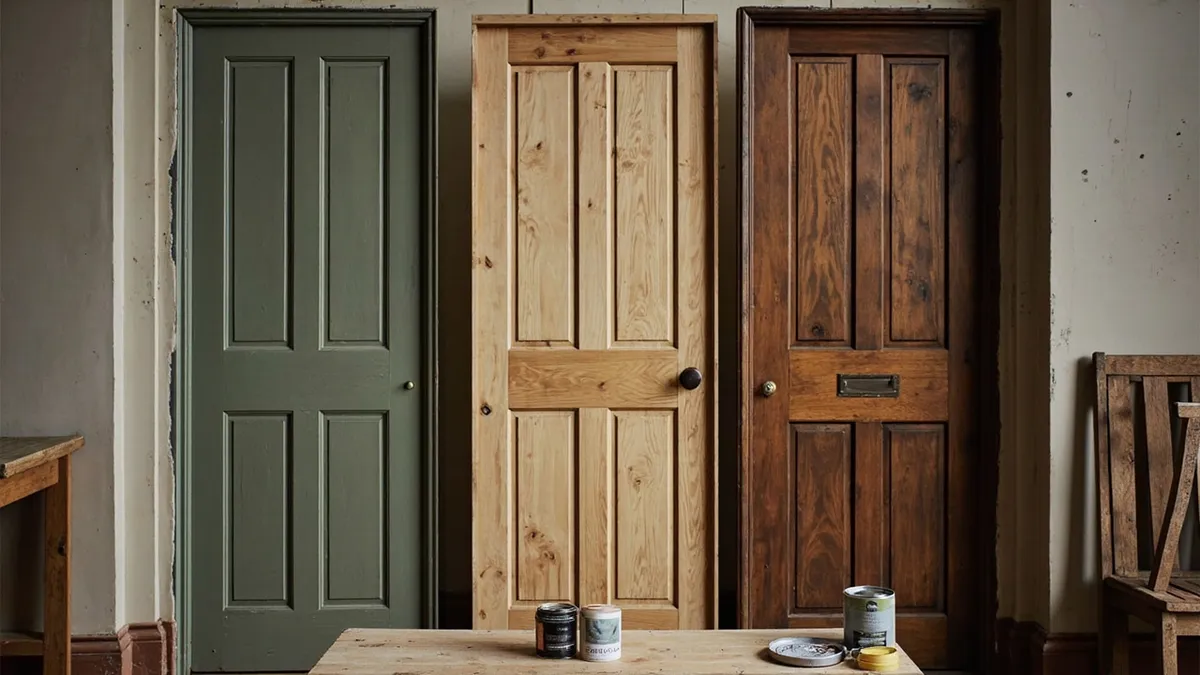
We can finish doors in the workshop with the products we sell, including Osmo, Fiddes, Farrow & Ball and Little Greene, or you can take them home bare. See our heritage paints if you'd like to match a period colour.
Get a quote for your pine doors
Whatever the age of your doors, we'll check each one and choose the method that suits it. Double Dipper is a Guild of Master Craftsmen member, working from Crossley Mills in Honley since 2016.
- Call 01484 666 333 (Monday to Friday 9am–5pm, Saturday 10am–2pm).
- Send photos through our contact page.
- Find out more about our door stripping and dipping service, or see finished doors in the gallery.
