Journal
Lead Paint on Old Doors: How to Tell If Yours Has It
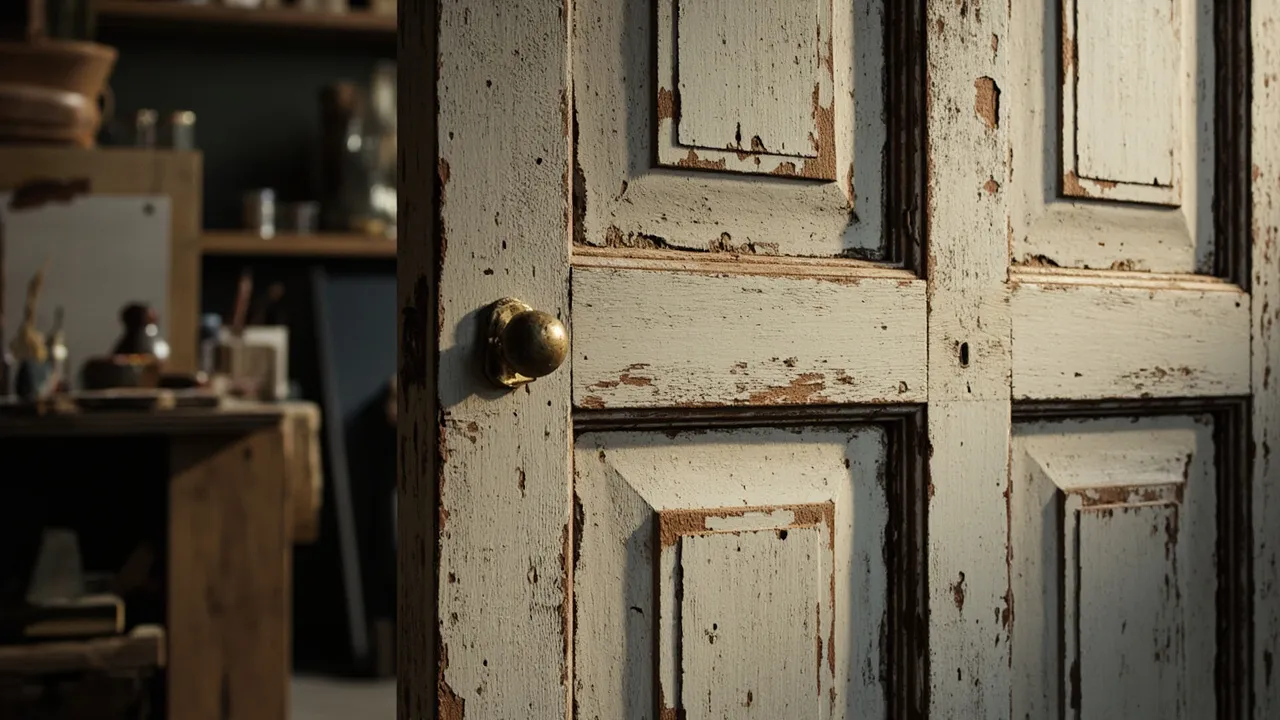
You can't tell whether an old door has lead paint just by looking. If your house was built before the 1980s and the door still carries old layers, assume lead may be there. A test kit or lab test can confirm it. Either way, don't sand or burn it off; Double Dipper strips it in the workshop instead.
- Lead paint was common on doors, skirtings, windows and fireplaces in older UK homes, usually in the lower layers under newer paint.
- Signs such as deep "crocodile" cracking and many thick layers are clues, not proof.
- Home test kits give a quick indication; a lab test on a small paint sample is more reliable.
- The biggest risk is dust and fumes from dry sanding, heat guns and blowlamps. Sending the door out keeps both out of your home.
Which UK homes are most likely to have lead paint?
Any home built before the 1980s could have lead paint somewhere, and the older the house, the more likely it is. The Health and Safety Executive lists removing paint coatings in properties built before the 1980s among the jobs that put people most at risk of lead exposure, in its frequently asked questions on lead.
In practice, the homes where we'd be most cautious are:
- Victorian and Edwardian terraces and villas. Original four-panel pine doors, front doors, skirtings and cast-iron fireplaces have often been painted many times since they were built.
- Inter-war houses. 1930s semis often still have their original doors and joinery under several decades of gloss.
- Post-war homes up to the 1970s. Less likely than a Victorian house, but still worth treating with care if the paint is original.
Lead was phased out of ordinary household paint gradually, over many years. The catch is that old paint doesn't go anywhere. A door that was painted with lead in 1950 and then repainted with modern paint every decade still has the lead underneath.
What does lead paint look like?
Lead paint doesn't look like anything in particular, which is why you can't rely on your eyes. That said, there are a few clues that tell you a door deserves caution:
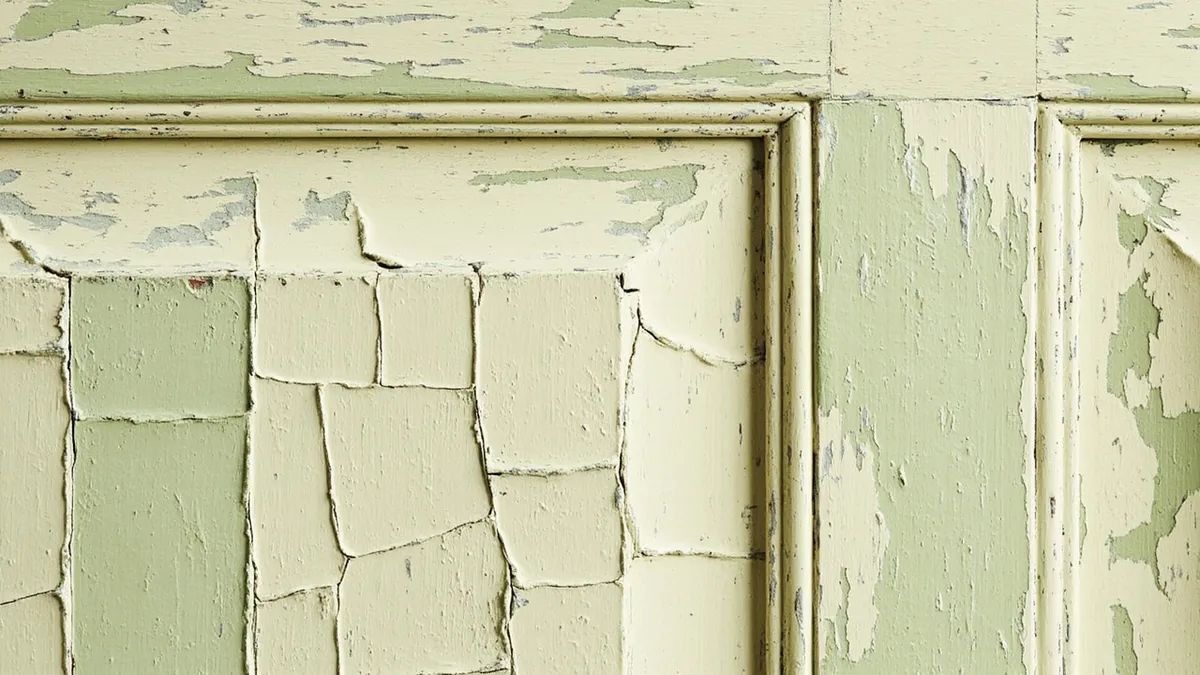
- Crocodile or "alligator" cracking. Old oil-based paints often break up into a pattern of small squares or scales as they age.
- Many thick layers. If a chip at the edge of the door shows a stack of colours, some of those layers are likely to be old.
- Softened, rounded mouldings. When the panel detail looks blurred and the door sticks in its frame, it's usually carrying decades of paint.
- A chalky surface. Some old paints go powdery on the surface as they break down.
None of these proves there's lead, and a smooth, modern-looking top coat doesn't prove there isn't. The top coat is often the newest thing on the door.
How do you test for lead paint?
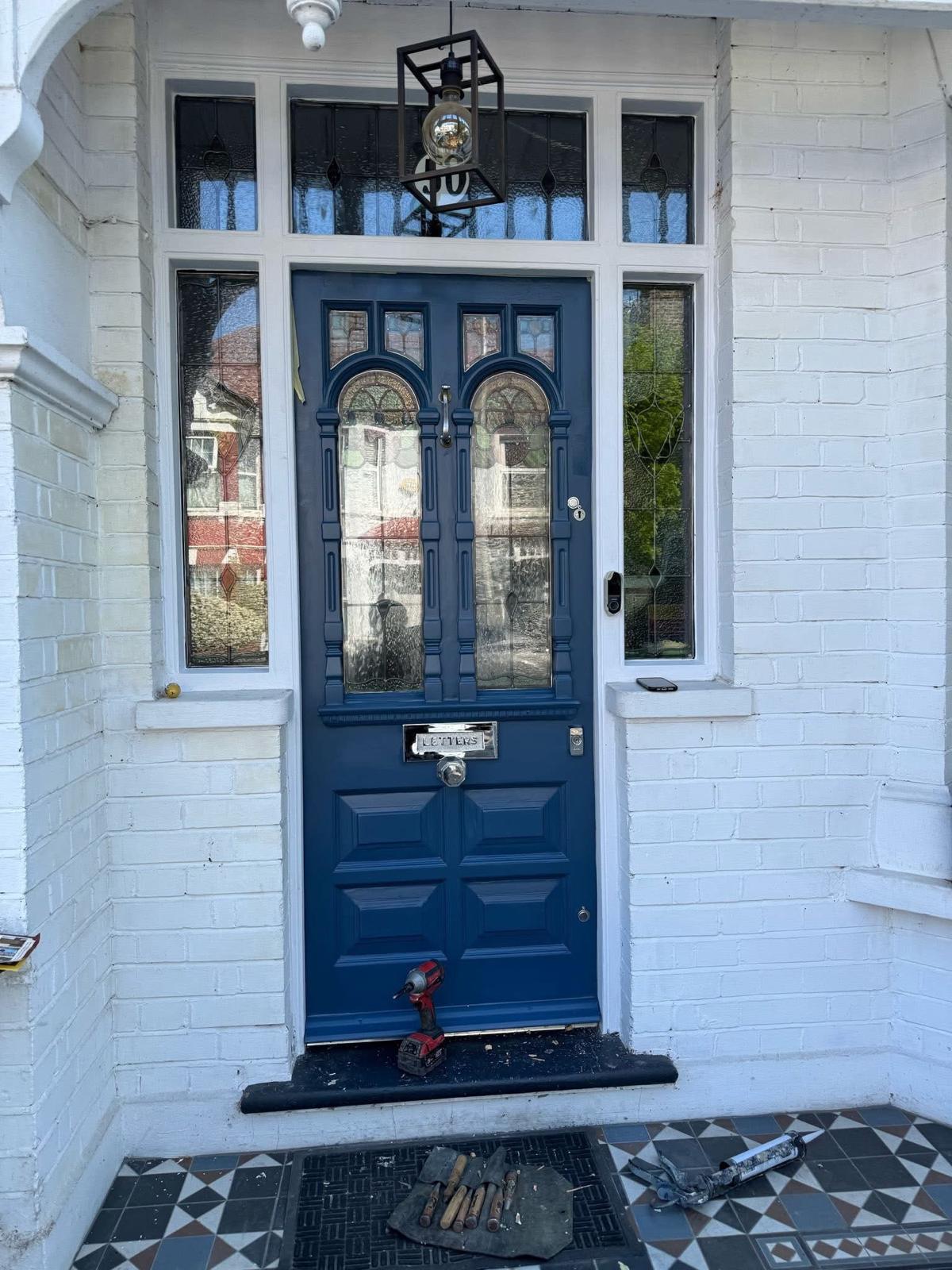
There are two practical ways to test for lead paint: a home test kit, or sending a small sample to a lab.
- Home test kits. These usually work with a swab that changes colour when it touches lead. They're quick and cheap, but they only test the layer the swab reaches, and results can be hard to read on dark or heavily layered paint. Treat a negative result with caution.
- Laboratory testing. A lab can analyse a small flake of paint that includes all the layers. It takes longer, but it gives you a clearer answer.
Whatever you use, don't sand or scrape a big patch to get at the lower layers. That creates the very dust you're trying to avoid. For most people with a period door, the simplest approach is to assume there could be lead and choose a stripping method that doesn't create dust or fumes in the house.
Why shouldn't you sand or burn off old paint?
Because dry sanding and heat are how lead gets into the air, onto floors and into lungs. The HSE lists dry sanding old paint and stripping old paint with blowlamps or gas torches as jobs that put people most at risk. A heat gun softens paint, but it can also give off fumes, and scraping afterwards leaves flakes and dust behind.
Fine lead dust settles on floors, windowsills and soft furnishings, and it's hard to clean up completely. Young children and pregnant women are the groups people worry about most, because lead exposure is more harmful to them. If you're concerned that you or anyone in your household has been exposed, speak to your GP or NHS 111.
That's also why HSE advice suggests only stripping old paint back if it's flaking, chipping or a risk to children. If a painted door is sound and you're happy with how it looks, repainting over it may be enough. If you want the wood back, the paint has to come off properly, and the safest place to do that is outside your home.
Worried about an old painted door? Take a photo and WhatsApp it, or call Daniel on 01484 666 333. We'll tell you how we'd strip it and give you a price and a date, usually within a day or two.
What's the safer way to strip a door that might have lead paint?
Take the door off and let a workshop strip it. At Double Dipper, the door comes to us, so there's no dust or fumes in your house. Sound pine doors go in the stripping bath, which lifts every layer at once, including the paint packed into mouldings and panel corners. Doors that are too fragile to dip, such as those with loose joints, veneer or leaded glass that can't come out, are stripped by hand instead.
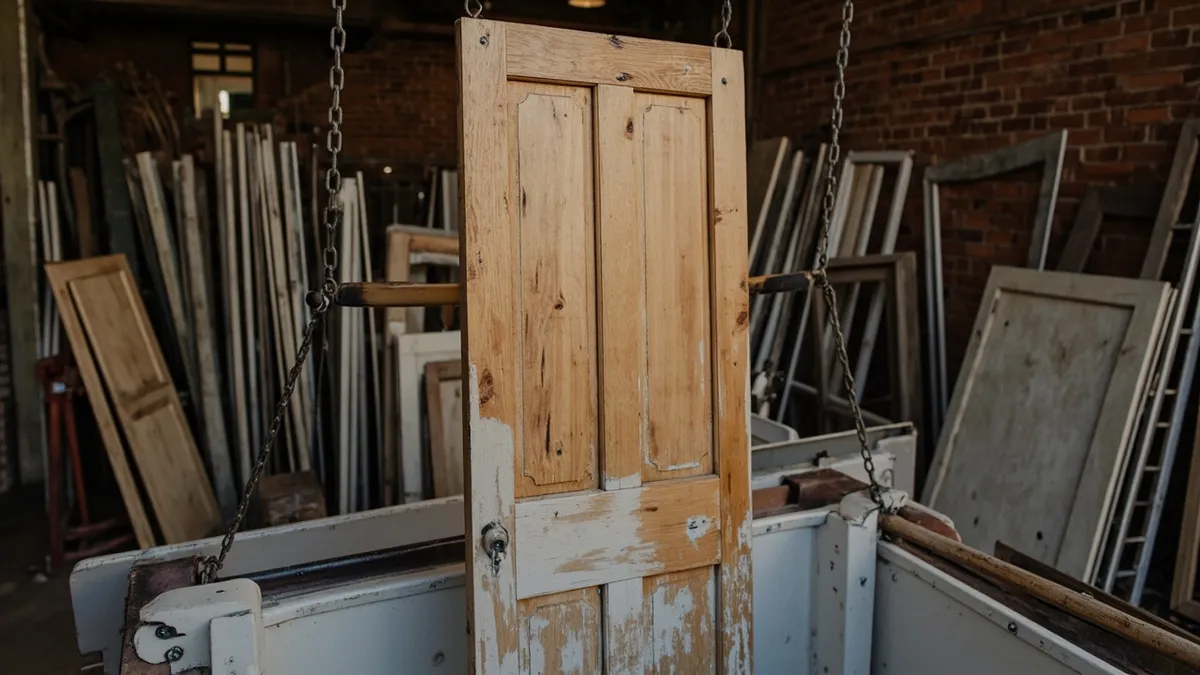
Every door is then neutralised and dried, and detail is finished by hand. You get it back as bare timber ready for wax, oil or paint. There's more detail in our guide to safely stripping lead paint from a Victorian front door, and on our door stripping service page.
How much does it cost and how long does it take?
An internal four-panel pine door costs from £60 to strip, neutralise and dry. External and stained-oak doors are £80–£95. A whole house of doors done as one batch works out at about £55–£80 per door and usually takes about a fortnight. Most single doors are ready in 7–10 working days. See our door stripping price guide for the full list.
Collection is free within 20 miles of our Honley workshop, which covers Huddersfield, Holmfirth, Halifax, Wakefield, Leeds, Bradford and Barnsley. From further away, you can drop off, courier smaller pieces overnight, or we'll quote a van collection.
Frequently asked questions
When was lead paint banned in the UK?
There wasn't a single date that matters for your house. Lead was removed from household paint gradually over several decades, and the old layers stay on the woodwork under whatever has been painted on top since. That's why the HSE treats work on paint in properties built before the 1980s as higher risk, and why it's safest to assume an original door could have lead underneath.
Is lead paint dangerous if I leave it alone?
Paint that's intact and covered is generally less of a concern than paint that's flaking, chipping or being sanded. The risk rises when it's disturbed, which is why the method of removal matters so much.
Do you strip other things that might have lead paint?
Yes. Old furniture, skirtings, cast-iron fireplaces, radiators and gates often carry old paint too. We strip wood and metal only, not uPVC, composite or laminate. See our furniture stripping service for pieces other than doors.
Get a quote
Double Dipper is a Guild of Master Craftsmen member, working from Unit 3, Crossley Mills, Honley, HD9 6PL since 2016.
- Call 01484 666 333 (Monday to Friday 9am–5pm, Saturday 10am–2pm) or email info@doubledipperpaintstrippers.co.uk.
- Send photos through our contact page.
- See stripped doors in our gallery.
