Journal
Internal Pine Doors: Why Restoring Old Ones Beats Buying New
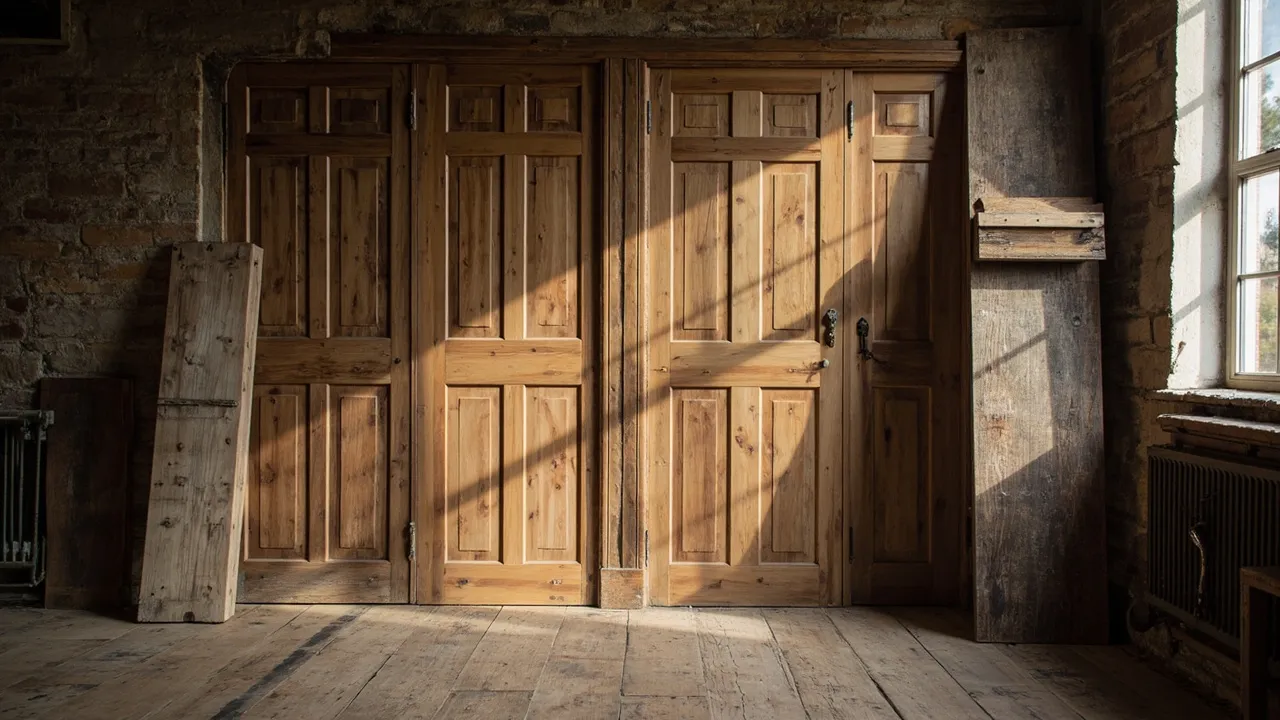
If your old internal pine doors are sound, stripping them nearly always beats buying new. A period pine door is usually slow-grown timber that already fits its frame and matches the house. At Double Dipper, an internal four-panel pine door costs from £60 to strip, neutralise and dry, and most are ready in 7–10 working days.
- Old pine doors are usually denser, tighter-grained timber than most new pine, and they strip back beautifully.
- Stripping an internal four-panel pine door starts from £60; a whole house of doors works out at about £55–£80 per door.
- An original door already fits its opening, so there's no trimming, re-hanging or new ironmongery to pay for.
- Replace only when a door is rotten, badly split, cut down too far, or has to meet a rule the old door can't.
Is old pine really better than new pine?
In most cases, yes. The pine used for Victorian and Edwardian doors was generally slow-grown, so the growth rings sit close together and the timber is dense, stable and rich in resin. That's why a door that has been hanging for well over a century is often still straight and true.
Much of the pine sold today is faster-grown. The rings are wider apart, the wood is softer, and cheaper doors are often built from finger-jointed or engineered sections under a veneer or primer. There's nothing wrong with a good new door, but it isn't the same material, and it won't age the same way.
Old pine also takes a finish differently. Once stripped, it has a warmth and depth of colour that new pine only reaches after years of light and wear. If you like the look of bare or waxed pine, an original door gives you that on day one.
What does stripping cost compared with buying new?
Stripping has a fixed, published price, and the door you get back already fits. These are our workshop prices:
| Job | Price |
|---|---|
| Internal four-panel pine door | From £60 |
| External or stained-oak door | £80–£95 |
| A whole house of doors, stripped as one batch | About £55–£80 per door |
Every price includes neutralising and drying. See the full breakdown in our door stripping price guide.
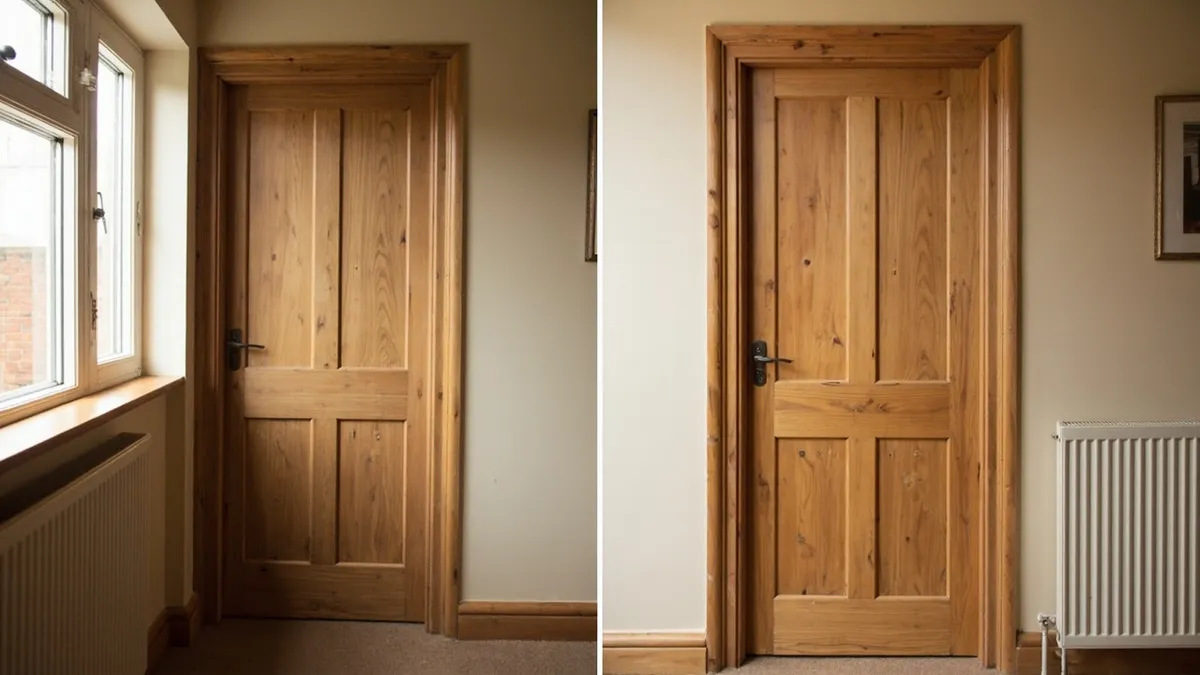
A new door is rarely just the price on the label. Period houses settle over the years, so frames are seldom square. A new door usually has to be trimmed to fit, the hinges rebated, the latch mortised in and the whole thing hung by a joiner. Your old door has already been through all of that. It was shaped to that opening long ago, and the hinge and latch positions line up with the frame.
Why does keeping the original doors matter?
Because doors set the character of a period house more than almost anything else inside it. The panel layout, the moulding profiles and the proportions were made to match the skirting, architraves and staircase. A modern replacement, even a "period style" one, tends to look slightly wrong next to original joinery: the mouldings are shallower, the panels are a different size, and the timber is paler.
Original doors also carry the history of the house. Old hinge marks, patched lock holes and worn edges are part of that. Once a set of original doors has gone to the tip, you can't get it back. For anyone buying or living in a period home, a full set of matching original doors is one of the things that makes it feel right.
How can you tell if your door is worth stripping?
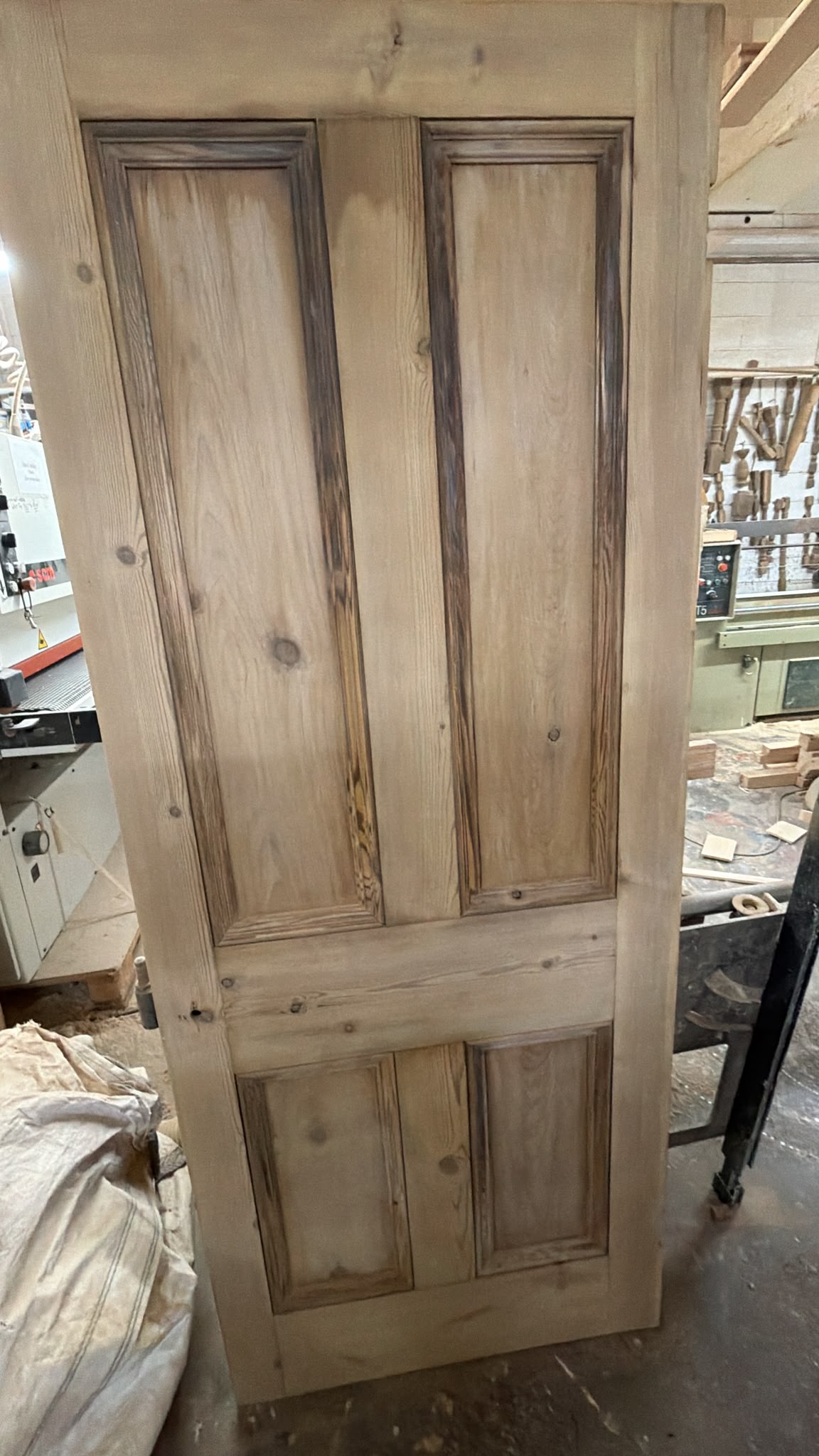
Most painted pine doors in period houses are worth stripping. Before you decide, check these:
- Is it solid? Tap the panels and look at the edges. Solid timber is what you want. Flush doors faced with hardboard or laminate can't be stripped.
- Are the joints sound? A little movement is normal, but a door falling apart at the joints may need a joiner before or after stripping.
- Any rot? Press a screwdriver into the bottom rail. Soft, crumbly wood means repair work.
- Has it been cut down badly? Doors trimmed heavily at the bottom for carpets can still be used, but check it will fit where you want it.
- How thick is the paint? The thicker the paint, the more a strip will bring the mouldings back to life.
If you're not sure, send us a photo. We'll tell you honestly whether it's worth doing.
Not sure your doors are worth saving? WhatsApp a photo of each door or call Daniel on 01484 666 333. You'll get an honest view, a price and a date, usually within a day or two.
When is replacing the better choice?
Replacing makes sense when the door itself has failed or can't do the job. That usually means:
- Serious rot or splits that would cost more to repair than the door is worth.
- A missing door. If the original has gone, a reclaimed door of the right age often looks better than a new one, and we strip reclaimed doors too.
- Fire safety. Some openings, such as those onto a stairway in a loft conversion, may need a certified fire door. Check with your building control officer before you decide.
- uPVC, composite or laminate doors. We strip wood and metal only, so these can't be stripped.
For everything else, stripping and refinishing the door you already have is usually the better-value and better-looking option.
What happens when you send your doors to us?
Each door is checked first, then we pick the method that suits it. Sound pine doors go in the stripping bath, which clears paint out of every moulding and panel corner. Fragile doors, veneered doors, doors with old glued joints, and doors with glass that can't come out are stripped by hand. Every door is then neutralised and dried, and the detail is finished by hand. You can read more on our door stripping service page.
Most doors are ready in 7–10 working days. A whole house of doors usually takes about a fortnight. We offer free collection within 20 miles of our Honley workshop, which covers Huddersfield, Holmfirth, Halifax, Wakefield, Leeds, Bradford and Barnsley. Further afield, you can drop off at the workshop, courier smaller items, or have a van collection quoted.
Should you wax, oil or paint a stripped pine door?
That's down to the look you want. A clear wax or hardwax oil shows off the grain and the warm colour of old pine. Paint suits a house where the doors were always meant to be painted, and a fresh coat on a stripped door looks sharper than paint on top of old layers. Our guide to the best wax and oil finishes for newly stripped pine doors goes into the detail.
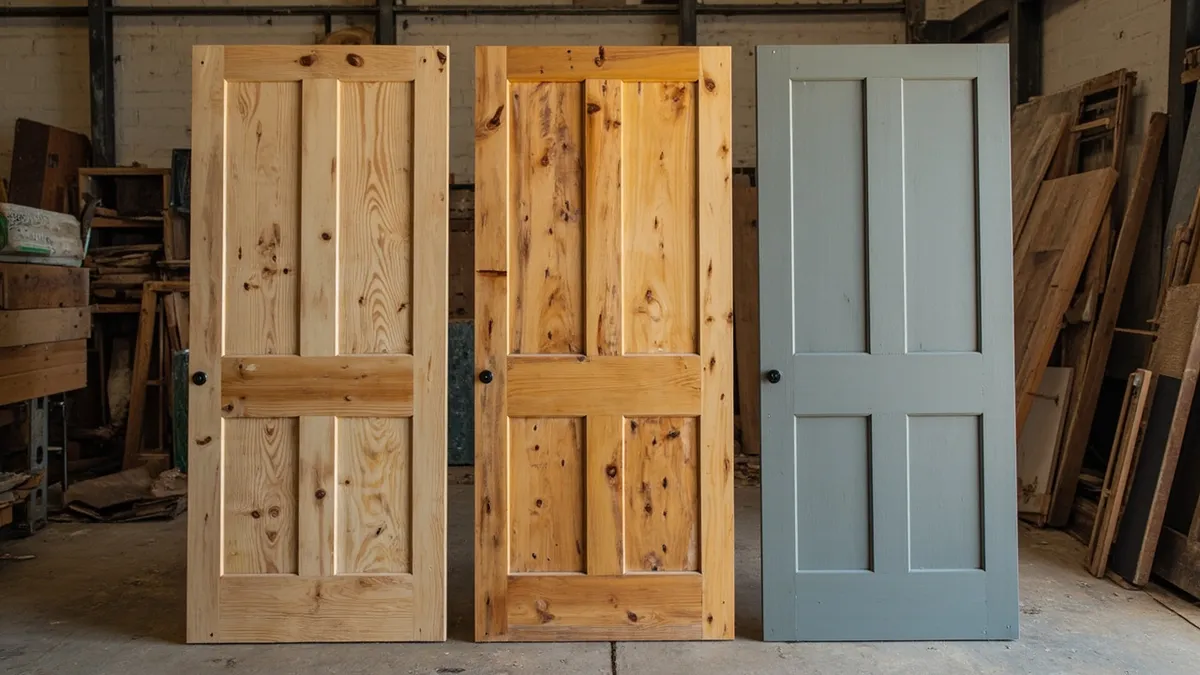
You can take your doors home bare and ready to finish, or we can finish them in the workshop with the products we sell, including Osmo, Fiddes, Farrow & Ball and Little Greene. Browse our wood finishes if you'd like to do it yourself.
Frequently asked questions
Will a stripped pine door look orange?
Not unless the finish makes it so. Some older varnishes and finishes gave pine a strong orange tone. A clear wax or a pale oil keeps it closer to its natural colour.
Can you strip doors with glass panels?
Yes. If the glass can come out, the door can be dipped. If leaded or stained glass has to stay in, we strip the door by hand around it.
Is it worth stripping a door I'm going to paint anyway?
Often, yes. Removing decades of old paint brings back the moulding detail and can stop a door sticking in its frame, so the new paint goes on a clean surface.
Get a quote for stripping your pine doors
Double Dipper is a Guild of Master Craftsmen member working from Crossley Mills in Honley since 2016.
- Call 01484 666 333 (Monday to Friday 9am–5pm, Saturday 10am–2pm) or email info@doubledipperpaintstrippers.co.uk.
- Send photos through our contact page.
- See finished doors in our gallery.
