Journal
Cast Iron Garden Bench Restoration: A Winter Guide
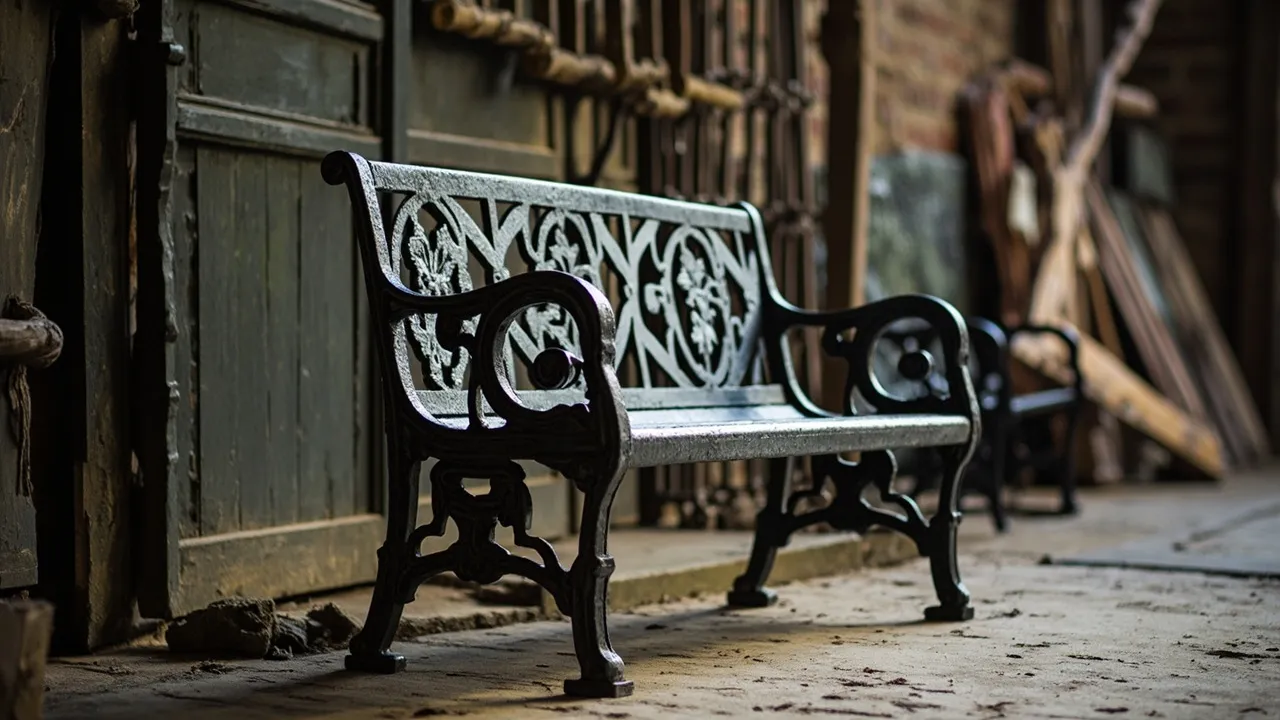
To restore a cast iron garden bench, take it apart, strip the cast ends back to bare metal, treat the rust, then refinish them and fit sound wooden slats. Winter is the ideal time, while the garden's quiet. At Double Dipper in Honley we strip painted metalwork to bare iron, and here's how a bench restoration works.
- Strip it apart: the cast-iron ends and the wooden slats need different treatment, so separate them first.
- Bare metal is the goal: old paint hides rust and cracks, and new paint won't last over either.
- Treat rust before finishing: we rust-treat every metal piece before it leaves the workshop.
- Plan for spring: larger metalwork usually takes 2–3 weeks, so winter gives you plenty of time.
Why restore a cast iron bench in winter?
Because you won't miss it. A garden bench sits unused for most of the colder months, so it can spend a few weeks in the workshop. It also stops another winter of rain soaking into flaking paint and rotting the slats.
Cast iron is tough, but it doesn't like water sitting against it. Once paint cracks, moisture creeps underneath, rust spreads beneath the surface and the paint lifts further. A bench that looks a bit tired in autumn can look much worse by spring. Starting now means it's back in place, freshly finished, before you'd want to sit on it.
How do you take a cast iron garden bench apart?
Most benches come apart into two or three cast ends, the wooden slats and a set of bolts, and that's the first job. Photograph the bench from every side before you start, and label each slat with masking tape so you know where it goes.
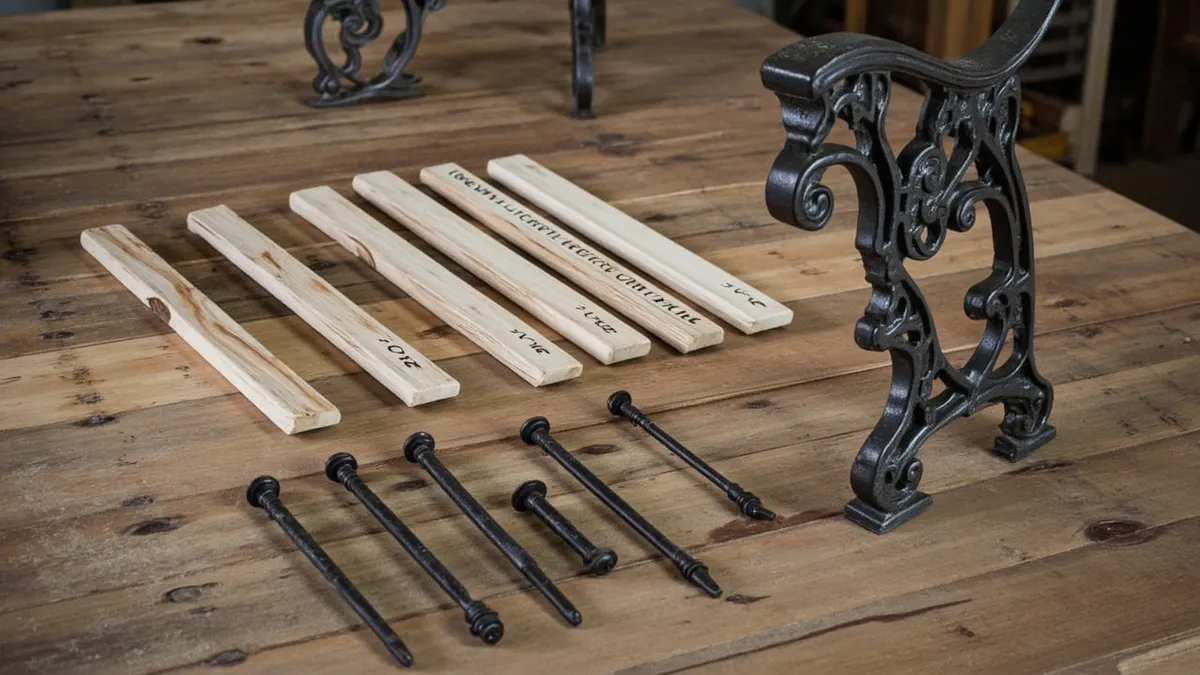
- Soak the bolts with penetrating oil for a day or two. Old bench bolts are often rusted solid.
- Undo gently. Cast iron is hard but brittle, so don't lever against the ends or hit them with a hammer; they can crack.
- Cut seized bolts rather than forcing them. New galvanised or stainless bolts are cheap.
- Keep everything together in a labelled box so reassembly is straightforward.
If a bolt just won't give, don't risk the casting. The ends can come to us still attached to a slat or two and we'll deal with it in the workshop.
What's the best way to strip paint from cast iron bench ends?
For ornate cast ends, professional stripping is usually the best way, because the paint sits deep in the scrolls, leaves and lattice that wire brushes can't reach. At Double Dipper we remove paint, powder coat and old enamel back to bare metal, so every crevice is clean.
At home, people tend to use a wire brush on a drill, a chemical stripper or a heat gun. Each can work on a plain casting, but on a decorative bench they leave paint in the detail and take hours. Heat and sanding also carry a real risk if the old paint contains lead, which is common on older garden furniture. The HSE's frequently asked questions on lead warn that burning off old paint with blow lamps or gas torches and dry sanding are among the riskiest jobs. Our guide on how to strip paint from metal gates compares the DIY options in more depth, and the same advice applies to benches.
How do you treat rust on a cast iron bench?
Once the paint's off, you can see the real condition of the iron. Surface rust is normal and easy to deal with. Deeper pitting is common on the feet, where the bench has stood on wet ground or grass for years.
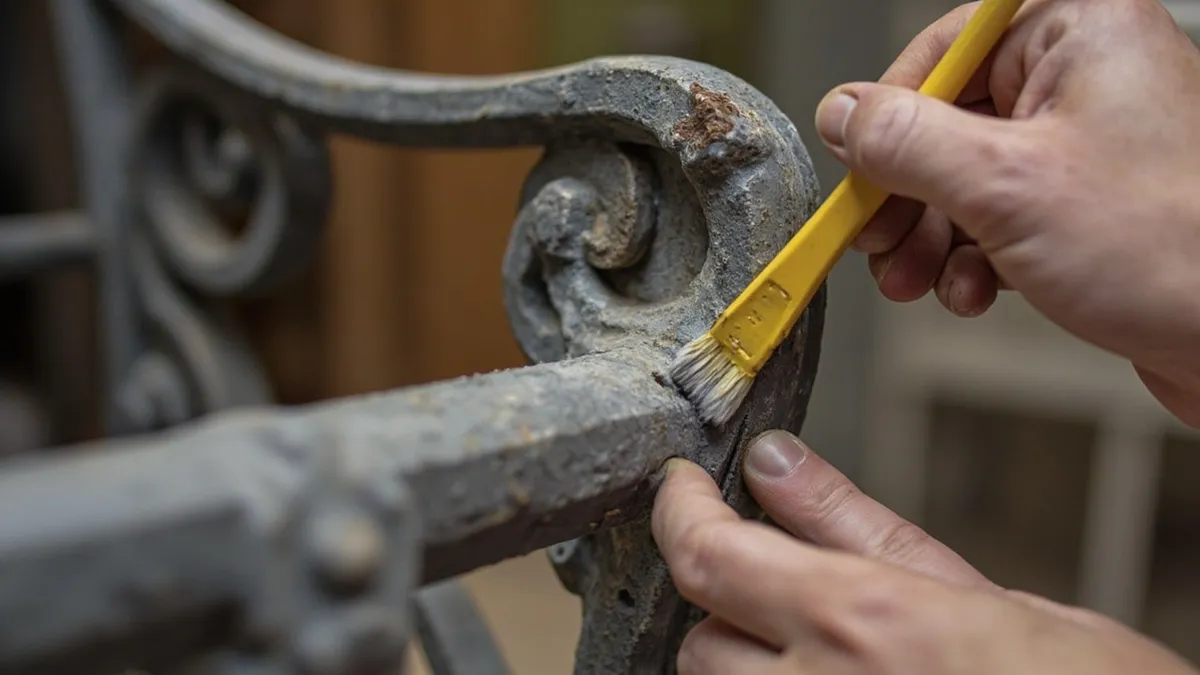
Rust has to be treated before any new finish goes on, or it carries on spreading underneath. Every metal piece we strip is rust treated before it leaves the workshop. If you're doing it yourself, work back to clean, sound metal, treat what remains, and get a primer or finish on quickly, because bare iron starts to flash rust within hours in damp air. Our guide on removing rust from cast iron gates before repainting covers the steps in detail.
Stripping also shows up any cracks or old repairs hidden under paint. It's far better to find those now, while the bench is in pieces, than after it's been repainted.
Got a cast iron bench, garden chairs or a gate that needs taking back to bare metal? Send us a photo and we'll tell you what's possible and give you a quote. Call 01484 666 333 or use our contact page.
What finish should you use on a cast iron garden bench?
An outdoor bench needs a finish that keeps water out, so for most people that means paint. We can return stripped metal in several finishes:
| Finish | Look | Outdoors? |
|---|---|---|
| Oil gloss | Traditional painted finish, any colour | Yes, the usual choice for garden furniture |
| Waxed black | Soft, dark, traditional iron look | Better for sheltered or indoor pieces |
| Clear lacquer | Shows the bare metal | Best kept for indoor or covered pieces |
| Bare | Clean iron, ready for your own primer and paint | Only if you're painting straight away |
If you'd like to paint the bench yourself, we sell Farrow & Ball and Little Greene paints in our paint shop. Whatever you choose, pay extra attention to the feet and the undersides, where water collects.
What about the wooden slats?
The slats are a separate job, and often the bigger decision. If they're sound, they can be cleaned up and refinished. If they're painted or varnished and the timber underneath is solid, we can strip them too, as we strip wood as well as metal. Every wooden piece is neutralised and dried after stripping.
If the slats are soft, split or rotten at the ends, replacing them is usually the honest answer. Measure the old ones carefully, including bolt hole positions, and keep one as a pattern. Finish new or stripped slats with an outdoor oil before fitting; we sell Osmo and Fiddes products in our wood finishes shop.
Is it worth restoring an old cast iron bench?
Usually, yes. A solid cast-iron bench is heavy, well made and can last for generations once it's looked after. Stripping, rust treating and refinishing gives you a clean, sound frame that holds paint properly, rather than another coat over rust that'll flake again in a year or two.
The main exceptions are badly cracked castings and cheap modern copies made from thin metal. If you're not sure what you've got, send us a photo. We'll quote each bench individually, since sizes and detail vary so much.
Frequently asked questions
How long does it take to strip a cast iron bench?
Larger pieces such as fireplaces, radiators and metalwork usually take 2–3 weeks in the workshop, including rust treatment and finishing.
Can you strip aluminium or plastic garden furniture?
We strip wood and metal only. We don't strip uPVC, composite or laminate.
Do I need to take the bench apart before it comes in?
It helps, as the ends and slats are treated differently. If bolts are seized, bring it as it is and we'll advise.
Get a quote from Double Dipper
If you'd rather not spend winter weekends with a wire brush, let us take your bench ends back to bare metal. Double Dipper is a paint stripping workshop at Unit 3, Crossley Mills, Honley, Huddersfield, stripping wood and metal since 2016, and we're members of the Guild of Master Craftsmen. Every metal piece is rust treated before it leaves. See our metal and gate stripping service for more.
- Further away? Drop off at the workshop, send smaller items by overnight courier, or ask us to quote a van collection.
- See finished work in our gallery.
Call 01484 666 333, email info@doubledipperpaintstrippers.co.uk or send a photo through our contact page. We're open Monday to Friday 9–5 and Saturday 10–2.
