Journal
Stripping Paint from Victorian Door Without Damaging Wood
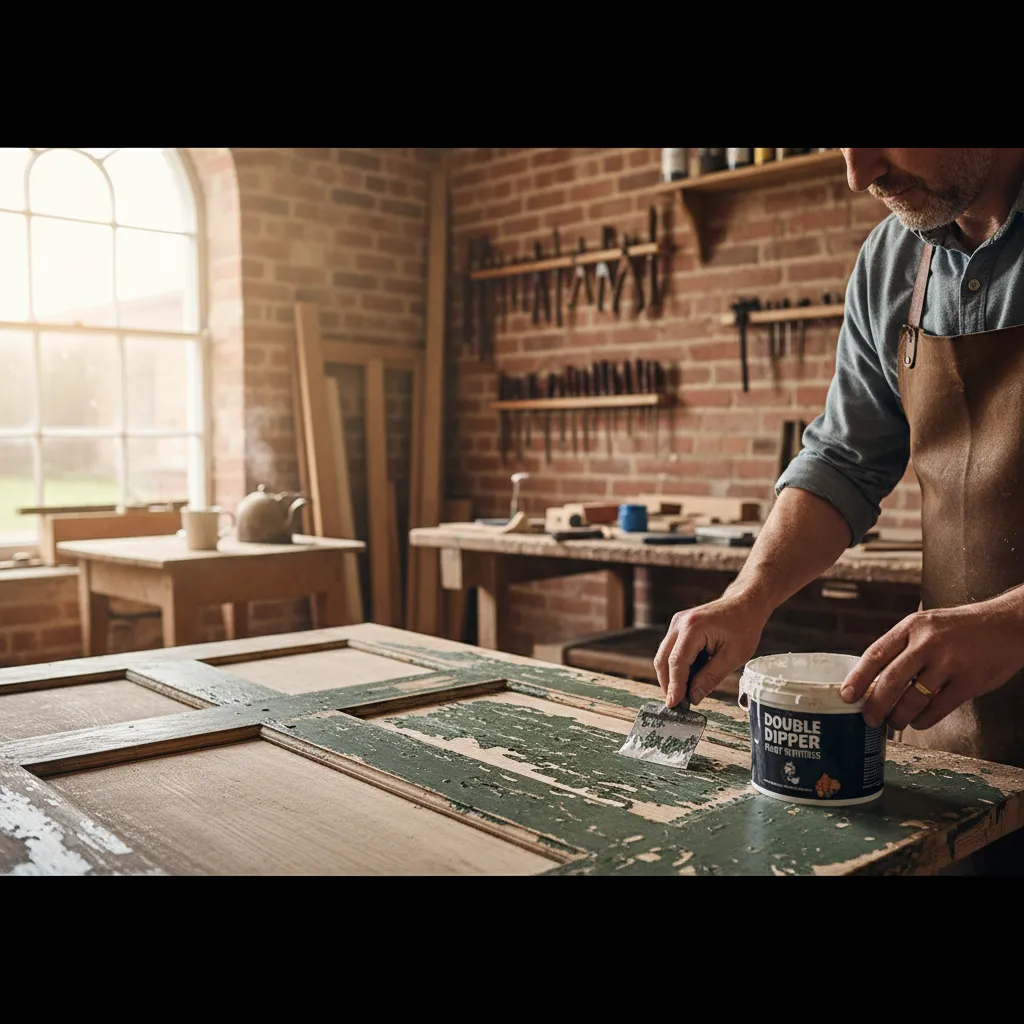
Quick answer: stripping paint from victorian door without damaging wood
Stripping paint from a victorian door without damaging the wood rests on three habits: a slow-acting paste stripper, the door laid flat on padded sawhorses, and a carbide scraper held almost parallel to the grain.
Heat, heavy sanding and hurried prying gouge soft period timber in seconds. The method below has been refined across thousands of doors at our Honley workshop.
How to remove paint from wood without damaging the wood door
Work in thin, controlled passes with a methylene-chloride-free paste stripper, then lift softened paint with a carbide scraper held almost flat to the timber. Keep the blade shallow, never dig into the grain, and reapply paste to stubborn patches rather than pressing harder. A brass-bristle brush or a bent dental pick reaches into moulded panels without marking the softwood beneath.
Does stripping paint damage wood?
Stripping paint does not damage wood when the method matches the door and the operator reads the timber. Aggressive sanding, wire brushes and overheated heat guns cause the real harm: rounded arrises, scorched patches and torn grain that no refinisher can hide. We have stripped four-panels from 1880s terraces where the original pine was still crisp after a slow chemical bath. The proof is in the door: handled with patience, the process preserves wood rather than harms it.
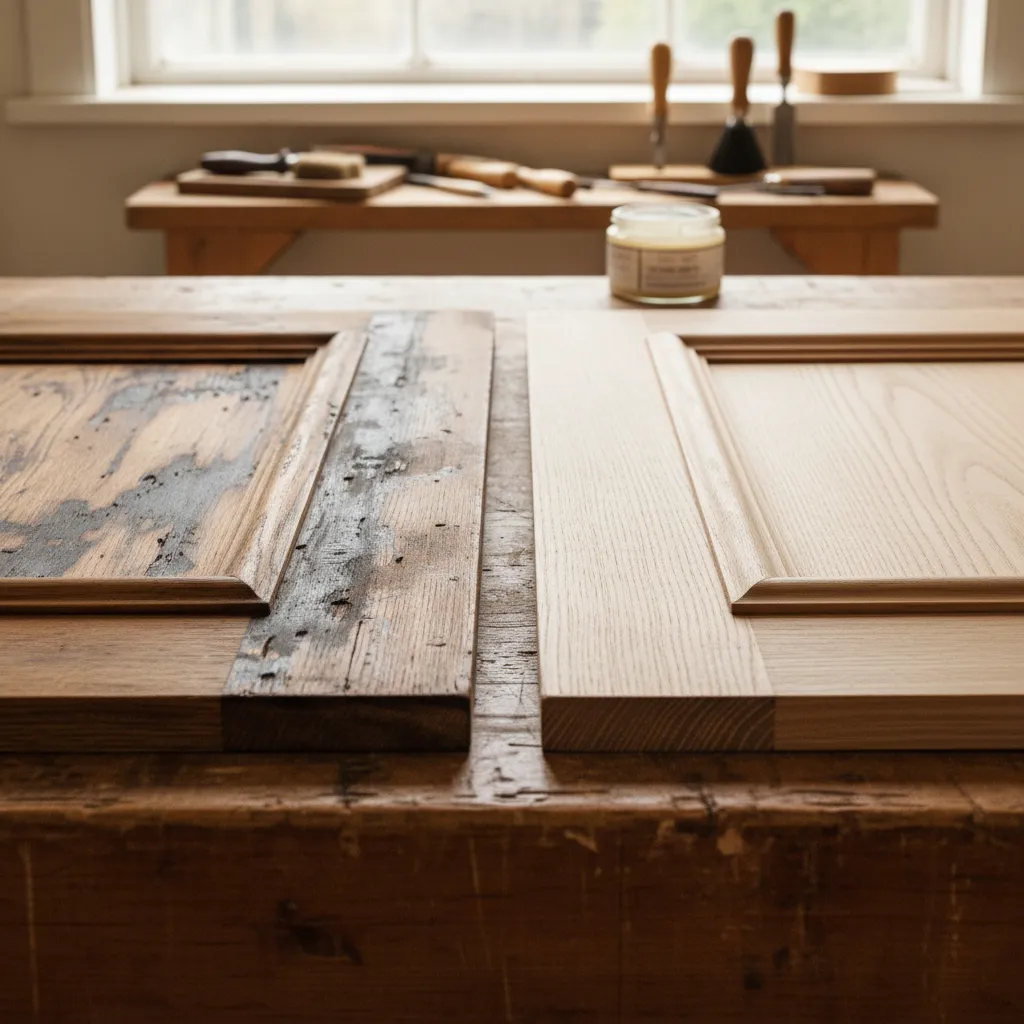
How to strip paint from an antique door
Lay the door flat across two sawhorses, take off the ironmongery, and test for lead before any scraping begins. Brush on a thick coat of paste stripper, cover it with cling film for twelve to twenty-four hours, then work the softened paint off with scrapers and picks in the direction of the grain. Finish with a mineral-spirit wipe and leave the door to dry for forty-eight hours before any oil, wax or primer goes on.
Easiest way to remove old paint from wood
For most period doors, the easiest method is a full immersion bath dip, where the whole door sits in a caustic-free stripping tank until decades of coating release on their own. We run this service at Crossley Mills for doors too detailed or too fragile for DIY work, and it lifts over ninety per cent of paint with no scraping, no airborne dust and no risk to mouldings or glazing.
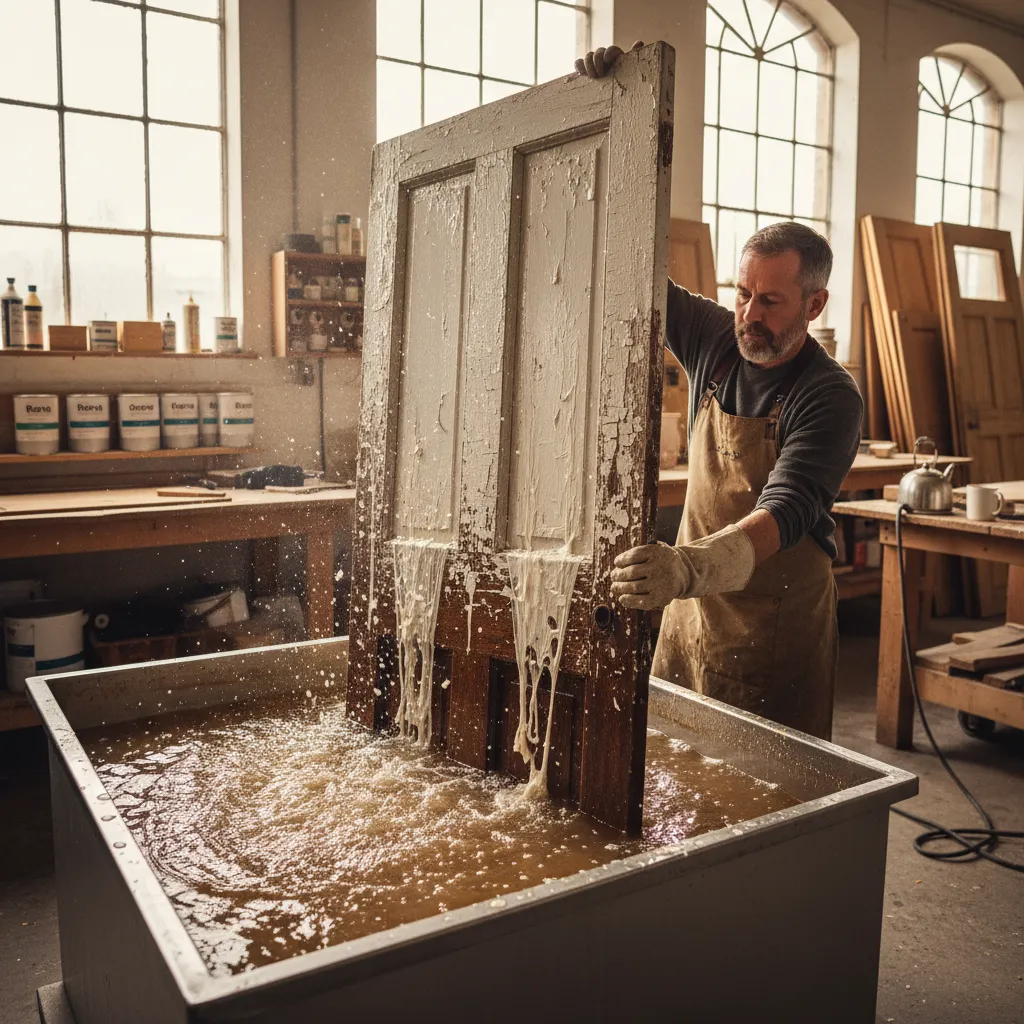
Trade-offs to weigh before starting
DIY chemical stripping costs £40 to £80 in materials and a full weekend per door, with lead-test kits adding £15 to £25. Professional bath dipping at our workshop starts lower than the price of replacing a like-for-like victorian four-panel, and you keep the original timber, hinges and glass. Pick DIY for flat, modern doors. Pick a specialist when the panels are beaded, the door is warped, or you suspect pre-1978 coatings.
How to Remove Paint from a Wood Door Without Sanding or Heat
Set up the workspace and remove the door from its hinges
Take the door off its hinges first and lay it flat across two trestles in a well-ventilated room, ideally with the window open and a fan moving air across the workspace. Lay a thick dust sheet or cardboard underneath to catch drips, and keep a bucket of water and clean rags within reach. Lay out nitrile gloves, safety goggles, a vapour mask rated for organic solvents, and old overalls before you open any tin.
For victorian panels with deep mouldings, flat positioning is the difference between a clean strip and a rushed job. Gravity pulls stripper into the recesses instead of letting it run off the face, which is why we strip every door that way at Crossley Mills.
Apply paste stripper, lift with the right scrapers, then clean down
Brush a thick coat of paste stripper, a methylene-chloride-free formula such as Peel Away 7 or Citristrip, across one panel at a time, working it into the mouldings with a cheap synthetic brush. Leave it 20 to 60 minutes until the paint wrinkles and lifts, then push it off with a carbide scraper held at a shallow angle. Swap to a plastic spatula and brass-bristle brush for the carved sections, and finish the grain with a wooden pick or an old toothbrush.
Wipe the stripped panel with white spirit on a lint-free cloth, let it dry, then sand lightly with 220-grit to lift any residue the scraper missed. Two coats of paste are usually enough for a victorian four-panel door that has carried five or six decades of gloss.
Does Stripping Paint Damage Wood, and Why Lead Paint Changes the Answer
Stripping paint from a victorian door without damaging the wood is realistic, but the wrong method can scorch, gouge or swell the timber in seconds. Heavy-handed stripping raises the grain and burns softwood. A controlled approach, paced to the door rather than the clock, keeps the original character intact.
What a controlled strip does, and what an aggressive one does
A controlled strip lifts decades of paint in layers, leaving the timber's patina, old fillers and screw holes exactly where they were. Done well, a four-panel door from 1890 still looks like an 1890 door afterwards, just bare.
An aggressive strip is the opposite. Heat guns held too long scorch pine in a single pass. Coarse sanding planes tear through ash and mahogany. Cheap strippers dry on the surface and pull up soft grain with the paint, leaving a fuzzy texture that no amount of finishing will hide. One job we took on in Marsden had been attacked with a belt sander; the original mouldings on the lower panel were unrecognisable, and the door had to be rebuilt by hand.
Lead paint testing and disposal you cannot skip on a victorian door
Any door in a pre-1978 house likely carries lead-based coats under the modern ones, and that fact changes the whole job. Test first with an inexpensive 3M LeadCheck swab, available from retailers such as B&Q or a local hardware shop. A positive result means wet-stripping with PPE, sealing stripped waste in heavy plastic, and dropping it at your local council hazardous-waste site rather than the bin.
Skipping the test puts you, your family, and anyone sanding the door later at risk of lead-dust exposure. Encapsulation is the only safe shortcut: if the existing paint is sound, leave it and paint over it.
How to Strip Paint from an Antique Door, Detailed Mouldings and All
Getting into carvings, panels and glazed sections without scoring the timber
The safest approach is to lay the door flat on padded sawhorses, lift out the glazing if it is loose, and work from the centre outwards with a carbide scraper held at a low angle. Plastic spatulas and brass-bristle brushes reach into mouldings that a steel blade would gouge, while a bent dental pick pulls residue from the corners of carved panels. Chisels are tempting, but a single slip takes a sliver out of the wood you cannot replace, so keep them for scraping softened paint only, never for levering.
For glazed sections, tape the glass edges first and use cotton buds dipped in stripper to clean the rebate before pulling the putty. If a panel is cracked or carries historic filler, leave it; that patina is what makes a period door worth keeping.
Refinishing once every last film of paint is off
Wipe the bare timber with white spirit on a lint-free cloth to lift any waxy residue the stripper leaves behind. Once dry, decide whether to seal, oil or paint: Osmo Door Oil feeds the grain on pine, hardwax oil suits oak, and a thin coat of Fiddes Supreme Wax gives a soft sheen on painted alternatives. Apply the first coat thinly, leave it 24 hours, then buff back with a fine nylon pad before the second.
A door that started with seven layers of gloss in March 1903 should not end up looking like new MDF. Keep the original quirks and stop.
- Phone: 01484 666 333
- Email: info@doubledipperpaintstrippers.co.uk
- Visit the contact page for a quote
Easiest Way to Remove Old Paint from Wood, FAQs and Next Step
How to remove paint from wood without damaging the wood door?
The easiest way is a slow-acting paste stripper applied thickly, covered with a plastic sheet for roughly 24 hours, then lifted off with a plastic spatula and brass brush. Heat guns work faster but scorch soft victorian timber within seconds if the nozzle lingers. For moulded panels, a dental pick lifts residue from corners a scraper cannot reach.
Does stripping paint damage wood?
Stripping can damage wood, but the damage usually comes from operator haste rather than the stripper itself. Aggressive scraping gouges the grain, and heat guns leave burn marks that no amount of sanding hides. Paste strippers left on too long raise the grain, which sands back cleanly with 180 then 240 grit.
How to strip paint from an antique door?
Take the door off its hinges and lay it flat across two trestles in the workshop, which keeps stripper wet and stops drips marking the face. Lead-test any house painted before 1978 first, then work one panel at a time from the top down. At Double Dipper Paint Strippers, that flat-lay method is how Daniel strips every victorian four-panel that comes through Crossley Mills, alongside the bath-dip line that handles pieces too fragile for hand work. We have also rescued original ironmongery from matching doorframes, restored cast iron fireplaces in the same projects, and even stripped antique bedsteads brought in by customers refurbishing whole bedrooms.
What is the easiest way to remove old paint from wood?
For most doors, the easiest route is bath-dipping: the piece goes into a caustic tank overnight and emerges stripped to bare timber. It suits solid timber doors but not veneered or laminated panels, which the bath can delaminate. Hand-stripping remains the safer choice for anything ply-built or with delicate inlay. The same logic applies to antique furniture, banisters and church pews that need gentle handling. Prices start at direct-communication rates with no middlemen, and our team is a Guild of Master Craftsmen member since 2016.
Hand the job to a Yorkshire workshop that does this every day
Ring 01484 666 333 or email info@doubledipperpaintstrippers.co.uk with a photo and approximate size, and Daniel will reply with a quote the same day. We also trade as Vibrant Doors for refurbishment sales and can quote restoration work alongside any paint-strip enquiry.
Sources
- How to Strip Paint Off Victorian Doors Without Ruining Their Character
- Any advice on stripping paint from Victorian door mouldings?
- How to Strip Paint From Internal Doors Without Damaging Them - Doors & More
- Paint Stripping and Refinishing Wood on a Historic House - OldHouseGuy Blog
- Ep. 114 REFINISH OLD DOORS: How to Strip Paint and Refinish Old Doors | 1920s Door Restoration
- How to Strip Paint from a Wood Door - Making it in the Mountains
- Stripping paint off doors and door frames, fastest method?
- How to remove old paint from a wooden door?
