Journal
Stripping Paint from Victorian Door Without Damaging Wood
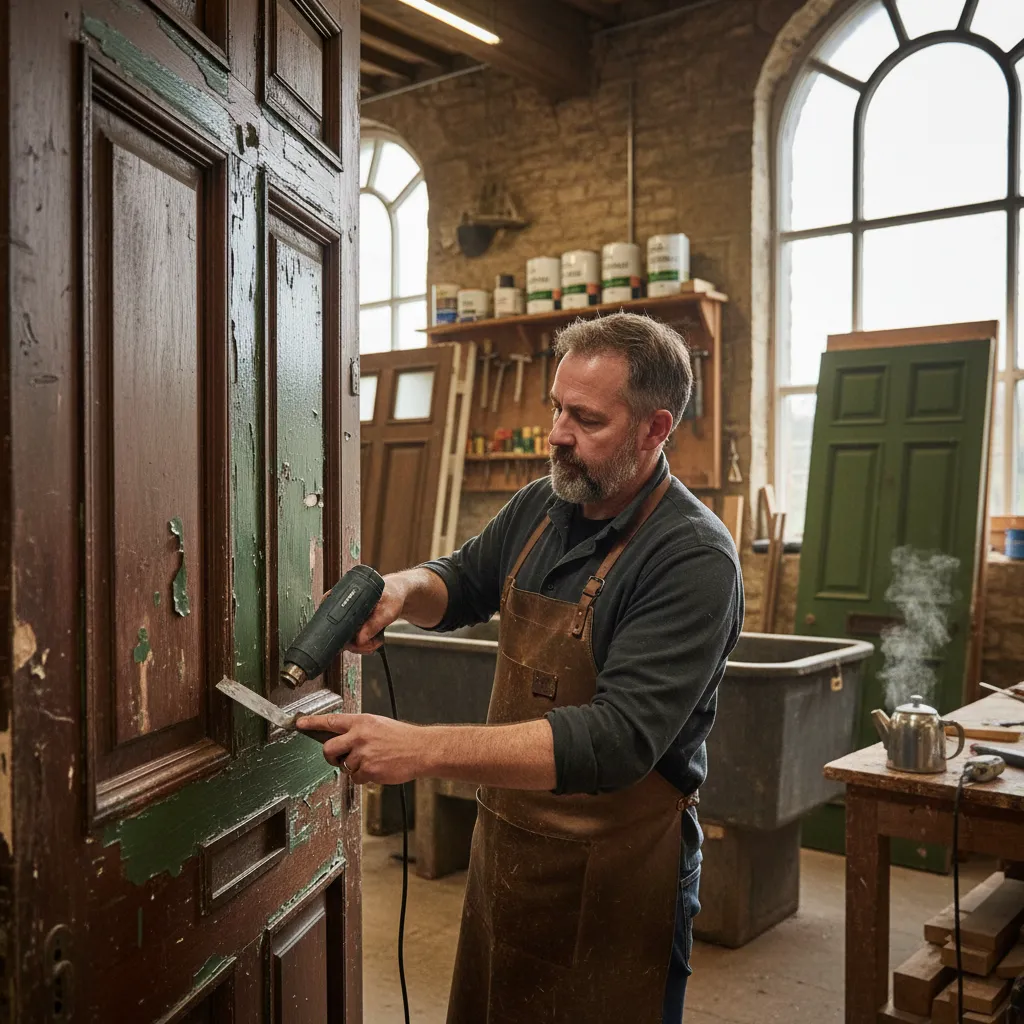
Quick answer: stripping paint from victorian door without damaging wood
The short answer
Stripping paint from a Victorian door without damaging wood means lifting the coating off the timber rather than abrading it. A paste or gel stripper, a low-temperature infrared heater and patient hand tooling handle roughly nine in ten period doors in our Honley workshop.
Start here, then expand
Work flat across two trestles, brush a thick layer of gel stripper onto a test patch, cover it with cling film, and scrape with the grain after 30 to 60 minutes. Move to an infrared heater for the deep ovolo mouldings, finish carved details with a brass brush and a dental pick, and reserve sandpaper for a light 0000 steel wool rub-down before refinishing.
How do you remove paint from wood without damaging a wooden door?
Begin with the gentlest method that suits the job. A gel or citrus-based stripper brushed on, left for 15 to 60 minutes, then lifted with a plastic or carbide scraper is the safest route for most Victorian timber. A heat gun on its lowest setting, kept moving in slow passes, softens older layers for scraping. Avoid blowtorches, random orbital sanders on mouldings, and wire brushes, which scorch, scour, and tear soft growth rings apart.
Does stripping paint damage wood?
Done carefully, no. Damage comes from scraping too hard, sanding profiled edges flat, or holding high heat long enough to char the surface. Stripping done in controlled passes, with detail tools such as dental picks and brass brushes for carvings, leaves the original timber intact and ready for wax, oil, or a fresh coat. The timber tells you quickly when a method is too aggressive; if you can smell scorched wood or see sanding marks across a bead, stop and change tool.
How do you strip paint from an antique door?
Unhinge the door, lay it flat across two trestles, and work in shade rather than direct sun. Test a small patch first, apply stripper evenly, cover with thin cling film in warm conditions to stop it drying out, then scrape with the grain. Wipe with white spirit, let the door dry for 24 to 48 hours, and only reach for sandpaper as a last step before refinishing. The same approach works for antique furniture, banisters, and church pews brought into the workshop.
What is the easiest way to remove old paint from wood?
For thin, flaking paint, a chemical gel and a plastic scraper is the lowest-effort option. For thick, built-up layers on a Victorian door, expect two or three applications rather than one. Around 95% removal is realistic on a flat panel without spending hours picking grain with a dental tool. The stubborn 5% lives in mouldings, end grain, and the corners where the stiles meet the rails.
Hand the door to a workshop
For a four-panel Victorian door with deep ovolo mouldings, bath-dipping at Double Dipper Paint Strippers in Honley lifts every layer in one controlled soak. Call 01484 666 333, email info@doubledipperpaintstrippers.co.uk, or visit the contact page for a same-day quote.
Methods worth using on a period door
Chemical strippers for flat panels and rails
A gel or paste stripper, brushed on thick and left under a loose sheet of cling film, lifted thirty-year-old gloss off a 1903 four-panel door in about forty minutes without raising the grain. Caustic strippers work faster on oil-based build-ups but must be neutralised with vinegar or a dedicated wash before any refinishing; skip that step and the next coat of Osmo or Fiddes will fish-eye within hours. For thinner, more recent coatings, a slower citrus-based product such as Citristrip or Max Strip cuts fumes and treats the original timber more gently.
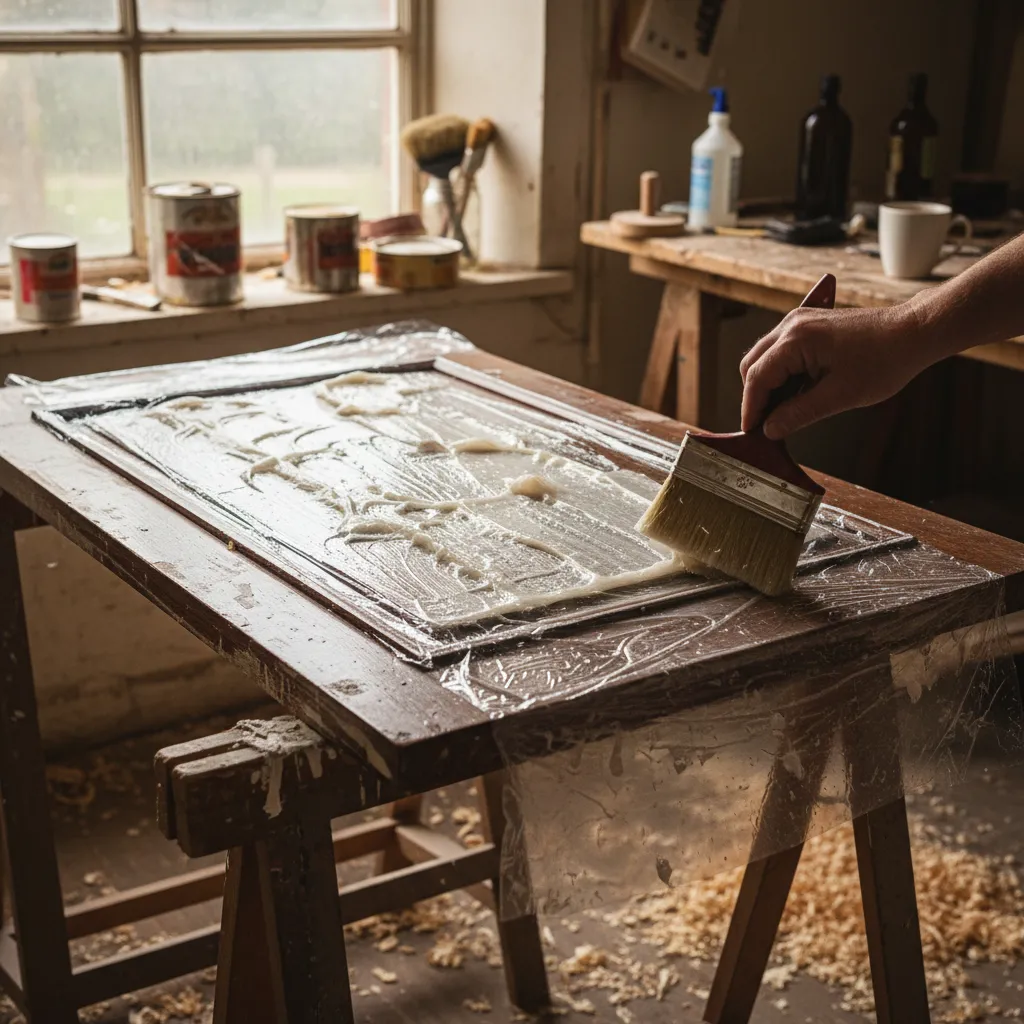
Apply with an old brush, score thick edges first with a carbide scraper, then pull the softened paint off with a plastic spatula rather than metal, to avoid digging into soft growth rings. Two passes are common on a door that has been painted six or seven times. The DIY sheds at B&Q and other high-street retailers stock the basic gel and scraper kit for around £25 to £40, which is enough to start one door.
Heat, scraping and detail work for mouldings
Around the beading, mouldings and the bottom rail, swap the stripper for an infrared heater or a heat gun on its lowest setting, kept moving in slow passes. Heat loosens the paint in the crevices without the fumes a chemical bath leaves behind in a stairwell. Steel wire brushes belong in the bin on Victorian timber; a brass-bristle brush, dental pick and a contoured scraper clean out the ovolo without sanding the profile flat.
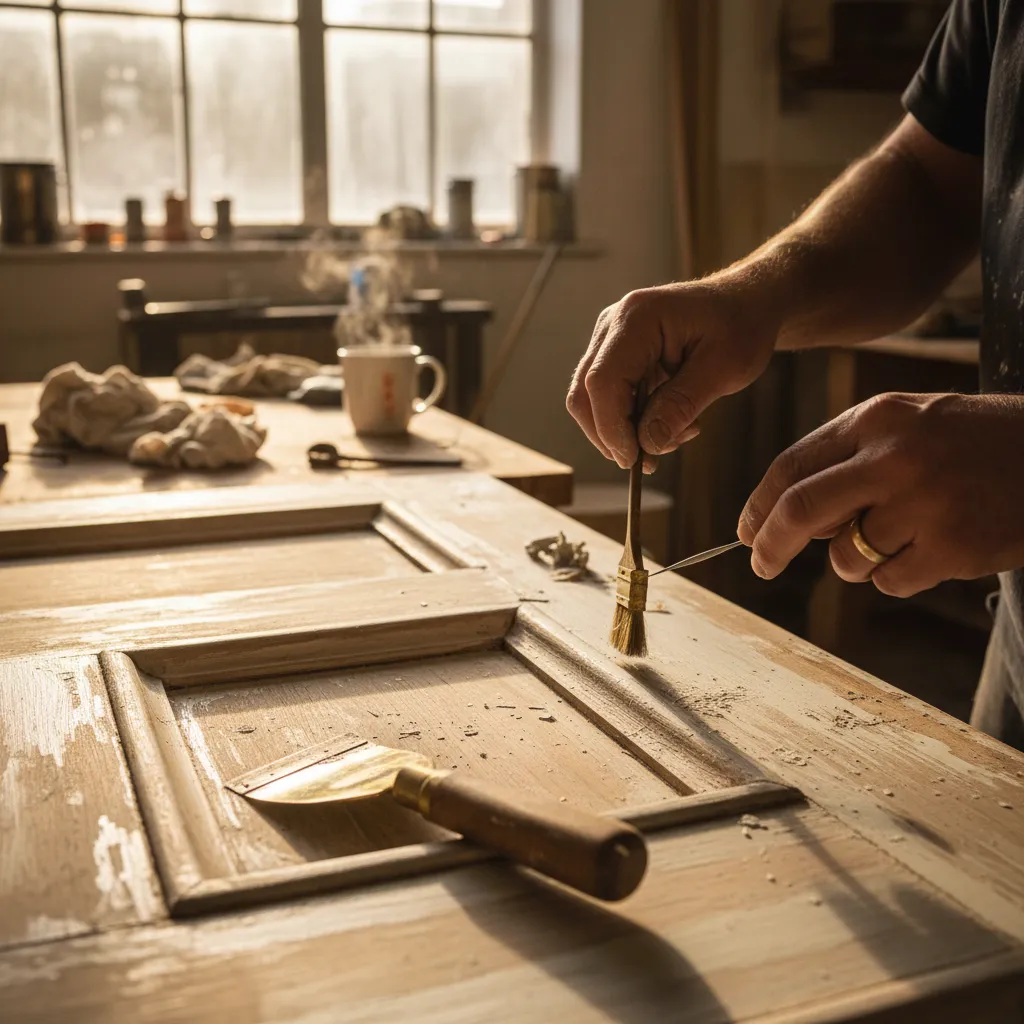
Daniel's rule at the Crossley Mills workshop is simple: the tool follows the moulding's shape, never the other way round. A light rub-down with 0000 steel wool and white spirit finishes the job before a coat of sanding sealer locks the colour in. Expect four to six hours of patient work for a single Victorian door, or hand the heavy scraping to a workshop with a hot tank and a hand-finishing bay and pick the door up a week later.
Safety gear and protective equipment
Wear nitrile gloves, safety goggles, and an organic vapour mask rated for solvent or caustic fumes, even with low-odour products. Work in a ventilated space, ideally with a fan moving air across the door rather than into your face. Lay a dust sheet underneath; stripped paint slurry stains concrete and can carry lead if the door predates 1978. A basic kit from Screwfix or Toolstation costs under £30 and saves a weekend of headaches.
Lead paint testing and disposal
Any Victorian door has almost certainly been painted with lead-based coatings at some point. A £10 3M lead test swab gives a clear answer in minutes. If positive, wet-wipe the surface rather than scraping dry, bag the waste separately, and take it to a licensed household waste site rather than the wheelie bin. The same rule applies to used stripping slurry, which most UK councils class as hazardous waste.
Common questions about stripping paint from victorian door without damaging wood
How to remove paint from wood without damaging the wood door?
Work in thin layers with a gel paint stripper and a plastic scraper, keeping the tool flat and following the grain. Chemical softening beats force, so the timber keeps its original mouldings. Heat, sanding and wire brushes each carry a real risk of burn marks, scratches or grain tear-out on a period door. UK restoration suppliers such as Vintage Doors and Vibrant Doors sell refurbished Victorian doors stripped the slow way, which is a useful benchmark for what a careful finish looks like once the slurry has gone.
Does stripping paint damage wood?
Stripping itself does not damage wood when the method matches the door. The damage comes from aggressive scraping, high heat held too long, or coarse sanding that cuts into the soft grain between the harder rings. A controlled approach removes decades of coating without touching the timber underneath, which is why most period doors that survive a careful strip-out look better than they did under their last few paint films.
How to strip paint from an antique door?
Unhinge the door and set it across a pair of trestles so every face sits within easy reach. Brush on a paste stripper, lay cling film across it to keep it damp, then ease the softened paint away with a carbide scraper and a brass brush worked into the carved details. The workshop has watched doors dating back to the 1880s shed five to eight layers this way and still take a hard wax oil without complaint; the same routine works on antique furniture and church fittings brought in from across West Yorkshire.
What is the easiest way to remove old paint from wood?
A caustic or citrus gel left to work for thirty to sixty minutes is the simplest route for most flat panels. For a Victorian four-panel door with deep mouldings, the honest answer is a bath dip at the Crossley Mills workshop, where the stripper reaches every crevice in one soak and hand finishing takes care of the carved areas afterwards. DIY works for panelled doors without mouldings; carved or beaded pieces usually end up on the workshop floor anyway after a weekend of fiddling.
What to do next
DIY or send it to the workshop
A single four-panel pine door takes a competent DIYer two to four days including drying time, and most of that goes into detailed corners rather than flat surfaces. The trade-off is mess: chemical slurry, scraper shavings, and stripped paint waste that needs correct disposal, plus the risk that a heat gun held too long scars a bead that took a joiner an hour to cut. Bath-dipping at Crossley Mills skips the slurry, finishes a door in a working week, and costs less than a week of annual leave when the cost of stripper, scrapers, masks and disposal is added up.
Collection runs across West Yorkshire and Greater Manchester, and each piece is handled by Daniel Fitzpatrick from quote to finish. Phone 01484 666 333, email info@doubledipperpaintstrippers.co.uk, or visit the contact page for a same-day estimate.
Sources
- How to Strip Paint Safely from Historic Wood Windows and Doors, Austin Historical
- How to Strip Paint From Internal Doors Without Damaging Them - Doors & More
- Paint Stripping and Refinishing Wood on a Historic House - OldHouseGuy Blog
- Episode 114: Refinishing Old Doors, A Walk Through Stripping Paint and Restoring 1920s Joinery
- How to Strip Paint from a Wood Door - Making it in the Mountains
- Stripping Paint from Wood: Beginner's Guide - A House in the Hills
- How Can I Remove Paint From Wood: Eco-Friendly Methods For Safe Paint Stripping
- How To Remove Paint From Deck: Safe Stripping Methods For Wood
