Journal
Best Way to Strip Paint from Cast Iron Fireplace
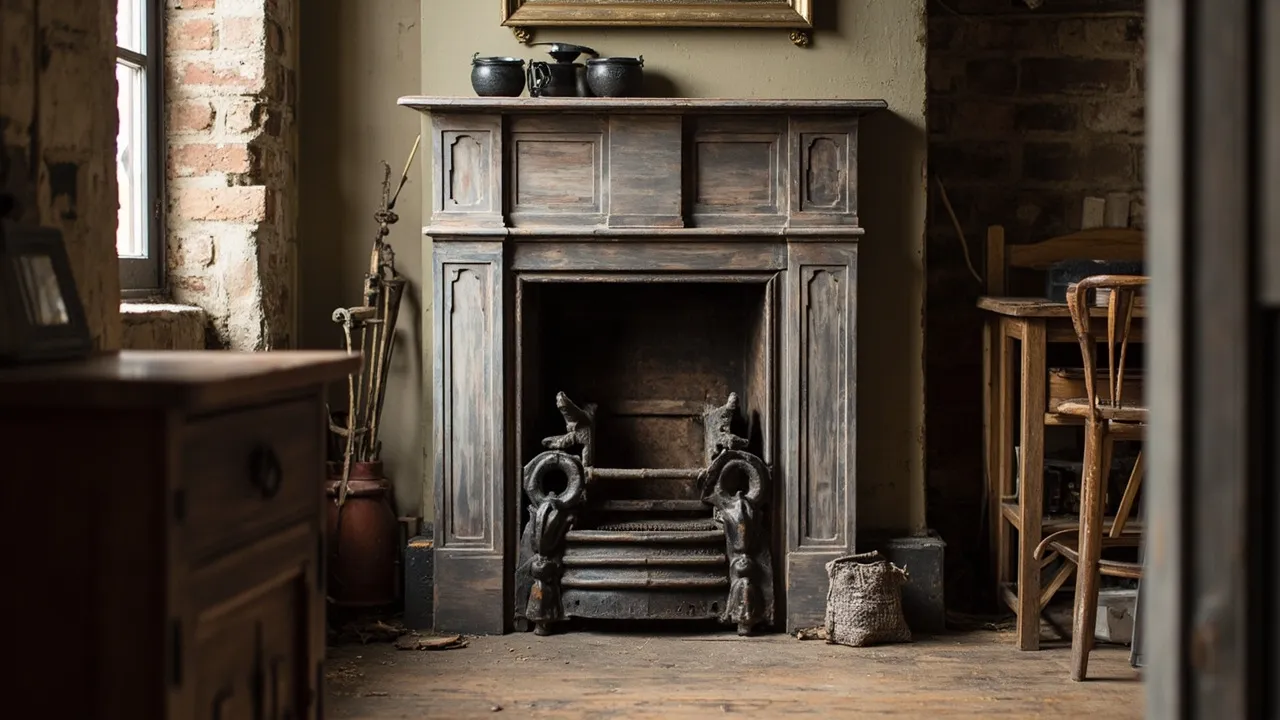
Quick answer: best way to strip paint from cast iron fireplace
What is the quickest, safest way to strip paint from a cast iron fireplace?
The best way to strip paint from a cast iron fireplace is a paste chemical stripper applied thickly, left for several hours, then scraped off with plastic or wooden tools.
Brush the residue out of the castings with a toothbrush, wipe down with white spirit, and finish with an oil-based metal primer within 24 hours to stop flash rust.
How do you strip paint off cast iron?
Paint comes off cast iron by softening it with a methylene chloride or benzyl alcohol based stripper, then lifting it with a plastic scraper and a stiff nylon brush. Work in sections no bigger than half a square metre so the paste stays wet and active. Detail work in scrollwork and corners responds better to a wooden toothpick than a metal pick, which scratches the iron and leaves marks you cannot polish out later.
What is the best product to remove paint from cast iron?
Peel Away 1 is the most reliable paste for cast iron fireplaces because one application can lift 20 to 30 layers of old gloss paint without dripping. For lighter jobs, Nitromors original works fine and costs under £15 a tin. Avoid Peel Away 7 on iron; its alkaline formulation leaves a white bloom on the surface that fights against primer adhesion.
Can you use WD-40 to strip paint?
No. WD-40 softens paint slightly and is useful for cleaning up sticky residue after stripping, but it does not break down cured gloss or oil layers. We have tried it in the workshop on Victorian fireplaces and it just smears the paint around. Treat it as a finishing aid, not a paint stripper.
Chemical paste strippers versus liquid strippers
Paste clings to vertical surfaces and ornate castings where liquid runs off before it does any work. Liquids are cheaper per litre and suit flat panels, fire backs, and removed components you can lay on a bench. For a full fireplace still mounted on the chimney breast, paste wins every time on a Yorkshire stone hearth.
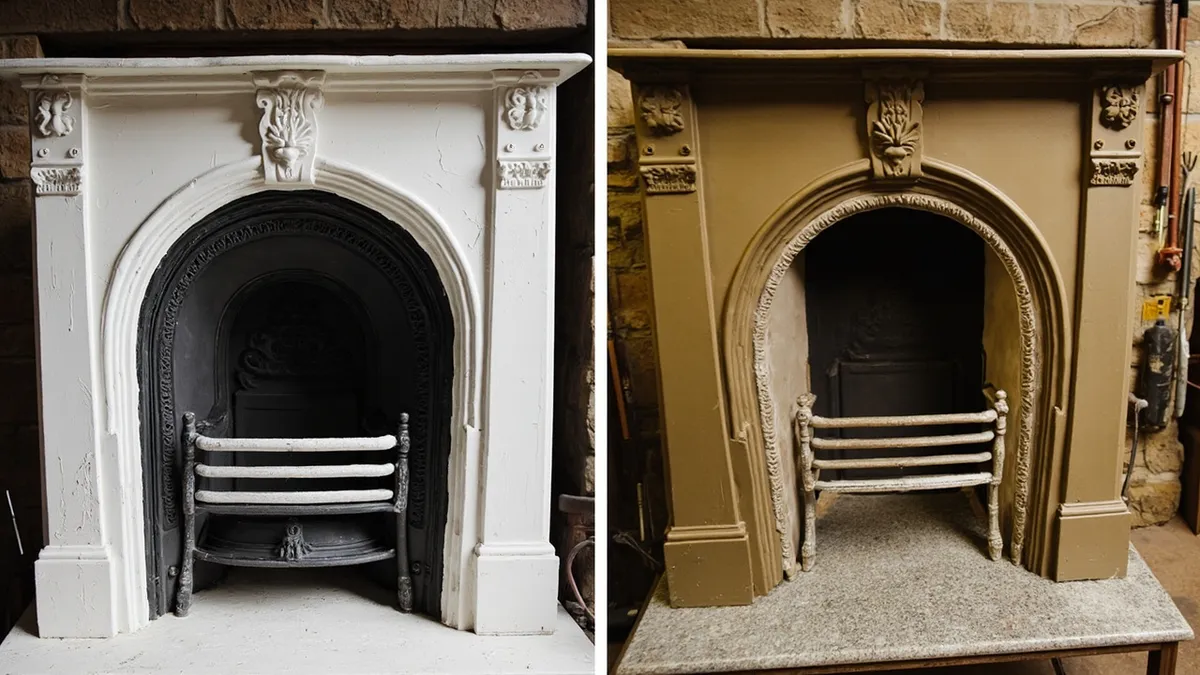
If your fireplace has more than eight coats of paint or was last decorated before 1978, ring the workshop on 01484 666 333 for a quote on bath dipping, which strips every layer in one tank and saves a full weekend of scraping.
Common questions about stripping paint from a cast iron fireplace
How do I remove paint from my fireplace?
Take the fireplace out of the surround if it lifts cleanly, or mask the brickwork with heavy polythene and decorator's tape. Apply paste stripper generously, work it into the scrolls with an old toothbrush, then scrape and neutralise section by section before the paste dries out.
Lead paint is common on pre-1970 fireplaces, so wear a P3 respirator, nitrile gloves and work outside or with the room well-ventilated. Send photos and rough measurements to our contact page, or call 01484 666 333, and Daniel will quote the dip-and-finish turnaround direct from the Honley mill.
When the workshop should take over
How many coats is too many for a DIY strip?
Start with a paste paint stripper such as Peel Away 1, brush it on thick, cover with the supplied laminate paper, and leave it for 24 to 48 hours before scraping softened paint off with wooden or plastic tools. Wire wool and an old toothbrush reach into the scrollwork on a cast iron fireplace where scrapers cannot. If the piece has more than ten coats, or shows any flaking lead paint, take it off the wall and send it to a workshop rather than working indoors.
Send your fireplace to the Yorkshire workshop
Daniel Fitzpatrick runs Double Dipper Paint Strippers from a Victorian textile mill in Crossley Mills, Honley, where every fireplace is hand-stripped or bath-dipped by Daniel himself. The workshop has handled cast iron fireplaces from across West Yorkshire and Greater Manchester since 2016, and finishes each piece with rust treatment, metal primer, and a topcoat in Farrow & Ball, Little Greene, or traditional grate polish. Collection and delivery are available across the region, so a heavy Victorian insert does not need to leave your hallway.
Ring 01484 666 333 or email info@doubledipperpaintstrippers.co.uk with a photo and the rough measurements, and Daniel will come back with a same-week quote.
Sources
- Refurbishing a Cast Iron Fireplace: Handy Guidance from the Antique Fireplace Guide
- Stripping Paint Off a Cast Iron Fireplace Cover – Brownstoner Forum Archive
- Taking paint off a Victorian-era cast iron fireplace – r/fixit discussion
- Bringing an iron fireplace back to life – strip it or paint it?
- Any advice on getting paint off a cast iron fireplace?
- Getting paint off cast iron fireplaces – Period Property forum thread
- Help needed: paint removal from a cast iron fireplace – r/DIYUK
- Watch Peel Away 7 lift paint from a cast iron fireplace – YouTube demo
