Journal
Bath Dipping vs Hand Stripping Antique Pine Furniture
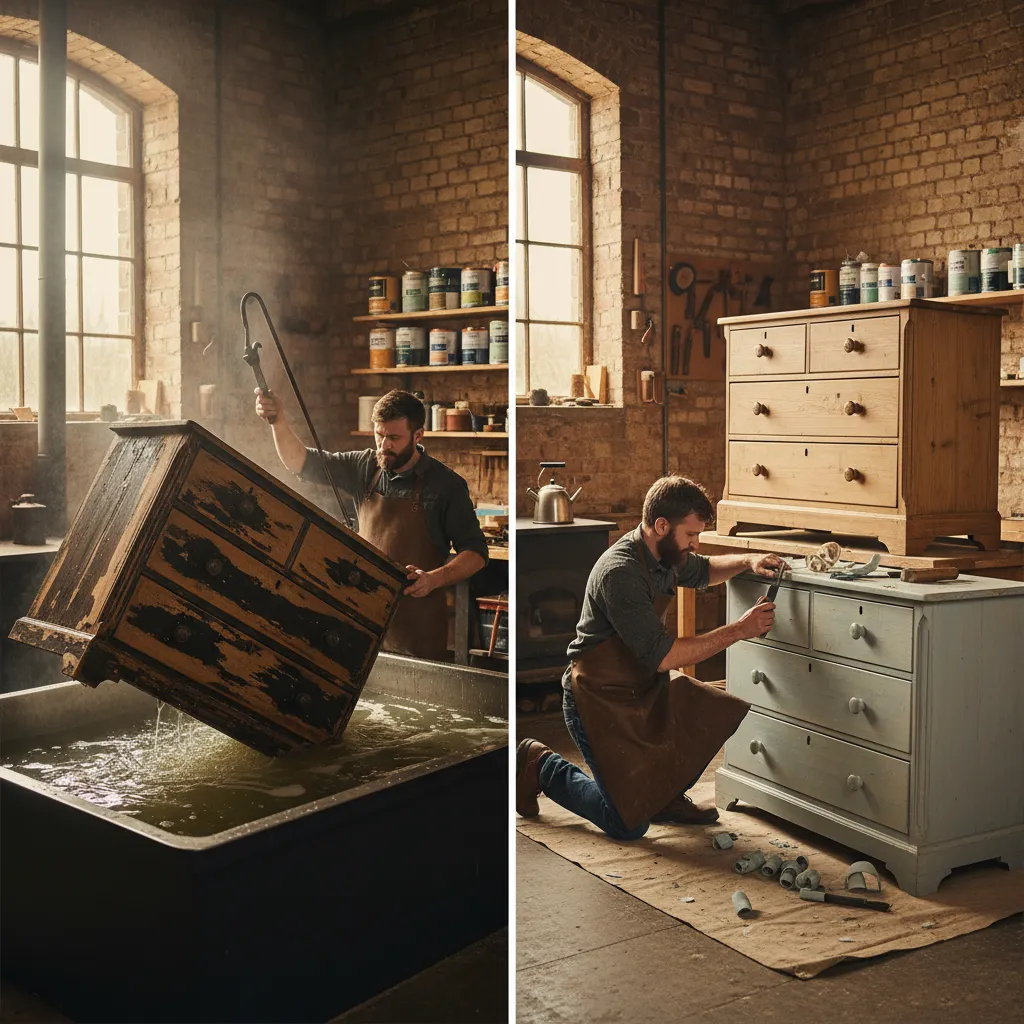
Quick Answer: Bath Dipping vs Hand Stripping Antique Pine Furniture
If you are weighing bath dipping vs hand stripping antique pine furniture, hand stripping is the safer choice for most pieces.
It preserves the patina, protects glue joints, and avoids the swelling and cracking a caustic bath causes. Bath dipping is faster and cheaper, but it strips the wood's natural oils and often weakens old joints, which is why most restorers only use it on sound, modern pine doors rather than heirloom pine furniture.
The trade-off comes down to value. A £20 pine shelf rescued from a skip can tolerate a dip. A 1900s pine dresser with dovetailed drawers and original brass handles deserves a brush, a putty knife, and a patient craftsperson who treats the timber as the object it is.
Which Method Suits Your Piece?
Choose hand stripping when the furniture has joints, veneer, or any maker's mark you want to keep. Choose bath dipping only when the piece is solid, joint-free pine, such as a standard four-panel internal door, and you have checked there is no ply or MDF hidden inside.
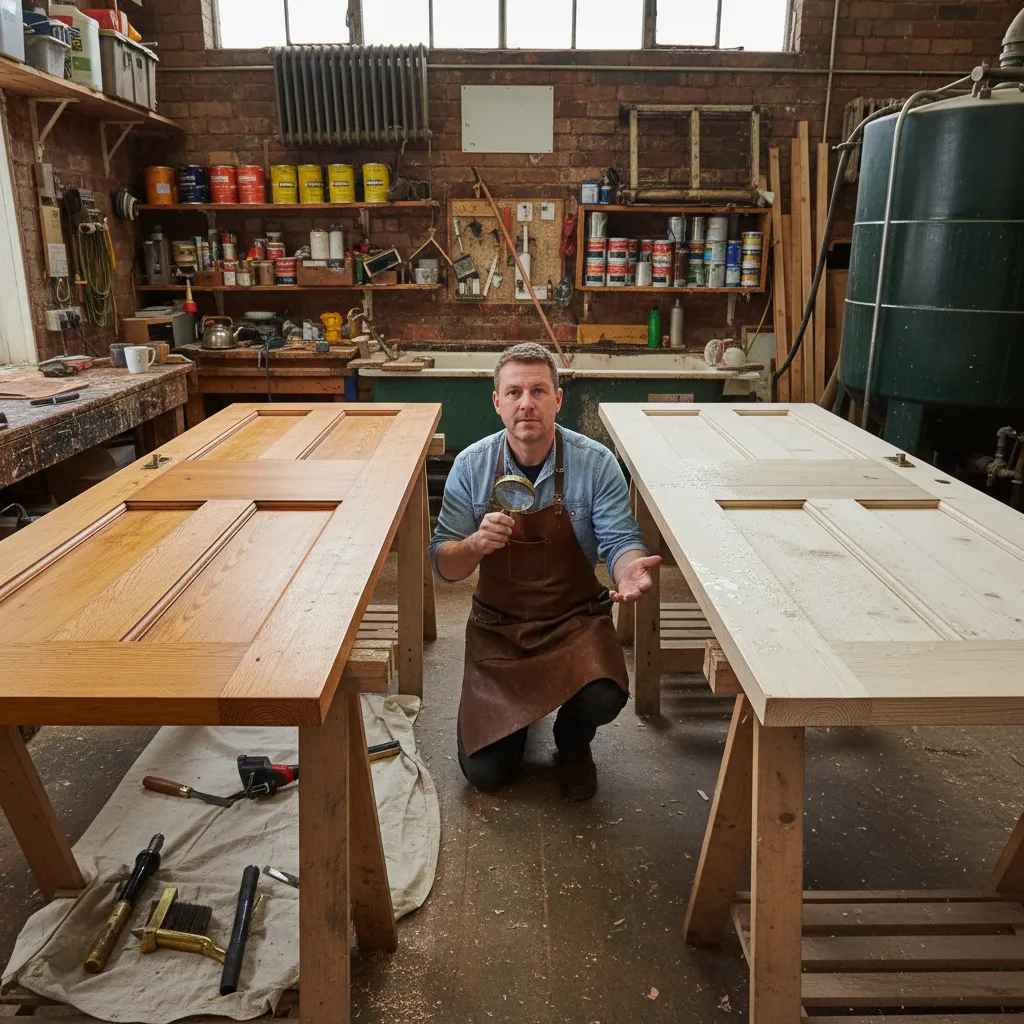
Double Dipper Paint Strippers handles both methods at the Honley workshop, so the decision sits with the customer, not the workshop. Daniel will say on the phone which route a particular piece needs before any work begins.
Ready to Send a Piece In?
Send a photo and rough size by email, or call 01484 666 333 between 8am and 4pm, Monday to Friday, for a same-day quote and a free collection slot across West Yorkshire and Greater Manchester.
How to Strip, Restore and Modernise Pine Furniture Without Damaging It
How to Strip Pine Furniture Safely
Strip pine furniture by brushing on a semi-paste remover, letting it dwell until the finish wrinkles, then scraping along the grain with a wide putty knife and finishing detail work with 000 steel wool. Work in a ventilated shed, wear nitrile gloves and goggles, and keep the stripper thick at around 3 mm so it stays active instead of drying out. Never belt-sand old pine. You remove decades of soft summer wood and expose the dark latewood bands underneath, a change that cannot be undone.
How to Restore Mexican Pine Furniture
Restore Mexican pine by sealing lifted knots with shellac, re-gluing loose dowels with hide glue, then finishing with a hard wax oil such as Osmo Polyx-Oil to deepen the warm orange tones the timber is known for. The soft Mexican timber needs a gentle hand. Aggressive sanding flattens the colour, and a hard wax oil brings back the depth without that risk.
How to Modernise Old Pine Furniture
Modernise old pine by toning it down. Wash stripped surfaces with black tea or thinned dark stain, seal with a matt Osmo or Fiddes wax, and swap bright brass knobs for black iron cup pulls. Tall pine dressers also lose visual weight when raised on simple 10 cm timber legs in place of a plinth base.
Sand or Strip? A Practical Decision Rule for Pine
For solid antique pine with sound joints, hand stripping beats sanding because it removes finish without grinding through the soft earlywood. Reach for sandpaper when the piece is veneered, carries only a thin modern varnish, or needs localised surface preparation before a new coat of wax or oil.
Skip both methods if the joints are already loose. Re-glue first, strip second, and finish with Bona, Osmo or Fiddes for a result that keeps the patina intact. Send photos to the workshop or call 01484 666 333 for a straight answer on whether a particular piece should go in the tank or stay on the bench.
Bath Dipping vs Hand Stripping: Risks for Glue Joints, Veneer and Timber
Why Caustic Dipping Weakens Joints and Causes Warping
Caustic baths attack the animal hide glue that holds Victorian and Edwardian joints together, softening it within minutes of immersion. A pine chair pulled from the vat at the Honley workshop has often lost every loose tenon before it reaches the drying rack. Swelling is the second problem. Pine absorbs liquid fast along the end grain, and a drawer bottom can grow 3 mm before it ever sees a scraper.
Warping follows as the timber dries unevenly, twisting rails and bowing panels that were flat when they went in. Veneered and plywood pieces fare worse still, because the soak delaminates the ply and lifts veneer sheets at the edges.
Suitability for Plywood, Veneer and Modern Timber
Plywood and MDF should never go in a caustic bath. The glue fails and the layers separate within minutes. Solid modern pine, such as a 1990s four-panel door, takes a dip well because the joints are PVA and the timber is dry. Antique pine, oak and mahogany should stay on the bench where a caustic soda bath cannot reach the joints.
Tannin Staining and Discoloration in Oak (and Why Pine Avoids It)
Oak reacts badly to caustic soda baths. The alkali darkens the natural tannins and leaves a patchy grey stain that sanding cannot lift. Pine carries low tannin levels, so it rarely discolours this way, though it still suffers the joint and swelling problems described earlier. This tannin reaction is one reason most oak furniture is hand stripped by default.
Next Step: When to Bring in a Yorkshire Workshop for Your Pine Piece
Questions Homeowners Ask Before Booking
Send a photograph before booking. A single phone snap of the drawer fronts, the carcase and the underside tells us more than a written description and lets us quote accurately without a visit.
A 1920s bookcase with one coat of varnish wants hand stripping in the workshop over a working week. A pine door covered in seven layers of household emulsion suits the caustic bath and comes back cleaner. A Mexican pine sideboard with peeling lacquer and loose tenons needs a careful assessment first, because animal glue fails quickly in a dip tank, so that piece will be hand stripped, re-glued, then finished in wax.
Lead-based paint rules out a home soak for anything pre-1970. The workshop holds the appropriate certificates and strips inside a ventilated mill unit at Crossley Mills, Honley, with extraction running continuously.
How to Get a Quote from the Workshop
Call 01484 666 333 or email info@doubledipperpaintstrippers.co.uk with a few photographs and the rough dimensions. Daniel replies the same working day with a fixed price, a turnaround estimate, and pick-up options across West Yorkshire and Greater Manchester.
Sources
- Why Hand Stripping Beats the Vat for Family Heirlooms | Jax Furniture Refinishing & Upholstering
- Bringing Old Furniture Back From the Brink Has Its Dangers and Rewards, Chicago Tribune
- Removing Old Finishes, West Wiltshire Restoration
- Taking the Plunge: Dip & Strip Techniques, FineWoodworking
- A Joiner's Notes on Dipping Doors and Furniture
- The Beginner's Guide to Stripping Wood and Metal with Dip Tanks
- In Defence of Slow Work: A Restorer's Case Against the Tank, Facebook
- Master Craftsmen Compare Dip Stripping and Hand Stripping
